Wartime Rations – Day Twenty-Seven

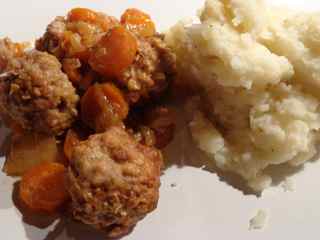
SausagemenatIt’s been a bit of a weird few days, so the menu I’d hoped to follow this week hasn’t quite worked out as planned. But I stuck to my rations and made sausage meatballs with mashed potatoes for dinner. I made them with breadcrumbs, onions and carrots, in the slow cooker, but next time I will add a few more spices and maybe some minced onion to the meat.

This is the second to last day of my month of wartime rations. I’m going to leave the last word to Anne tomorrow, but here are a few of my thoughts on the experience.

I’m very aware I’ve just been ‘playing’ at this. I haven’t had to worry about not being able to buy groceries or having to start a fire before I can boil the kettle for a cup of tea.

Here in Calgary we’re experiencing a cold snap, but all I have to do is turn up the thermostat. I can’t imagine what it must have been like during wartime, particularly with fuel shortages, getting up on a cold morning and having to light a fire before doing anything else.

My grand-daughter, who is still in nappies, is coming round tomorrow. Changing them is a breeze because they’re disposable. Pity my poor mother who lived in an attic flat with no running water and had to haul cold water all the way up the stairs to wash her baby’s clothes.

Apart from the first couple of days, as my body adjusted from the extravagance of Christmas to wartime rations, I haven’t felt hungry on this eating plan at all.  (And I’ve lost 7 lbs to boot.)  The food has been good and nutritious and I’ve rediscovered a few veggies I’d turned my back on after leaving home as a teenager.

And some of the things my Mum – and other women of her generation – used to do now make sense. She didn’t waste a thing. If bread went stale, it was toasted. And it wasn’t just bread. String tied around parcels was unpicked, rolled up and saved for a later time. The same with jam jars which she used for her homemade jam and lemon curd in the summer.

One of my friends could never understand why her mother, even after she emigrated to Canada, kept a cupboard filled with dried and tinned foods – just in case. For the women who lived through the war and had to provide nutritious foods to keep their families fed and healthy on limited rations, it must have been a constant worry. No wonder they always made sure they wouldn’t be caught short again.

So the big lessons I’ve taken away from this experience? That we waste so much food nowadays. That we spend so much money on processed foods while ignoring the simple fresh foods that are so much better for us than anything that contains a chemical on its list ingredients. How cheap the weekly shopping bill becomes when you purchase fruit and vegetables in season.

That I’m very lucky to live where I live, when I live.

That the women of war were true, unsung heroines.

Wartime Rations – Day Twenty-Six

toadToad-in-the-Hole tonight using one of my precious eggs for the batter. My Mum made the best Toad-in-the-Hole in the world, but sadly I don’t seem to have her knack.  I followed the recipe precisely, used a hot oven and had the fat smoking before I added the batter, but although it tasted fine, it didn’t rise all light and fluffy the way my Mum’s used to. Ah well…I’ll blame it on cooking at altitude – Calgary is 3,400 feet above sea level.

* * *

Anne shared a few of her thoughts about my experiment versus what it was really like to live under rationing.

anne2013How did you feel about rationing? Often quite hungry. I’ve written more at length already (in an earlier blog) about school meals that were often just a pile of mash and a small piece of cheddar of slice of corned beef, with maybe a milk pud to follow. From your blog, I think, you are doing rather better although my memory of points is that we got 20 a month. Potatoes and bread were there to satisfy hunger, but dull fare when there was nothing to spread on them! Later, when I was working for the Daily Record I had the benefit of their canteen for a cooked supper – not brilliant, but food.

I’ve been very fortunate in that I haven’t had any ‘shortages’ during my experiment. Yes, you have – we usually got eggs around Easter time but hardly any for the rest of the year, and then usually on ‘Blue Books only’ – children. Supplies of fresh stuff were still tied very much to the farming year.

Wartime Rations – Day Twenty-Five

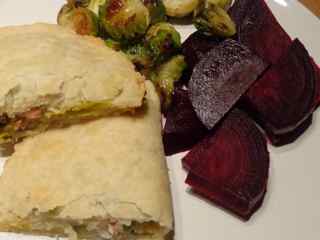
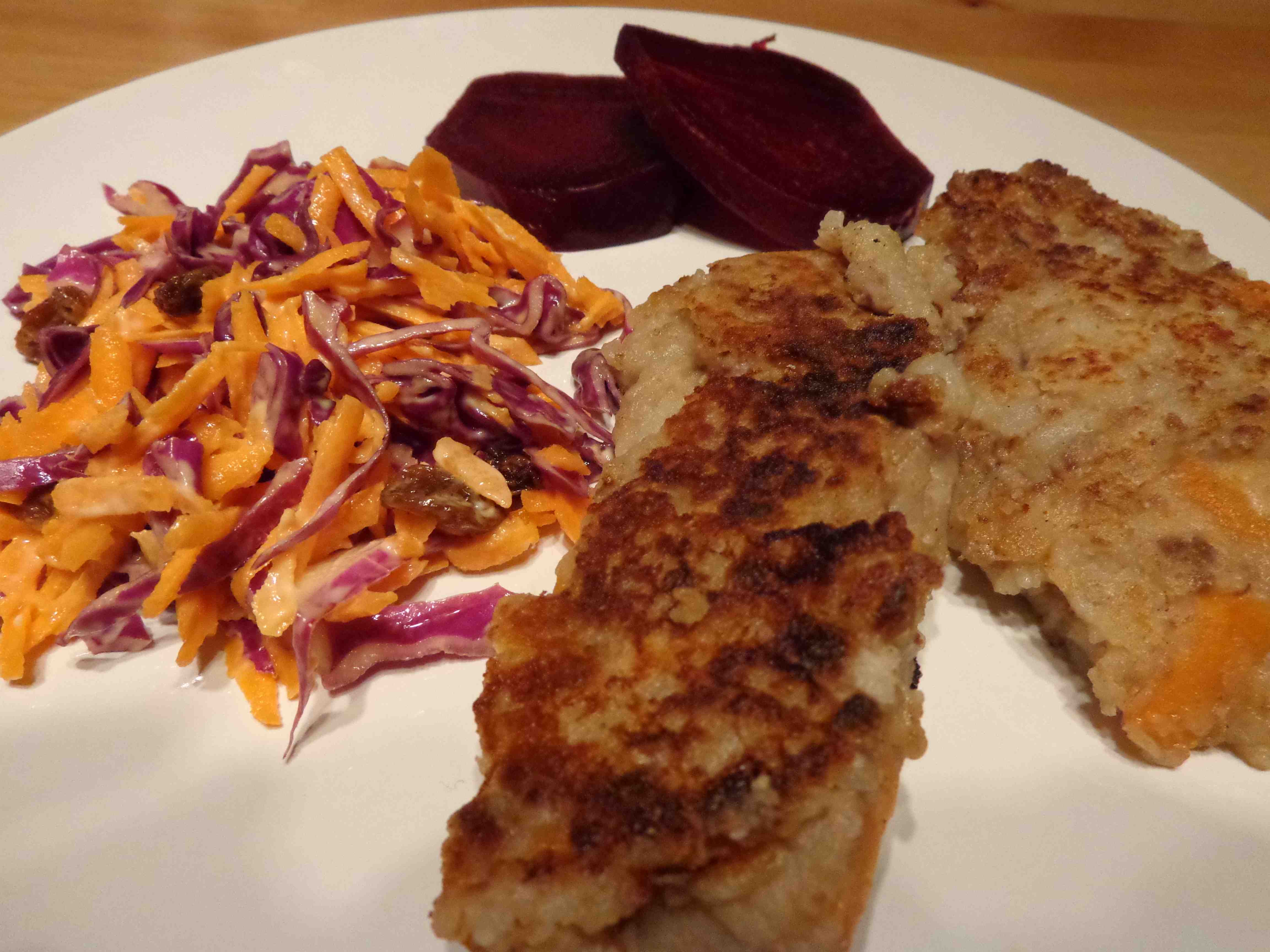
baconDinner tonight  – bacon turnovers with beetroot and roasted brussels sprouts – was delicious and so satisfying I could only manage one course. The pastry was simple – flour, fat and water – and the filling easy – fried bacon, leeks and mashed potato. Roll the pastry into a circle, put the filling in the centre, fold the pastry over, seal the edges, then put in a hot oven for 30 minutes along with the sprouts which were roasted in the left over bacon fat. This would be a great – and incredibly cheap – recipe for leftovers of any kind.

* * *

On to more of Anne’s memories of being a child evacuee during the war.

anne2013Were there many evacuees in Kippen? The ‘under -11s’ from Hyndland School were all there or in other villages around Balfron. I was lucky and made two ‘best friends’ – one a village girl, and the other from Hyndland.

How often did you go back to Glasgow? I don’t remember clearly, but I think not often, especially not at the start or until more raids seemed unlikely. It was more a case of Glasgow family coming to see us than our going there.  John (Anne’s brother)  came during his leaves and he and I explored the countryside around – memories which are precious to me.

How long did the journey take to Glasgow?  Did you travel by bus or train? By bus, which we picked up at St George’s Cross at the east end of Great Western Road. It took a little over two hours as far as I remember, winding through village pick-up stops – like a puppy-dog and lamp-posts. In winter it was a dreary run because of the dark, and the dim blue lights were to dim to read by.

Did you remain in Kippen over the summer? Oh yes, it was an unbroken stay, except for the occasional trip to Glasgow.  Towards the end my Kippen best friend came to Byres Road with me for a week.

Wartime Rations – Day Twenty-Four

Many thanks to my writing friend Mahrie G. Reid for offering her perspective on Wartime Rationing from a Canadian point of view.  Mahrie’s first mystery novel is scheduled for release this spring.  If you would like to check out her website for more information, please click HERE.

* * *

photoThanks to Diana for inviting me to participate in her War Rations experiment. I was born in 1949 and many of the meals my mother served in my early years originated during the war rationing era.

My mother, Mary Grace Ross, was born 101 years ago this month. The changes she saw in the world were astronomical. She lived 90 years and 10 months and had her life changed dramatically by two world wars. During WW ll her five brothers served overseas and Mom, who lived along the east coast, was a plane spotter, trained to identify every plane flying during that time and in particular enemy planes.

Although sugar, tea, butter and meat were rationed, Canadians ate more and better than during the depression and the healthy eating guidelines used during the war are the foundation for the current Canada’s Food Guidelines.

Canadians were encouraged to eat “patriotic” food, and apples and lobster were the first foods labelled as patriotic. Home canning was also encouraged and the process reached an all time high during the war years.

“Magazines such as Canadian Home Journal repeated such messages by publishing articles with titles like “It’s Patriotic and Pleasant to Eat Canadian Lobster” and which included recipes for patriotic dishes like Lobster Cocktail, Lobster à la King, and Lobster Sandwiches.” (Catherine Caldwell Bayley, “It’s Patriotic and Pleasant to Eat Canadian Lobster,” Canadian Home Journal 37/3 (July 1940), 28-29 and Canadian Home Journal 36/8 (December 1939), 1.)

The cheaper ground meat came into its own during the late forties. An episode of the Canadian TV show, Bomb Girls, realistically featured instructions on turning ground meat into a meal as tasty as steak. In Nova Scotia, fish was also a staple. Even after the war, these two items remained on the menu in our household.

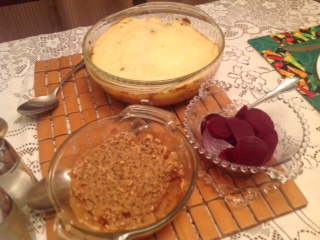
The meals I chose for my War Ration Day were Fish Soup (no milk so not chowder) and a no-crust version of meat pie topped with “icing” made of mashed potatoes. Both include potatoes, carrots and onions as well as a small amount of butter, salt and pepper. I added dried dill from a home garden to the cod-fish soup and served the meat pie with previously home-pickled beets.

photo 1photo 2

An Apple Betty for dessert rounded out both meals. Made with apples and cinnamon topped with oatmeal mixed with one tablespoon of brown sugar and some water, this tasty dish met the December 1939, Department of Agriculture instructions to: “Serve apples daily and you serve your country too.”

photo 4photo 3

* * *

Wartime Rations – Day Twenty-Three

One of my writing friends – Mahrie G. Reid – will be taking over my blog tomorrow to give the Canadian perspective on Wartime Rations.  Mahrie writes mysteries with a touch of romance.  Her first novel, set in Nova Scotia and titled Sheldon Harris Came Home Dead, will be available this spring.  You can follow Mahrie on her blog at: mahriegreid.blogspot.ca

hash

A very simple meal for dinner this evening: soup, corned beef hash and pear crumble. The hash was very simple and tasted better than it probably looks in this picture. Next time I make it I think I might add some onions.  And my husband insists corned beef hash isn’t corned beef hash if you don’t add a splash of hot sauce!

* * *

Continuing with Anne’s memories of being evacuated to Kippen with my mother Mary, I asked her about some of the houses they lived in. I remember my mum telling me that they lived in the attic in one of the homes and she had to haul buckets of cold water up to the top floor to wash my brother’s nappies. What were Anne’s memories?

anne2013We stayed in a total of 4 different houses in Kippen. The first was on the main street, with a woman and her child (maybe her husband was in the Forces). I can’t remember much about the cooking facilities there, but do remember the kettle and one large pot of black iron, both 10-12″ high which were used on trivets on the living-room fire. (As I said before, we had oil lamps and battery-run radio.)

The next house was also on the main road and that was the attic one. One large attic room was already occupied by a lady of Mary’s age, called Mary T, and the two Marys were friendly.  Mary T was an amusing companion and a great mimic, the sort of person who can keep you laughing , so it was sad to learn later that she died of TB when she was 28. Mary and your brother slept in the other large room, and I had a sort of cupboard on the landing with a skylight, and a little camp bed only inches off the floor.

House no. 3 was right on the edge of the village and more than a mile from the centre in an area or sub-village called ‘Cauldhame’, so I had a very long walk to reach the bus-stop to take me to school in Balfron, and in the winter suffered from chilblains. Living there was OK because I’d made a friend of one of the village girls nearby. Her father had worked for the railway company and on retirement had bought a railway coach for their retirement home. That was interesting. But I can’t remember much about the inside of the house – maybe we weren’t there for very long, though its setting just beside a little wood with a stream was very pretty, so games like ‘Sleeping Beauty’, Robin Hood and Babes in the Wood were believable.

The last house was the most modern – a block of 4 flats in pale coloured masonry. We had the upper flat on one side, so there was a big flight of stairs behind the ‘front door’.  The occupier was a Mr T, a big, bluffly cheerful man who was the local gravedigger and presumably acted as a general groundsman when there was no-one to bury. He was kind and always in a good mood. I think Mother had him to stay a few days at Byres Road at least once – to see the Big City. We shared the living room with him, and Mary and I were in a double bed in a bedroom.  It was the most spacious of our billets.

Wartime Rations – Day Twenty-Two

Week Four – I’m in the homestretch.

The disadvantage of words like ‘rations’ or ‘diet’ is the assumption it immediately creates of privation and hunger. Rationing in Britain was introduced to prevent both those circumstances. It was essential to the war effort that the civilian population was well fed so they could work in the factories and take on extra duties (eg. Air Raid Wardens) if Britain was going to win the war. And it was so successful that by the end of the war people were consuming approximately 3,000 calories per day!

But – I have to confess – when I weighed myself this morning, I discovered I’ve lost a total of 7 lbs in the 3 weeks I’ve been eating wartime rations! Seven pound weight-loss eating pudding every night and never feeling hungry!

Another confession.  I wobbled on my rations this afternoon. I was out for lunch and had a ham/lettuce/tomato and cucumber sandwich, even though the last three ingredients weren’t available in wartime Scotland in January. Next Monday – I can’t believe I’m saying this! – I’m looking forward to enjoying a tomato, cucumber, red pepper, celery and broccoli salad.  With a fresh orange to finish!

But for tonight, dinner was genuine January wartime rations: homemade vegetable soup, cheese dumplings with coleslaw and brussels sprouts, and apple crumble.

dinner

* * *

Anne, my mother and brother moved to Kippen from Glasgow to avoid the bombing and this week she’ll be answering my questions on her experiences as an evacuee.

anne2013When were you evacuated and how long did you stay in Kippen? Shortly after Clydebank*, and I was there for about 2 years 6 months. To begin with I was in the village school for a few months until the ‘Qualifying Exam’ (like the later ’11+’); a nice overstretched headmaster  had to cope with all these extra pupils because Glasgow’s Hyndland School was moved ‘en bloc’ (teachers as well) to the village around Balfron, which was the secondary school centre.

What was the village like? Kippen was isolated on a loop road off the main Glasgow-Stirling road, so it was quiet with no passing traffic. It formed a cross with houses along three of the roads, and there was a stone cross at the centre. No side-roads – the fields began behind the little houses. I was surprised when I went back, out of nostalgia, in the early 1990s to see that little had changed – in fact the only change in the centre was that the Post Office had moved from one side of the main street to the other, and that was all except for a sort row of houses which had been built since I’d last seen it in the 40s.

*Clydebank Blitz – March 13/14 1941

Kippen – A village 20 miles north-west of Glasgow. Scotland.

Wartime Rations – Day Twenty-One

Long – long – blog tonight, so let’s get started.

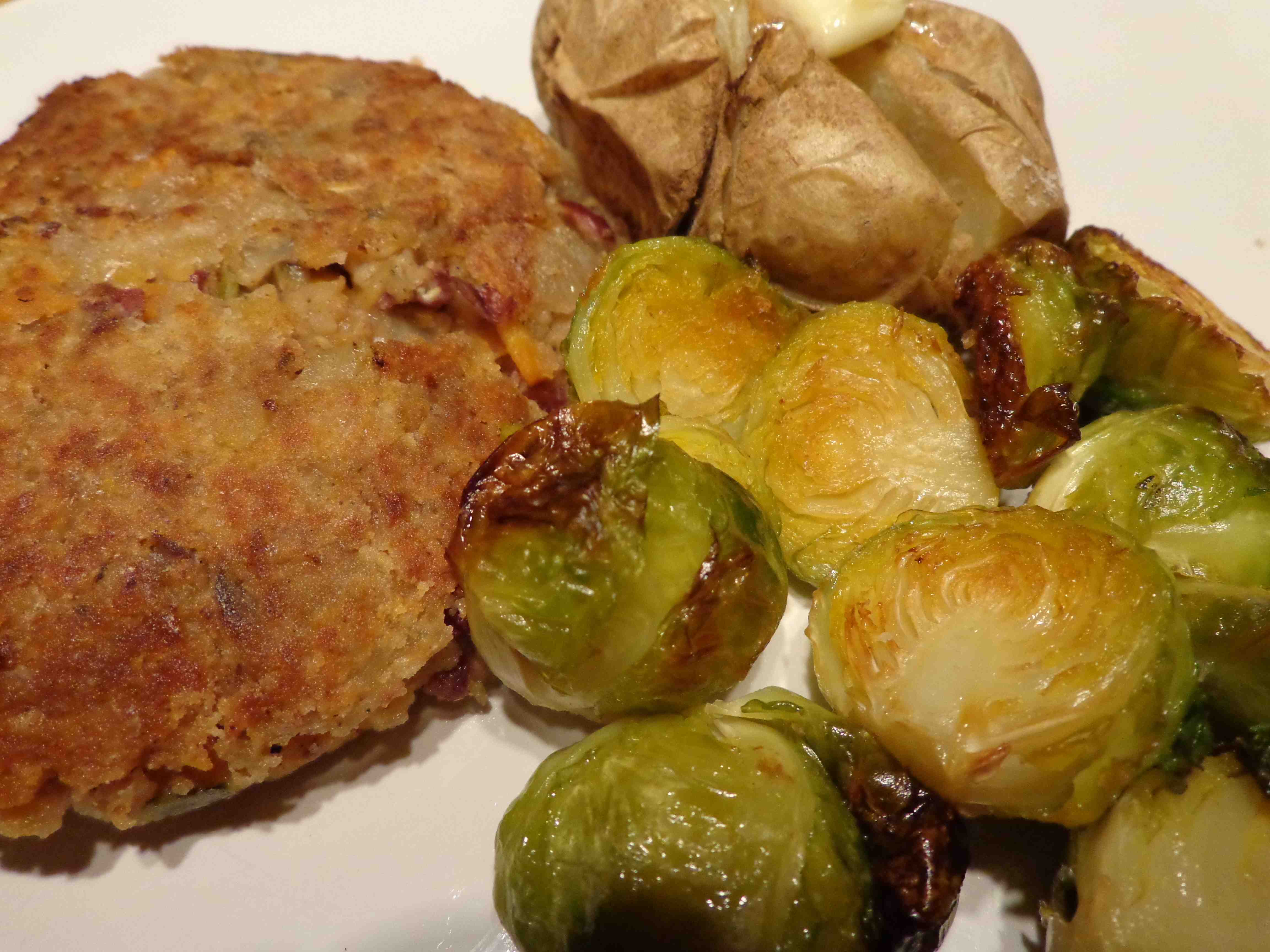
Dinner tonight was leftovers – again!  This time, Haggis burger with roasted brussels sprouts and baked potato. For pudding, baked apple stuffed with honey and raisins.

brusselsshortbread

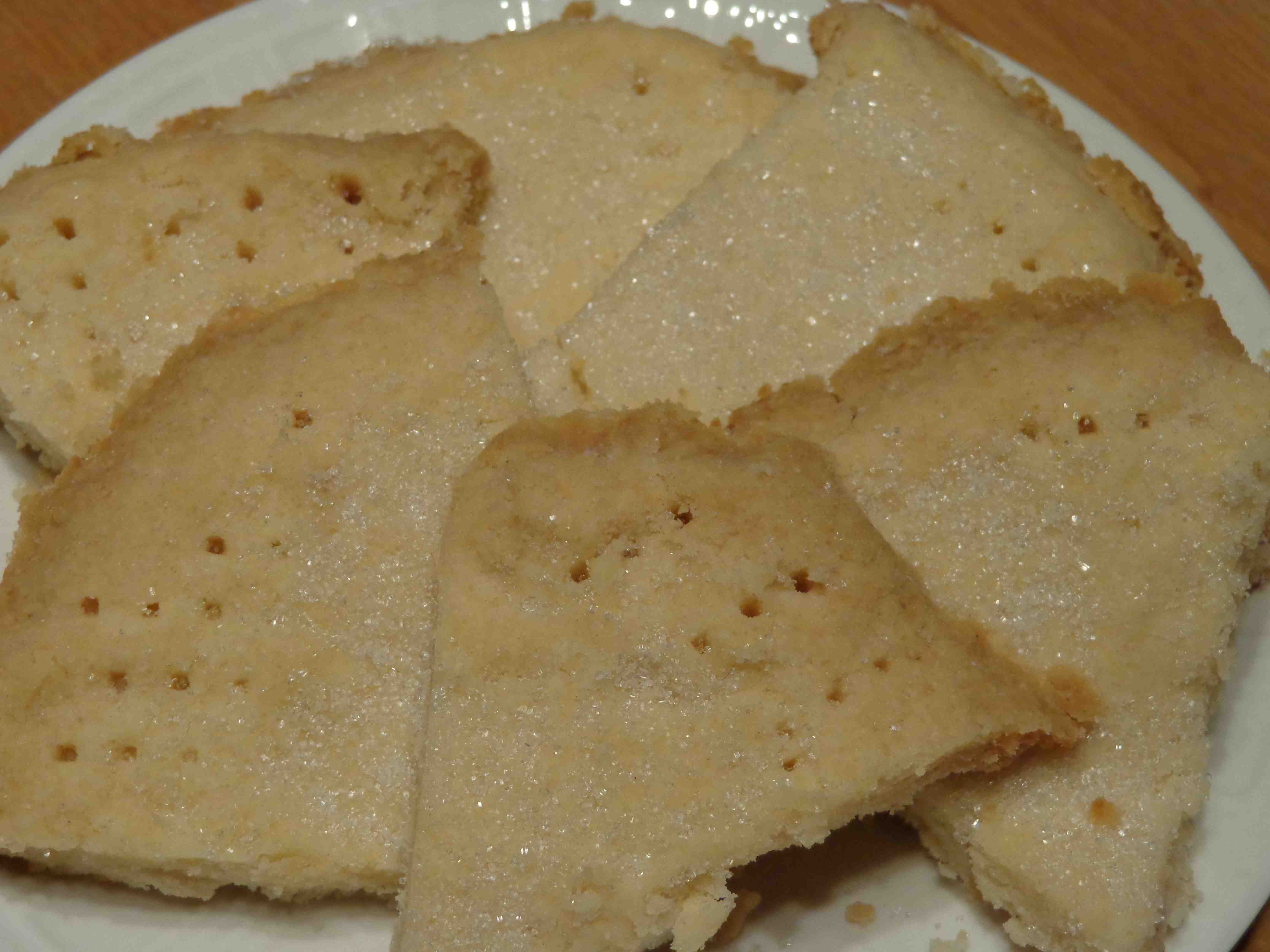
In honour of Burns Night yesterday, I tried to bake some shortbread – my first attempt in about 30 years.  Although they don’t look very pretty – next time I’ll use a pastry cutter! – they tasted good.  At least, the small portion I managed to rescue did. About three seconds after taking this picture, I knocked the plate on the floor. Let’s just say that if dogs can smile, mine had a grin from ear to ear, with shining eyes and a very waggy tail to match!

Although I could laugh it off, in wartime it wouldn’t have been nearly as funny.  Making the shortbread took up 1/10 of our fat allowance for the week. When resources were scarce, that would have been no laughing matter!

* * *

Moving on…

hshopAs promised, here –  for my husband’s colleagues who can’t believe I’m bringing in a grocery shopping for two at around $60 per week –  is my menu, shopping list and bill for this week’s rations. Please remember this isn’t absolutely everything I need for my weekly menu – I already have staples like flour/tea/treacle/sausagemeat etc. on my shelves and in the freezer.

Also, the bill has been adjusted to show the price of my actual rations allowances.  Some things – like bacon – I could only buy in a large packet so I had to remove the bacon allowed for this week and freeze the rest.

Main Course: Haggis Burger, Cheese Dumplings, Sausagemeat Loaf, Steak and Pot Pie, Steak and Pot Pie leftovers, Bacon Turnovers, Corned Beef Hash, Toad-In-The-Hole

Pudding: Breton pears, Padded pudding, Dark Gingerbread, Welsh cakes, Apple crumble, Pear crumble, Bread and Butter Pudding, Baked Apples.

SHOPPING LIST:

Rations (for two):

Bacon – 8ozs 226g:  $3

Meat –  1lb/455g: $3.96 (Stewing steak)

Milk – 12 pints/6.8 litres: $9.99

Cheese – 4ozs – 112g: $2.50

Butter/fats – 1 lb /455g : $3.49

Sugar – 8 ozs/224g: $0.44c (It should be 1lb between the two of us, but I’m still haven’t used up our first week’s sugar ration.)

Eggs – 8 (2 shell and 6 powdered) $1.86

Preserves: 4ozs/112g:  $1.00

Non rationed food:

Sausages: $2.50

Corned Beef: $4.83  (on points when available!)

Bread: $3.29

Potatoes: $3. 98

Carrots:$3.99

Beetroot: $1.72

Leeks: Not available – it’s wartime.

Apples: $3.98

Pears: $5

Strawberry Jam:$1

Red cabbage: $2.29

Onions: $2

TOTAL: (IF my maths is correct!) $60.82Cdn: $54.96US: $63.25 Australian: 33.36GBP

As I said, I do have some staples already on my shelves and veggies left over from last week, and when I figured out the price of my morning porridge, without milk it comes to 14c per portion.

So it is possible to eat a very healthy, filling diet on a budget  But if you’d like to read more about eating well and cheaply, please check out THIS website.  Jack Monroe is a 25 year-old single mother who found herself forced to feed herself and her child on 10GBP a week.  ($18.23Cdn:$16.48US: $18.96Australian)

Wartime Rations – Day Twenty

January 25th. Robert Burns Day.  Even eating wartime rations, there was no way I could let today pass without a nod to Scotland’s famous bard. But haggis?  Was it even available in wartime Scotland?  My grandparents were English and didn’t celebrate Burns Night, so Anne was unable to answer that question for me.

haggisSo I checked out vegetarian haggis recipes online and decided upon this one from The Guardian newspaper.  The recipe included mushrooms (available in the summer), red kidney beans (available on points) and a lemon (very – very – hard to come by and probably only afforded by the rich), so it was a bit of a wartime cheat. It definitely smelled and looked like haggis, but although it tasted great (my husband gave it 8/10) it didn’t taste like any haggis I’ve ever eaten before.

scones

Staying on the Scottish theme, I decided to make some potato scones to go with our mid-morning cup of tea today. I haven’t made these since I was in Miss Lennie’s cookery class back in the day, but straight out the oven with butter melting on them… excellent.  And easy!

My husband’s work colleagues know he’s been eating wartime rations with me, so every morning he goes in to work he has to recount our meal from the previous evening. What they don’t quite believe is how cheap my weekly food shopping has been for the two of us over the past few weeks – around $60Cdn.  ($54.22US, $62.22Australian, 32.85British pounds.)

I’ve worked out next week’s menu and pulled together a shopping list. I’m heading to Safeway tomorrow morning, so will have an itemised bill to show you to prove (hopefully!) that you can eat really well and cheaply.

Wartime Rations – Day Nineteen

No new food photos today as I’m still working on leftovers.  However… I can promise a ‘treat’ tomorrow. January 25th is Burns’ Night, and as I’m a Scottish Canadian, I’ll be attempting a vegetarian haggis recipe that just might have been possible during the war.

(If anyone has any information on what Scots did on Burns’ Night during the war I would love to hear from you. Anne’s parents were English, so it’s not something they ever celebrated.)

Straight on to some of Anne’s other memories. Here are answers to a few random questions I asked.

anne2013Was there enough paper for school jotters? Yes, but the quality of paper became very bad as time went on; rubbing out became quite a problem.  Paper (like everything else!) was in short supply everywhere, newspapers slimmed down sometimes to only two sheets (4 pages, that is) from ten or twelve. The writers and reporters were given the slogan ‘Boil It Down!” to keep their items short. Books too – the paper was really dreadful.

What did you do during the war for presents and birthday cakes? I used to be given half-a-crown to buy five 6-penny presents for my siblings – usually sweets with my unwanted sweet coupons. I’d have to save up pocket money for gifts for Mum (e.g. a pretty ornament) and Dad (a fishing fly or ciggies).

Auntie Bessie (in England) was wonderful: she would occasionally have saved enough ‘points’ and rations to make and send us a fruit cake, and she was a great baker.

Wartime Rations – Day Eighteen

Dinner tonight was two very simple courses.

mince slicesMain course:  Mince slices, from a recipe in We’ll Eat Again, using the last of the mince I cooked the other day. Mix together the mince (or any cooked meat) with mashed potatoes and breadcrumbs, turn onto a floured board, cut into slices and either fry or grill for about 8 minutes. Comfort food on a cold day.

Dessert: Fresh pear.

* *

What was it like being evacuated to a new school and then going back to your ‘old’ one?

anne2013For the first few months I went to the Kippen village school and sat the ‘Qualifying’ exam. It was fun, though the poor headmaster didn’t know what had hit him with all these new pupils that he could hardly accommodate. No wonder he appeared so distracted. Then he got another blow: pupils MUST have PE twice a week. He couldn’t accommodate that either and told us it would have to take place in the playground – weather permitting. As for gym shoes – “Dinna’ bother. Any old bachles will do.” I can still hear his voice.

As you already know, I almost hated Hillhead School and found Balfron with its many teachers from Hyndland much easier going, and I did well there. Back in Glasgow, it was back to Hillhead but this time the Secondary School which was just as bad as the Junior one. Then my parents gave me a choice: two more years at Hillhead or one year at the Glasgow and West of Scotland Commercial College in Pitt Street. Of course I opted for a year at the College – so here you see a woman with no school certificates whatever – not even the Lower Leaving one. (Partly because I’d had to repeat a year in junior school because illness had kept me away for nearly 4 or 5 months.) Still, I got by.