Guess Who?

Randy Bachman (ex Guess Who and Bachman Turner Overdrive) has recently been touring the country talking about his career and performing some of his greatest hits.  Having seen his show in Banff, it struck me that some of his insights apply to us as writers, not just musicians.

1) When inspiration strikes, BE READY!

Randy and his band were in the middle of a performance when one of the strings on his guitar broke.  Apparently it was a fancy guitar, so the rest of the band went off for a drink while he set to restringing. When it was done, he tried a riff to make sure everything was in tune… and realised the riff he’d come up with was something special.  Knowing that if he stopped playing he’d forget it – this was in the days before recording devices on cell phones! – he called the drummer from the wings to keep the rhythm going, then the other guitarist and then finally the lead singer.  “Sing something!” he told him. There and then, on that stage, they came up with both the music and lyrics for their iconic American Woman. (Something similar happened to Paul McCartney with ‘Yesterday’ which he initially called ‘Scrambled Eggs’, and we’ve all heard about J.K. Rowling coming up with the story of Harry Potter on a train.

Moral:  When a great idea strikes you, write it down – or record it in some way – IMMEDIATELY.

2) Sometimes when you’re at your most relaxed and not trying, you come up with your best work.

‘You Ain’t Seen Nothing Yet’ was their ‘work song’ – the song they used to warm up before performing or recording.  Not thinking it had much merit they had no plans of recording it, but when they were persuaded to do so, it became one of their biggest hits.

Moral: Sometimes you don’t always know what’s best. Listen to what others say.  You might not like a particular story you’ve written, but if it strikes a chord with others, you might have captured a piece of magic.

3) Get yourself noticed.

Originally a hit in Europe, RB’s band covered Shakin’ all Over. However, there was a legal issue with the band’s name at the time and the record company decided to put the record out with a white label and the title Guess Who?  This led to speculation that some of the musicians included Paul McCartney and Keith Richards and generated enormous interest.

Moral: As writers, we are responsible not just for writing the best stories we can, but for getting them and ourselves out there and noticed.

There’s a feeling… Part Two

It’s absolutely bucketing with rain here in Calgary today, but when the weather is dry, one of my favourite places to visit – and a ‘must’ if you’re visiting the city in summer – is Heritage Park. When we moved to Calgary I worked as a docent in the Park telling schoolchildren tales of the pioneer days. It was a wonderful way to learn and experience the history of this land. I even had the good fortune to meet the daughter of an early pioneer.  She was in her 80s at the time, and she and her family had moved to Alberta in the early part of the century from Chicago.  Her father had gone on ahead to build a house for the family who followed on several weeks later.  When they arrived, she recalled her mother just sat in the wagon for hours and sobbed.  They’d left a house with beautiful furniture and stained glass windows to live in a ‘soddie’, similar to the one in the photo below. Those early pioneers certainly had grit.

SoddieThere is so much to do and see here that you really need to spend the whole day in the park.  And there is something for everyone; original houses filled with history and stories, train and steam boats rides, an old fashioned fairground and lots of shops selling everything from little nick-nacks to gingerbread men and old fashioned candies.

Sweet shop

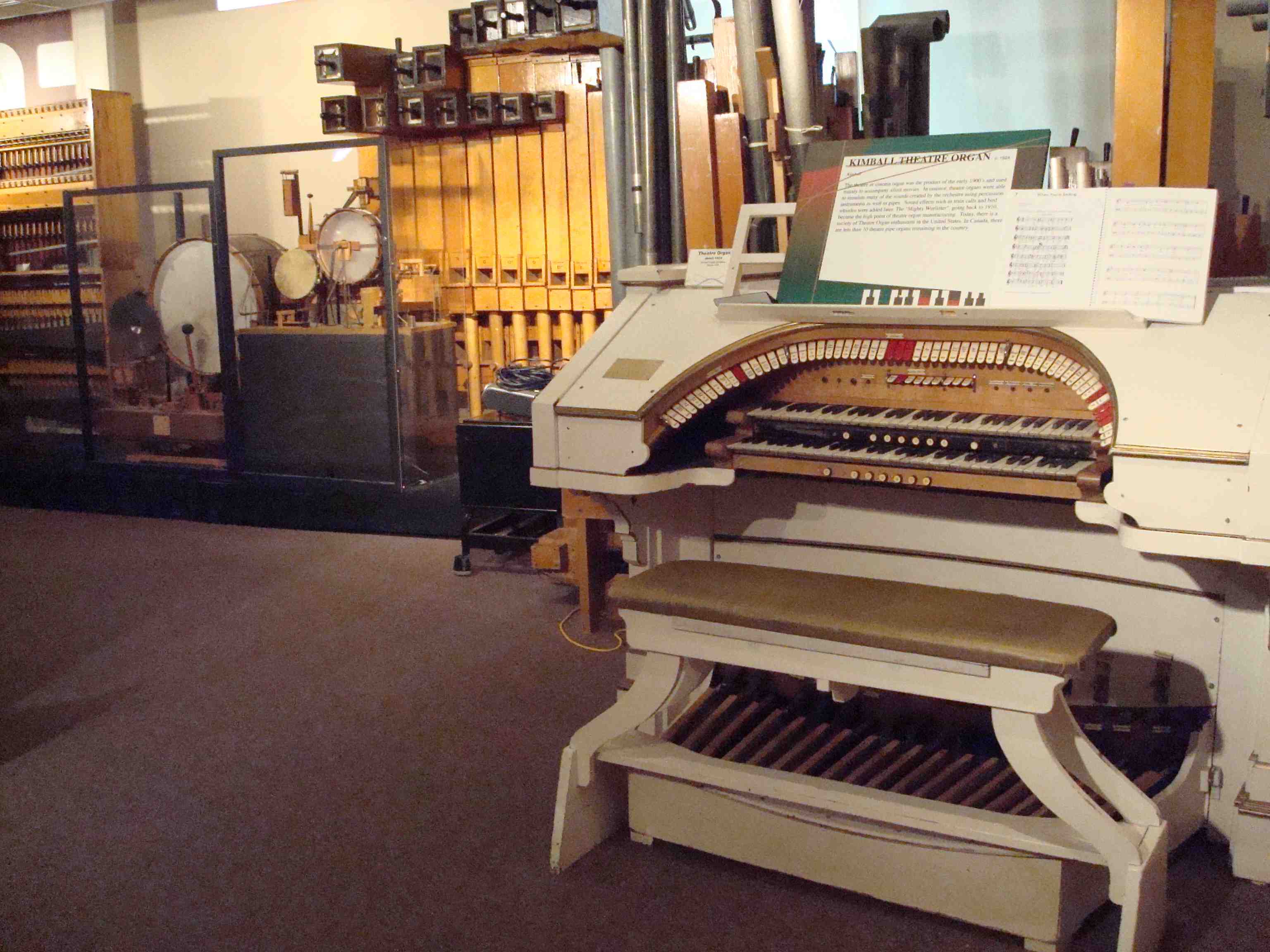
Another absolute city gem – which most Calgarians aren’t even aware of – is the Cantos Music Foundation. Situated in a red brick downtown office building, it holds a treasure house of keyboard instruments, some dating back almost 400 years.

Cinema organ

The picture above is only part of an old 1920s cinema organ. In the early days of silent films, the organist wasn’t just responsible for providing the musical accompaniment, but also for creating the necessary sound effects, and that’s what you can see lining the wall behind the organ. Absolutely fascinating.

Keyboard

The museum offers everything from harpsichords to the latest electronic keyboards. Sitting amongst all these beauties is the simple white upright piano on which Elton John wrote ‘Your Song’. On his last tour through Calgary he made a special visit to the museum to play on it once more.

As I said, an absolute treasure house for anyone interested in music.

There’s a feeling in the air…

The tradition within the North West Mounted Police on their March West across Canada in 1874 was that the Inspector establishing a fort was given the honour of naming it after himself. Therefore, when Inspector Brisbois arrived at the confluence of the Bow and Elbow rivers, he did just that. Unfortunately for him, Colonel James Macleod (his superior officer) suggested the name be changed to Calgary, after Calgary Bay, a place he’d visited on the Isle of Mull in Scotland. But maybe it was just as well. The Brisbois Stampede doesn’t have quite the same ring to it as the Calgary Stampede, does it? CalgaryBay CalgaryHouseWhen we first moved to Calgary, the skyline was sparse with the tallest building being the Calgary Tower. Now the tower is dwarfed by a forest of skyscrapers, and one of my favourite things to do is go to the bluff in Crescent Heights and watch the sun set on the city. The combination of city lights, setting sun and image of the mountains in the distance is magical. CalgarySkylineBack in the day, one of the local TV channels ran a great advertising spot which – to me – reflected the energy of this young city.  It looks a bit dated and hokey now, but the video still makes me smile.  Oh… and just recently, Calgary was voted the cleanest city in the world! Not bad for a city only 138 years old.

From the sublime…

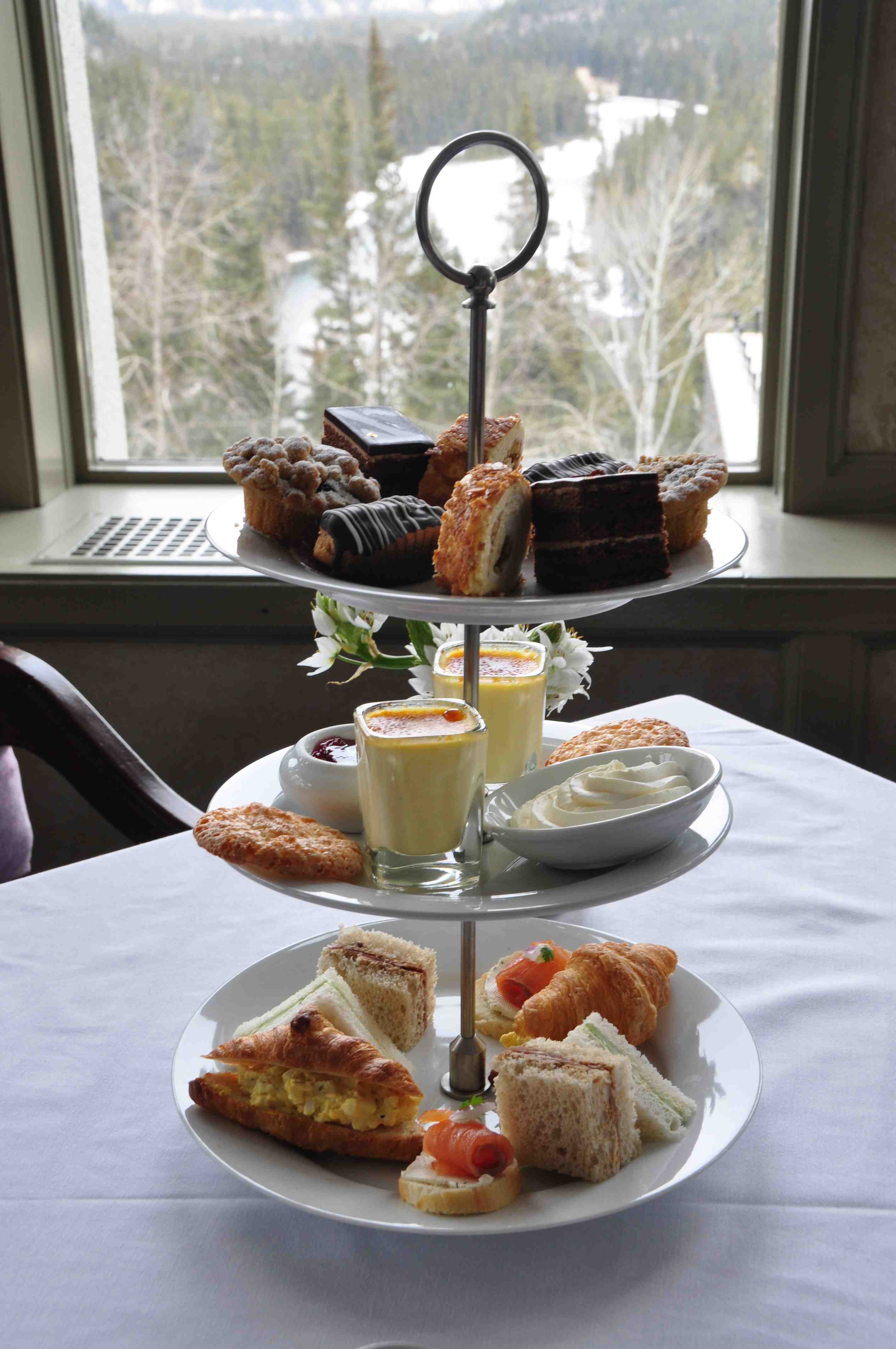
There’s nothing like going from eating Wartime Rations to a slap up afternoon tea at the Banff Springs Hotel.Afternoon tea

Growing up in Scotland, our family frequently took summer holidays in Banff in the north east of the country, so it sort of fits that I now find myself living with another Banff in my backyard.

Any visit to Southern Alberta isn’t complete without a trip to this mountain town.  One and a half hour’s drive from Calgary – if you stick to the speed limit – it’s the perfect place to visit no matter what the season.

Banff HOtel

The image of the Banff Springs Hotel (and yes, there is also one in Scotland, but not nearly so impressive) is world famous.  If your budget doesn’t stretch to staying here for a night or two, try and take in the afternoon tea. ($41 per person) enjoyed in the Rundle Lounge where the view stretches down a river valley surrounded on all sides by mountains.

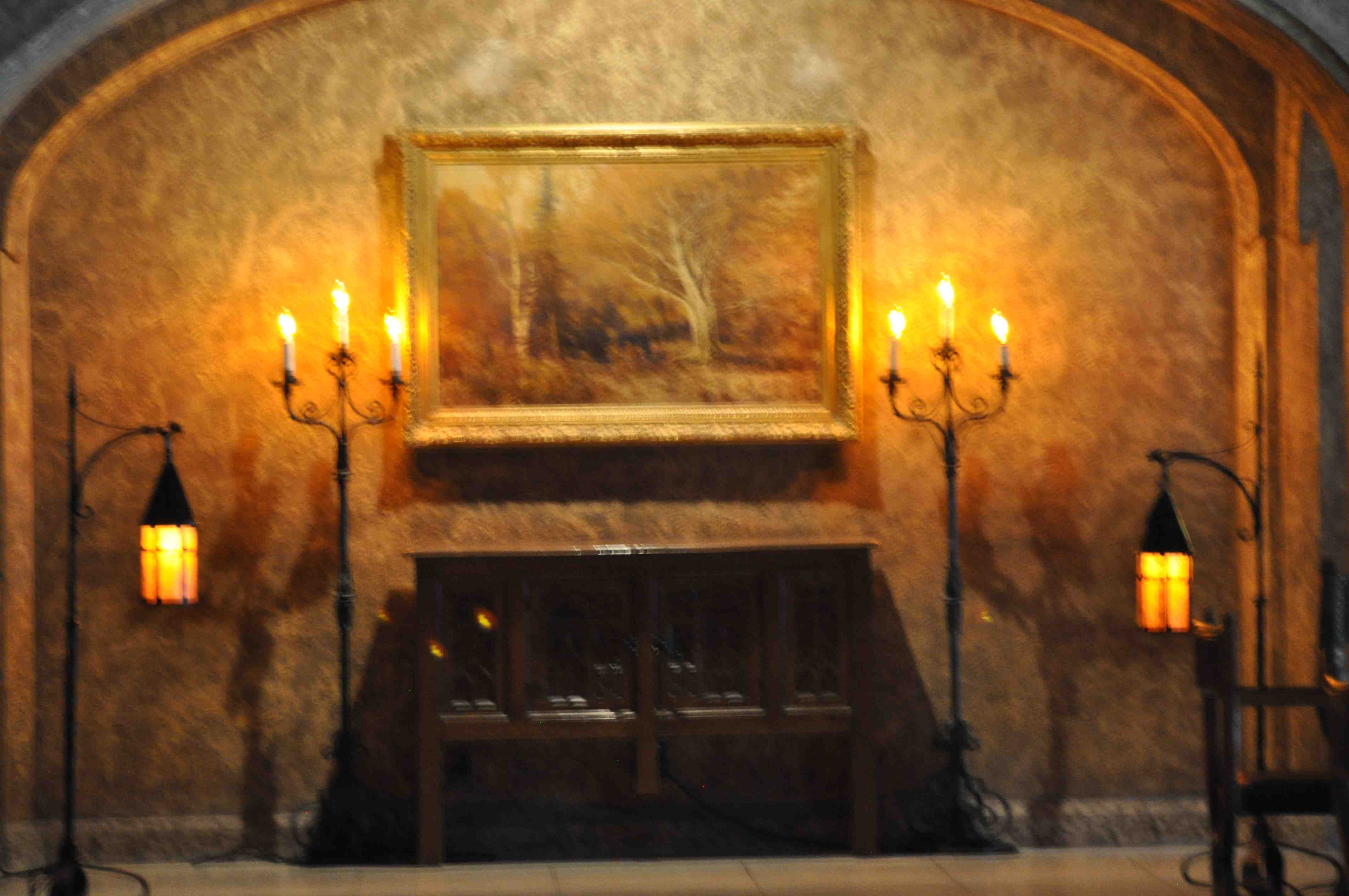
Owned by the CPR, the original hotel was built in 1888 with the replacement (current) structure commencing in 1911. When its president Cornelius Van Horne came out to check on its construction, he discovered that the builders were building it back to front with the kitchens overlooking the million dollar view.  Well, he soon sorted that out.  In commemoration he painted a picture which currently hangs in the Spanish Gallery.  If you look closely in the bottom left hand side you’ll notice he signed it… back to front.

Van Horne picSo much for my plans to return to blogging about writing.  Well, I did say I’d be writing about travel in this blog too, so maybe I’ll just stick to my neighbourhood for the rest of the week and tell you about some of my favourite places in and around my current home city of Calgary.

Wartime Rations – Day Fourteen

Apologies for not putting up the final post in this two week experiment yesterday. My hay fever exploded last week and I started taking an OTC ‘non-drowsy’ anti-histamine. Well, neither the anti-histamine nor the non-drowsy seemed to work as I’ve spent the last few days wandering around like zombie, barely knowing what day it is, with my eyes streaming.  I stopped the pills on Friday, and now, although my eyes are still streaming, I’m at least finally awake!

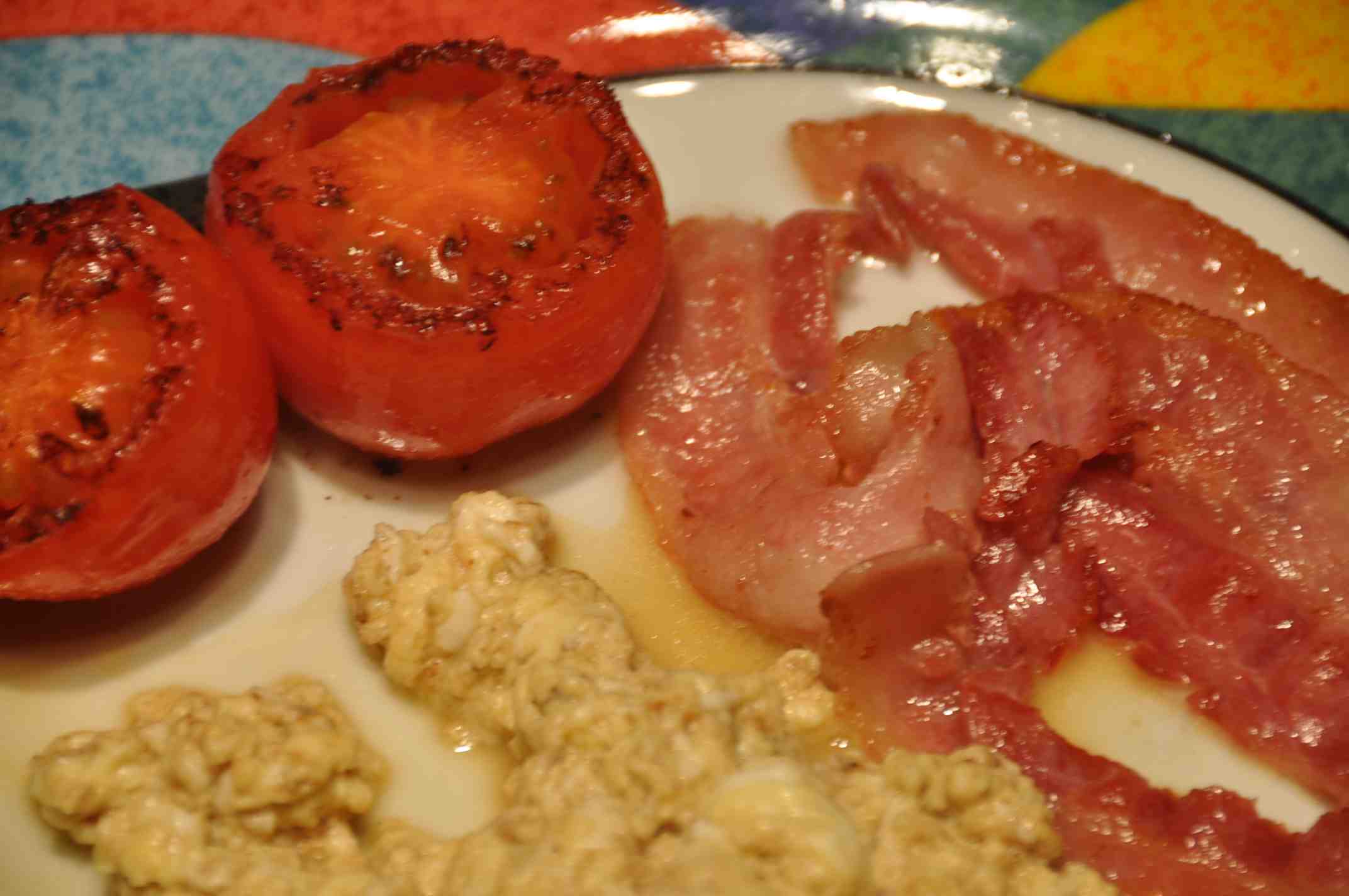
With Sunday being my last day of rationing, I treated myself to a proper bacon and eggs breakfast. After such a hearty start to the day, some soup, a sandwich and fresh fruit was all I needed to satisfy me for the rest of the day.

Baconandeggs

So what have I learned from my two weeks of rationing?

1) The food was healthy, but very – very – time time consuming.  With lack of cold storage, no modern microwaves, endless queues at the individual shops and rations not always being available, it must have been extremely hard for the working married – or single – woman to find the time to cook a nutritious meal at the end of the day.  Factories and the workplace often supplied a hot meal through their canteens, so I’m sure the temptation must have been to eat lunch as the main meal and then come home to a sandwich or slice of toast.

2) Although I was born well after rationing ended in the UK, many of the meals these past two weeks have been very familiar from my childhood.  Which makes sense.  My mother was married in 1938 so out of the first 16 years of her married life, 14 of them were spent under full or partial rationing. These were the foods – and recipes – she would have used.

3) I don’t remember ever seeing Mum throw food out (nor paper nor empty jam jars) and I’m sure that was as a result of the war.  I have a friend whose mother was the same age as my own. Although my friend grew up in Canada, her British mother kept a closet packed with tinned food – just in case. Both of us found our mothers’ actions a little – eccentric – but they are a clear reminder to the writers out there that a character’s current behaviour and attitudes are influenced by his or her past experiences.

Another example: My mother-in-law was a real tea jenny. The teapot sat on the stove from the moment she woke up till the moment she went to bed.  If it got cold, she simply added water and boiled it up again. Once more, I’m sure that was a throw-back to the shortages during the war.

So am I going to continue with the rations? In a scaled down form, yes.  There are some recipes – carrot and apple jam for example – that I would like to try, and I’ll write about them in weekend blogs, but for the next little while, I think I’m going to go back to writing about writing.

 Some last thoughts from Anne about life after VE and VJ Day.

As the US troops withdrew and went home, they left behind plentiful supplies of tinned food, so that was the first time I tasted sweet corn. Then we were introduced to Spam, but that Spam tasted really good and was a real treat – can it be that it was a better quality for their forces, compared with its lowly place on food favourites now? But there were all sorts of veg and fruits (first time for lychee, too, for me), and tins of stews and even butter. I can’t clearly remember which tins were subject to the Points system.  All the tins were covered in khaki paint with the name stencilled in black.

Some friends of mine lived in Ealing then, and Alan discovered that many tins which had illegible or non-existant description found their way, very cheaply, to city street markets. Some of the cheapest were the very large tins, about 10″ high and 8″ diameter – remember there were no fridges – so too large for most people. My friends had four young children at the time so Alan used to get a couple or so of these anonymous large tins every week. He knew that the contents of most of them would be eaten quite quickly at home; those that were not to their taste… well… that’s when he took up winemaking, and in a big way. Anyway, we were glad the US had abandoned such bounty – and wished it could have lasted longer.

Wartime Rations – Day Thirteen

With enough bacon saved for tomorrow’s breakfast, we finished up our meat ration tonight with lamb chops. I’d also saved enough cheese to make scalloped potatoes, so it was all very rich and delicious.

Lamb chops

Pudding was a special request repeat of the bread pudding from last week.  Once again I used the recipe from The 1940s Experiment Website. Both pudding and website are fabulous, so please check them out.

Bread pudding 2

Given that my two week experiment eating wartime rations is coming to an end, here are some of Anne’s thoughts about VE Day and the wind down of the war in Britain.

From Anne:

Well, there we were on VE Day: church bells rang, hooters hooted, and loudspeakers belted out the song of the day – ‘I’m going to get lit up when the lights go up in London – I’m going to get so lit up, I’ll be visible for miles’ and the cheering and dancing went on for hours.

But there was still the Far East and the Yellow Peril to be dealt with, so after the parties it was back to work, and back to wartime food AND rationing. The Atlantic was as far as possible cleared of German subs and minefields so we could have started importing more, but by now the country was so impoverished that we couldn’t do much more than continue importing the same wartime amounts of staples – tea, sugar, etc.

The islolationists in USA had kept them out of hostilities until Pearl Harbour, though we’d had the benefit (huh!) of Lend-Lease without which I have to admit, we probably would have been starved of food and armaments. The shock of the bill for the L-L supplies came shortly after the end of the European fighting, so poor Mr Atlee, with all his plans for tremendous social changes, had to drop many of them. Did you know we didn’t finish paying off that gargantuan debt till about 2004? However, he managed to give us the Health Service.

Wartime Rations – Day Twelve

Had the usual – porridge – for breakfast, with soup and the last of the meat pie for lunch.

Dinner was macaroni – again – but now that I’m getting the hang of how to tease out the rations, I added fried bacon and onions to the sauce. A real guilty pleasure.

Macaroni2

Anne’s memories today are in response to two questions I posed yesterday about storing and reheating food (thank heavens for fridges and microwaves) and also treats at the cinema.

Over to Anne:

As far as I remember, it was a case of Bring your Own treats (at the cinema).  I think the ‘ice cream girls’ who paraded the aisles during the intervals had probably disappeared to the Services or factories.  For myself, it was something from Colquhoun’s (the bakery beneath the flat in Byres Road) with cash I’d swapped my sweet coupons for! or perhaps an apple  or a scrubbed carrot.  From Colquhoun’s it would depend on the state of my purse – most likely a sausage roll or (the best treat for me) a mutton pie   You don’t seem to be suffering from feeling hungry, but I did – but then I was a growing girl!

Without a fridge, especially in the summer, it was difficult to keep meat fresh – cooked or uncooked.  All I had as a young wife was a ‘meat safe’ which was just a ‘box’ of wire to keep flies off.  I kept it in the coolest room, in the shade, and where it might catch any draught going.  I had been well warned by Mother that I should not re-heat cooked meat after it had cooled unless it was a stew or something that I could bring back to the boil again – I’d run a strong risk of its containing bacteria.  

Wartime Rations – Day Eleven

If I was a sensible wartime housewife, I’d have made mince and potatoes for dinner last night and then put the leftovers into a pie to provide a bit of variety for tonight’s meal. As it is, I’ve just had some leftover pie –  having already had some for lunch, AND with plenty more remaining for tomorrow – so I’m afraid it’s a rather repetitive photo today.

Meat pie2

It does go to show, however, that with little cold storage back then (except for larders in the winter) housewives must have had to plan ahead so as not to waste food.  Or could they plan ahead if they had to shop daily and food wasn’t always available on that day?  Hmmm.

We’re off to the movies tonight. Normally I’d have some popcorn, but I’m so full from these wartime meals that it’s unlikely I’ll eat anything more before breakfast.  But it did get me thinking; Did they sell treats at the cinema during the war?  (Could they, if sweets were rationed?)  Will need to ask Anne about that.

The other thing I haven’t eaten during this experiment is fish. I’d been saving this entry of Anne’s until then, but just in case I don’t get around to eating any before Sunday, here it is.

From Anne:

Fresh fish was not rationed, but supplies were limited – it was not safe for boats to go beyond a narrow strip of coastal water, and long queues formed outside a shop that displayed any.

Fishmongers then also sold chickens, and Mother would beg the bits that got cut off when they were being prepared for sale – necks, intestines, claws etc. The claws she would wash, then scald to clean them and loosen the scales; I can remember the job of scraping the scales off.  Then they were ready to go into the more or less permanent stock pot along with any other edible scraps; there was always soup to make from Dad’s veg.

Wartime Rations – Day Ten

Tonight’s meal had the potential to be a disaster.

“We’re having minced beef pie, for dinner,” says I.

‘Hope it’s not like the pie my mother made,” my husband replies.  “I detested – detested – it.”

(To be honest, I never much liked my mum’s mince pie either.)

Strike one.

“I’d like to have something other than potatoes tonight,” says I. (I’m a bit sick of them.) “Is cauliflower with parsley sauce okay?”  What he hears is the second sentence, not the first, so when I served up a meal with no potatoes he produced a bit of a pouty lip.

Fortunately, the beef pie was goooood.

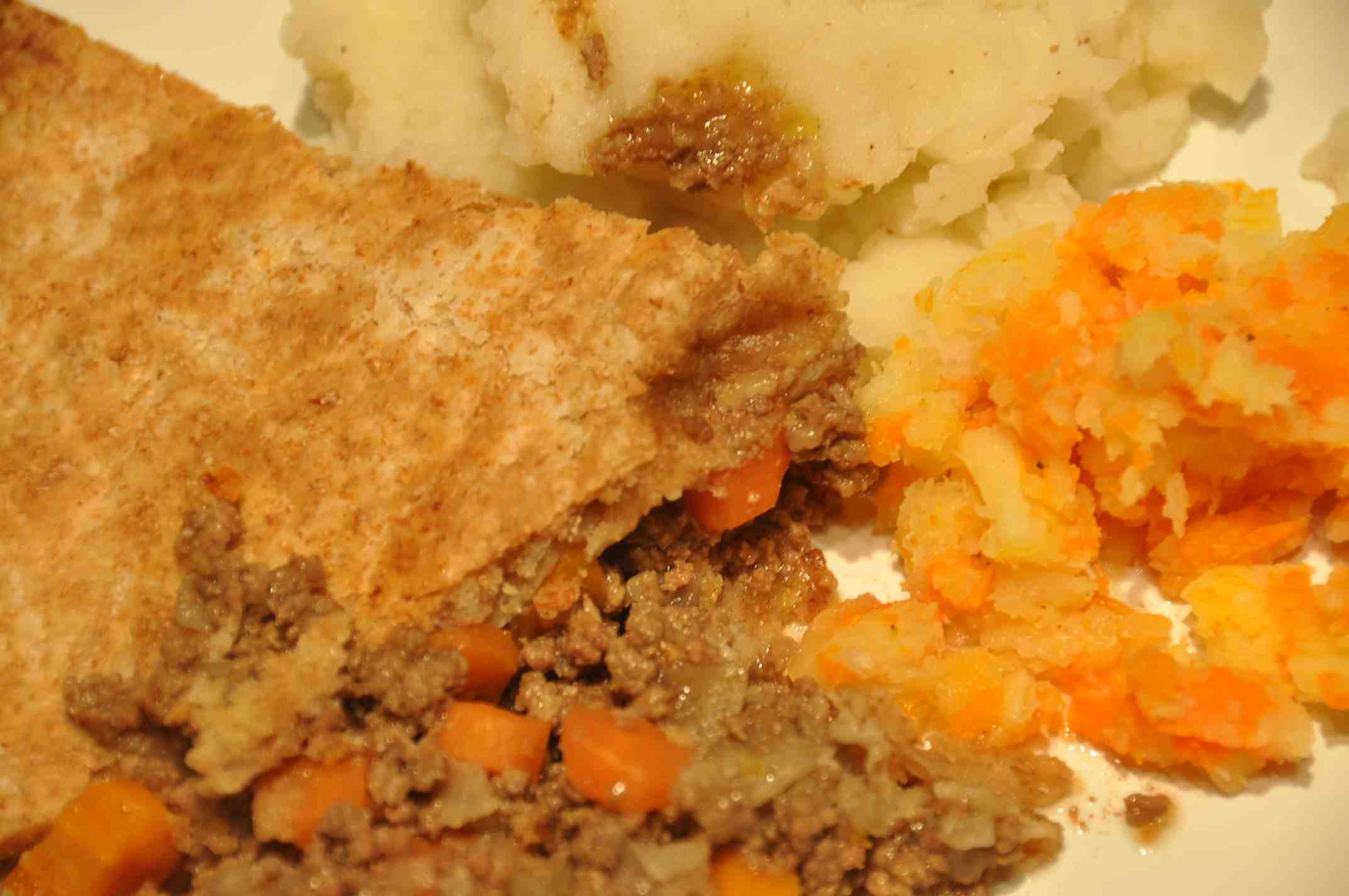
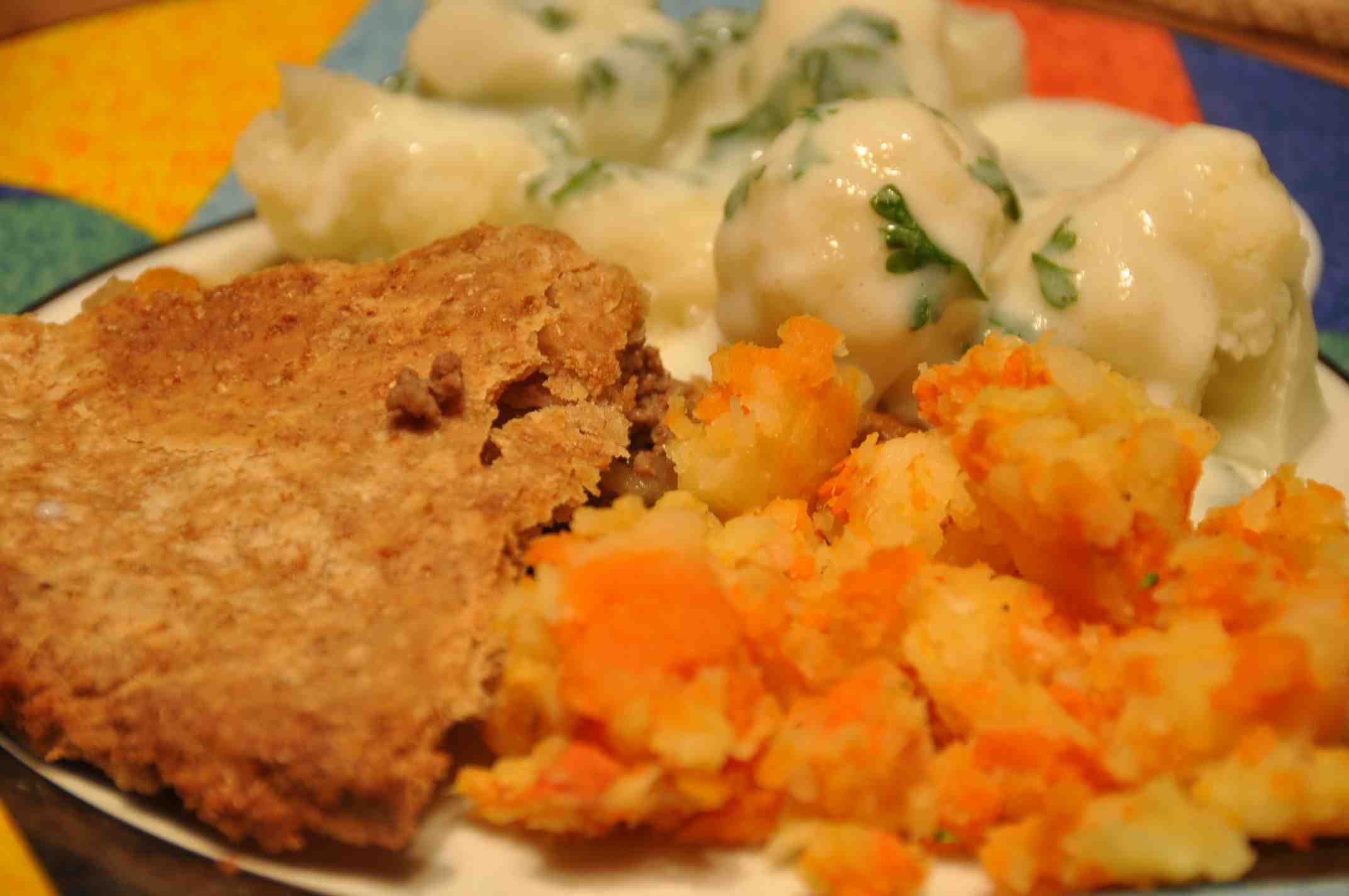
Mince Pie

For pudding I really wanted rice pudding, but according to Anne (see below) that wasn’t available.  I’ve been trying everywhere to get semolina instead, but couldn’t find what I needed. So, I don’t know if it was a cheat or not, but we had tapioca with a splodge of strawberry jam.   We also nibbled on a few fresh strawberries afterwards. At this time of year they are so sweet and juicy.

Tapioca

I can’t tell you how much I’m enjoying having pudding every evening.  In ‘real life’ I rarely ever make them and was a bit anxious when I stood on the scales this morning.  Turns out I’ve lost 3 lbs since starting this eating regime. I can honestly – honestly – say I’ve never felt hungry once.

A few thoughts on pudding and fruit from Anne.

RICE pudding?  No, no.  You can only have semolina (unless you stocked up before September 39).  The best make of semolina was from the Marshall factories and was called Farola, but I don’t know when it came on to the shelves; a check on Wikipedia says Marshalls introduced their short-cut macaroni in 1935, but doesn’t give a date for the introduction of Farola.

Strawberries, yes – but I don’t know if they reached the whole of the UK.  In Kippen there was a huge fruit growers and I earned a lot of pocket money there.  Lots of children helped with that harvest and most went for the big fruits like strawberries because they were allowed to eat some while they picked!  I, on the other hand went for small ones – black and red currants, or jaggy ones – gooseberries, because the pay for those was six times that of strawberries.  Unlike you, I love gooseberries so did eat when I got to the big juicy dessert ones – red or yellow.   I suppose  you got these products in shops local to such nurseries – or as far as the petrol allocation let you take them.  

Wartime Rations – Day Nine

Another winner! My son didn’t have time to go home for dinner tonight between work and going to his night class, so I invited him over to share our rations. “It’ll be okay,” I assured him, but I’m not sure he was convinced.  Fortunately the three course dinner was a hit.

Pea soupWe started with vegetable soup made with dried peas instead of my usual lentils, followed by sausages, baked potato with butter, carrot/parsnip mash and raw broccoli. (My husband won’t eat green vegetables if they’ve been cooked.)

Bangers and mash

Sausages weren’t rationed during the war, but their meat content was very low with most of the filler being bread.

bread pudding

For pudding I decided on Bread Pudding and it was delicious.  I got the recipe from The 1940s  Experiment.com website.  If you haven’t checked it out yet, please do. There is so much fascinating content to be found there.

I haven’t been at all hungry on my rations.  In fact, I forgot to eat lunch today because I was still full from a late-ish breakfast of porridge and toast. But I can’t pretend I’m really experiencing what it must have been like during the war. Even though a food might be on the ration – eg eggs – if there weren’t any to be had, you did without. Sometimes the shortage lasted one week, often more. In that case it was make do and mend, and in that case, as Anne comments below, mothers usually denied themselves for their families.

From Anne:

Mothers, I am sure, became thinner before anyone else, though children and expectant mums got extra milk, vitamins and some rather horrid concentrated orange juice; sometimes there were eggs for ‘blue books only’. (Blue covers denoted children’s ration books.)

Soap and washing powders were rationed too. That wasn’t a problem to us in Glasgow. With its wonderfully soft water the ration was more than enough; in fact Mother used to send unused soap coupons to her family in the hard water areas of the Midlands who were finding the allocation too small.