Wartime Rations

Back in May last year, I spent a fortnight eating World War Two British rations. It was a great experience and I’ve decided to repeat it for four weeks this January. My initial instinct was to start on January 1st, but we have so many leftovers from Xmas/New Year it would go against the wartime spirit of eliminating waste – it was illegal to waste food –  so I’m going to start on Monday, January 6th and will finish on Sunday February 2nd.

My husband has agreed to join in – at least for the first week. (When he discovers that the main vegetable available in the winter months was cabbage, he might change his mind.) Until then, I’m going to spend the next few days explaining the ‘rules’ and how I plan to structure my posts.

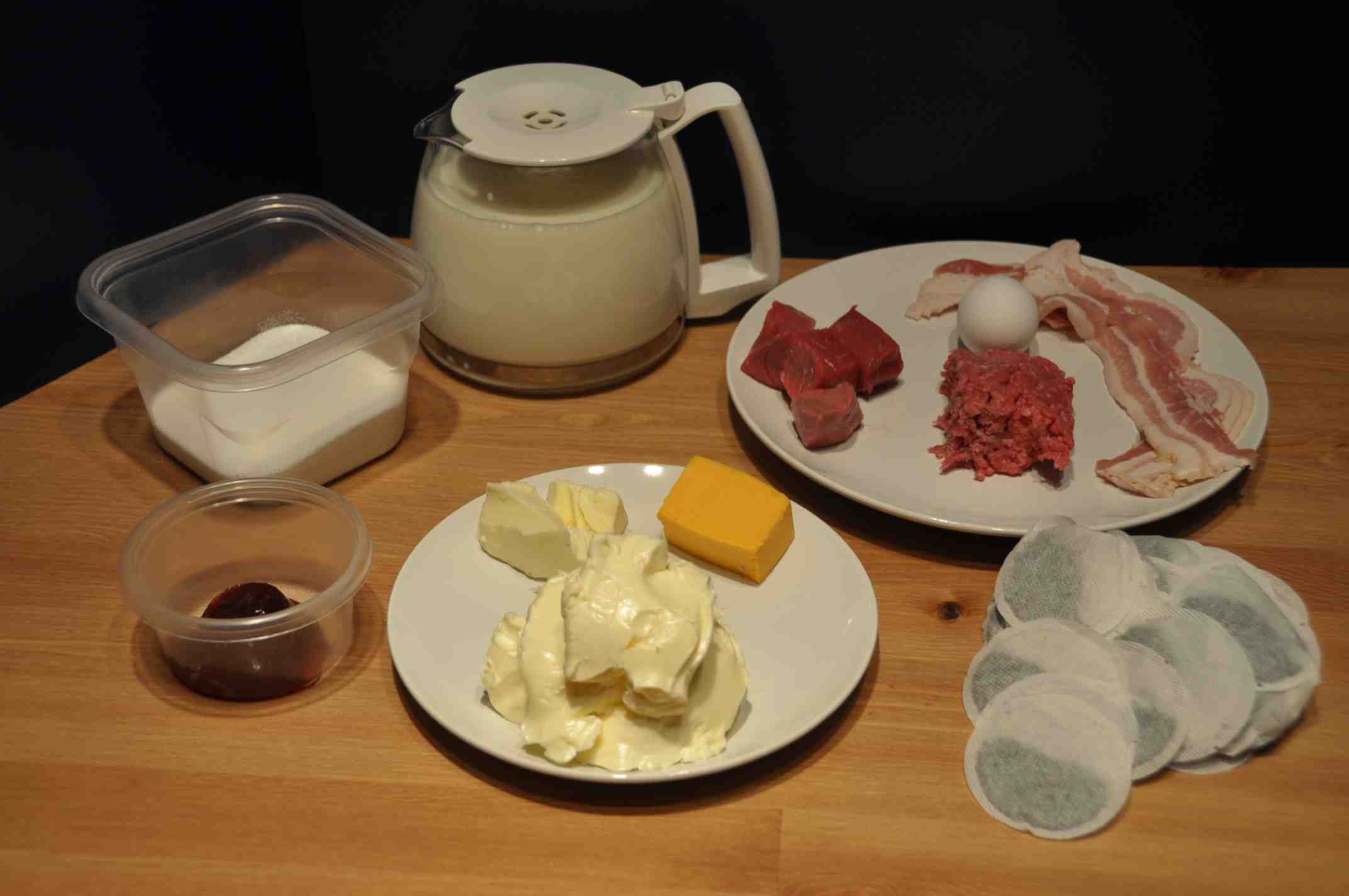
Rations varied throughout the war – and didn’t end until 1954! – but I’m going to adopt the same rations as last time. The foods that were rationed were mostly dairy, meat, sugar and tea.  Un-rationed foods included vegetables, bread, fish and offal (when the latter was available). There was also a ‘points’ system with each person getting 16 points a month. In general 16 points could buy you – for example – 1 can of fish or 2 lbs of dried fruit or 8 lbs of pulses.  Certain foods  – eg bananas – were not available until long after the war ended.

ratiions

Rationed food per person per week: (Just because it was rationed didn’t mean it was always available!)

Bacon – 4 oz

Meat – 8oz

Fat:  10 oz.   2 oz butter, 4 oz margarine and 4 oz of lard, but I’m going to use all butter.

Cheese  – 2oz

Milk – 3 pints

Sugar – 8oz

Jam – 2oz

Tea – 2oz (I read somewhere it was 15 teabags, but I measured out 23!!)

Eggs: 1 shell, 3 powdered.

Wartime Rations – Day Fourteen

Apologies for not putting up the final post in this two week experiment yesterday. My hay fever exploded last week and I started taking an OTC ‘non-drowsy’ anti-histamine. Well, neither the anti-histamine nor the non-drowsy seemed to work as I’ve spent the last few days wandering around like zombie, barely knowing what day it is, with my eyes streaming.  I stopped the pills on Friday, and now, although my eyes are still streaming, I’m at least finally awake!

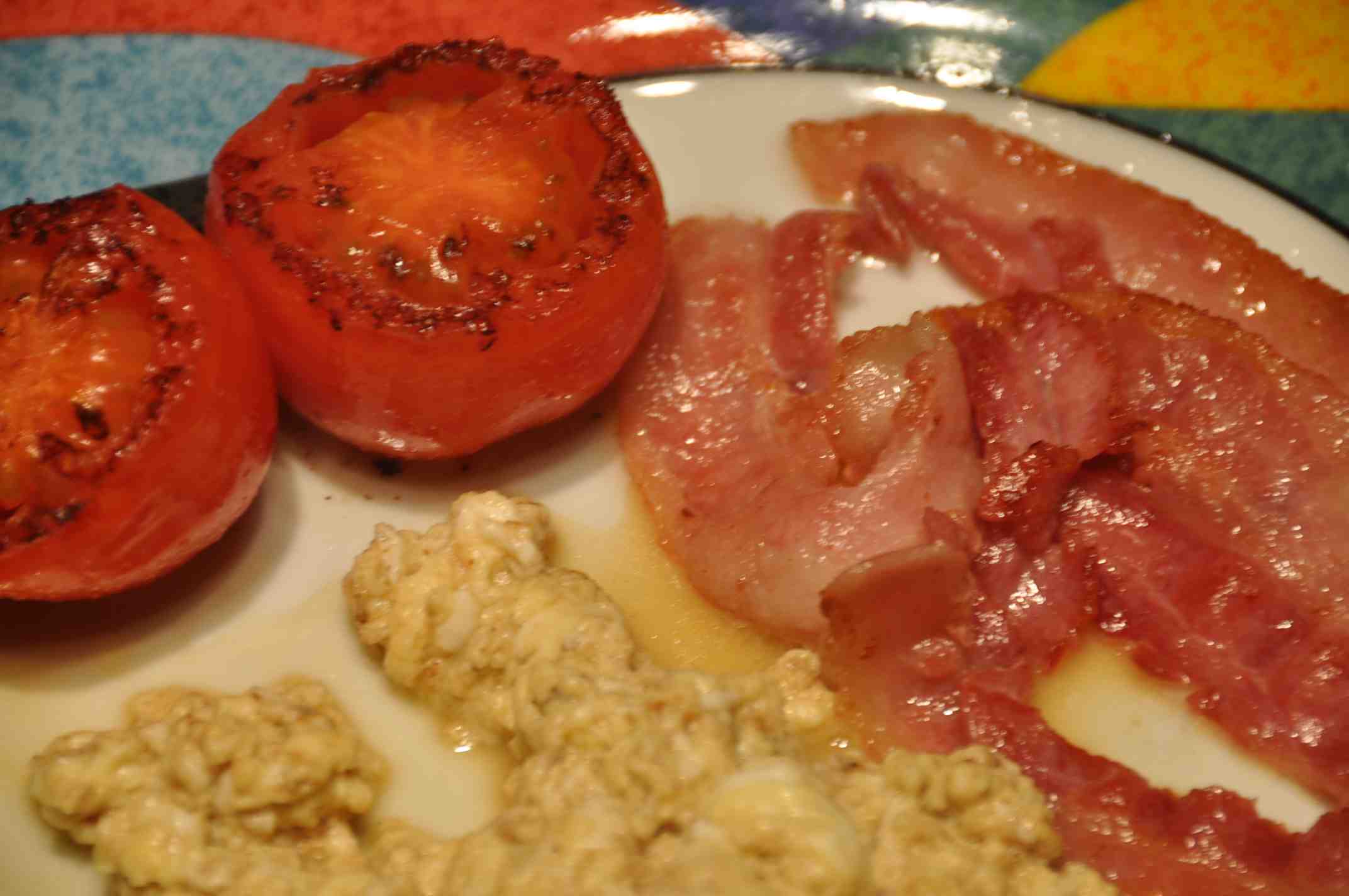
With Sunday being my last day of rationing, I treated myself to a proper bacon and eggs breakfast. After such a hearty start to the day, some soup, a sandwich and fresh fruit was all I needed to satisfy me for the rest of the day.

Baconandeggs

So what have I learned from my two weeks of rationing?

1) The food was healthy, but very – very – time time consuming.  With lack of cold storage, no modern microwaves, endless queues at the individual shops and rations not always being available, it must have been extremely hard for the working married – or single – woman to find the time to cook a nutritious meal at the end of the day.  Factories and the workplace often supplied a hot meal through their canteens, so I’m sure the temptation must have been to eat lunch as the main meal and then come home to a sandwich or slice of toast.

2) Although I was born well after rationing ended in the UK, many of the meals these past two weeks have been very familiar from my childhood.  Which makes sense.  My mother was married in 1938 so out of the first 16 years of her married life, 14 of them were spent under full or partial rationing. These were the foods – and recipes – she would have used.

3) I don’t remember ever seeing Mum throw food out (nor paper nor empty jam jars) and I’m sure that was as a result of the war.  I have a friend whose mother was the same age as my own. Although my friend grew up in Canada, her British mother kept a closet packed with tinned food – just in case. Both of us found our mothers’ actions a little – eccentric – but they are a clear reminder to the writers out there that a character’s current behaviour and attitudes are influenced by his or her past experiences.

Another example: My mother-in-law was a real tea jenny. The teapot sat on the stove from the moment she woke up till the moment she went to bed.  If it got cold, she simply added water and boiled it up again. Once more, I’m sure that was a throw-back to the shortages during the war.

So am I going to continue with the rations? In a scaled down form, yes.  There are some recipes – carrot and apple jam for example – that I would like to try, and I’ll write about them in weekend blogs, but for the next little while, I think I’m going to go back to writing about writing.

 Some last thoughts from Anne about life after VE and VJ Day.

As the US troops withdrew and went home, they left behind plentiful supplies of tinned food, so that was the first time I tasted sweet corn. Then we were introduced to Spam, but that Spam tasted really good and was a real treat – can it be that it was a better quality for their forces, compared with its lowly place on food favourites now? But there were all sorts of veg and fruits (first time for lychee, too, for me), and tins of stews and even butter. I can’t clearly remember which tins were subject to the Points system.  All the tins were covered in khaki paint with the name stencilled in black.

Some friends of mine lived in Ealing then, and Alan discovered that many tins which had illegible or non-existant description found their way, very cheaply, to city street markets. Some of the cheapest were the very large tins, about 10″ high and 8″ diameter – remember there were no fridges – so too large for most people. My friends had four young children at the time so Alan used to get a couple or so of these anonymous large tins every week. He knew that the contents of most of them would be eaten quite quickly at home; those that were not to their taste… well… that’s when he took up winemaking, and in a big way. Anyway, we were glad the US had abandoned such bounty – and wished it could have lasted longer.
Wartime Rations – Day Thirteen

With enough bacon saved for tomorrow’s breakfast, we finished up our meat ration tonight with lamb chops. I’d also saved enough cheese to make scalloped potatoes, so it was all very rich and delicious.

Lamb chops

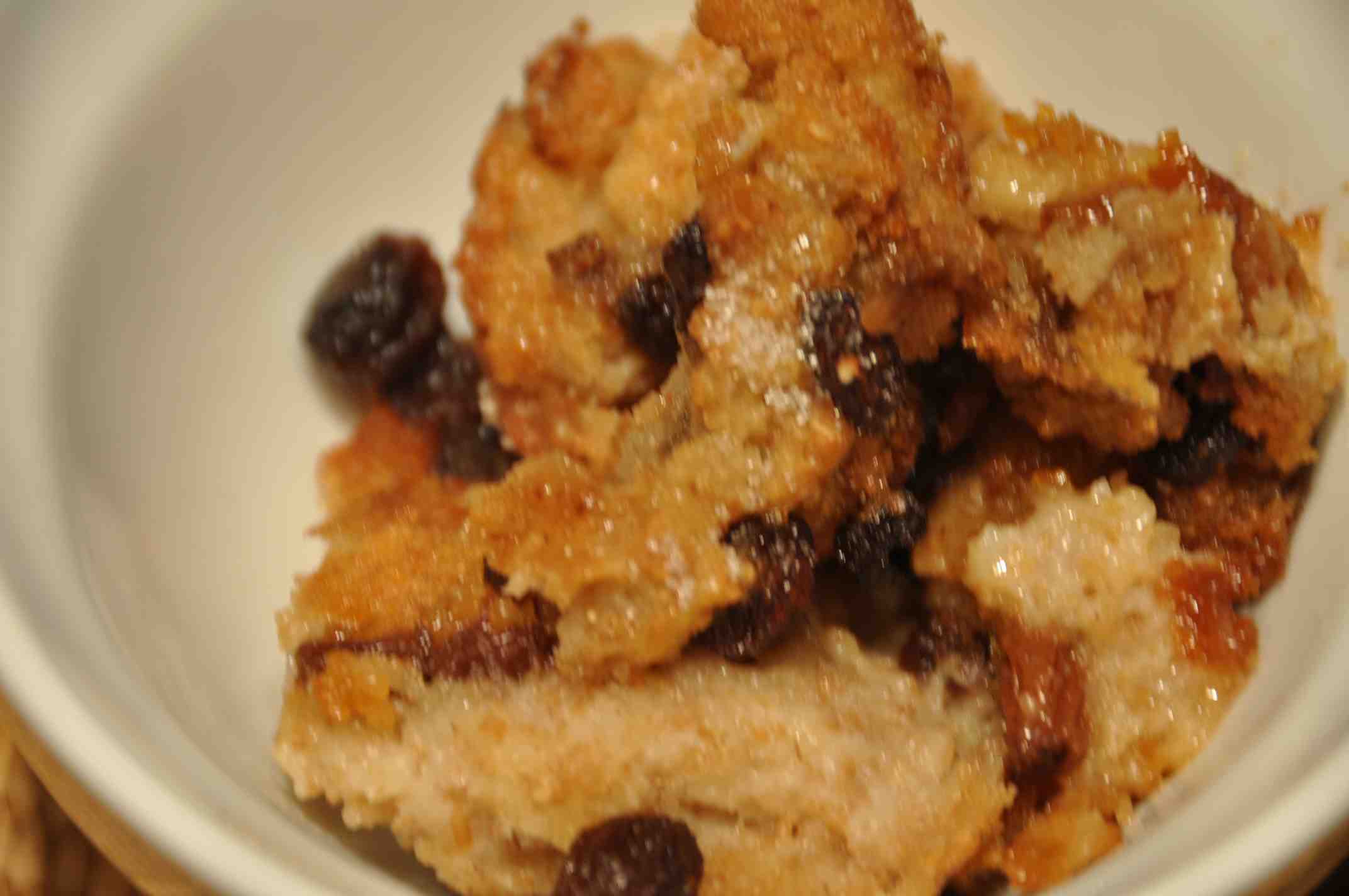
Pudding was a special request repeat of the bread pudding from last week.  Once again I used the recipe from The 1940s Experiment Website. Both pudding and website are fabulous, so please check them out.

Bread pudding 2

Given that my two week experiment eating wartime rations is coming to an end, here are some of Anne’s thoughts about VE Day and the wind down of the war in Britain.

From Anne:

Well, there we were on VE Day: church bells rang, hooters hooted, and loudspeakers belted out the song of the day – ‘I’m going to get lit up when the lights go up in London – I’m going to get so lit up, I’ll be visible for miles’ and the cheering and dancing went on for hours.

But there was still the Far East and the Yellow Peril to be dealt with, so after the parties it was back to work, and back to wartime food AND rationing. The Atlantic was as far as possible cleared of German subs and minefields so we could have started importing more, but by now the country was so impoverished that we couldn’t do much more than continue importing the same wartime amounts of staples – tea, sugar, etc.

The islolationists in USA had kept them out of hostilities until Pearl Harbour, though we’d had the benefit (huh!) of Lend-Lease without which I have to admit, we probably would have been starved of food and armaments. The shock of the bill for the L-L supplies came shortly after the end of the European fighting, so poor Mr Atlee, with all his plans for tremendous social changes, had to drop many of them. Did you know we didn’t finish paying off that gargantuan debt till about 2004? However, he managed to give us the Health Service.

Wartime Rations – Day Twelve

Had the usual – porridge – for breakfast, with soup and the last of the meat pie for lunch.

Dinner was macaroni – again – but now that I’m getting the hang of how to tease out the rations, I added fried bacon and onions to the sauce. A real guilty pleasure.

Macaroni2

Anne’s memories today are in response to two questions I posed yesterday about storing and reheating food (thank heavens for fridges and microwaves) and also treats at the cinema.

Over to Anne:

As far as I remember, it was a case of Bring your Own treats (at the cinema).  I think the ‘ice cream girls’ who paraded the aisles during the intervals had probably disappeared to the Services or factories.  For myself, it was something from Colquhoun’s (the bakery beneath the flat in Byres Road) with cash I’d swapped my sweet coupons for! or perhaps an apple  or a scrubbed carrot.  From Colquhoun’s it would depend on the state of my purse – most likely a sausage roll or (the best treat for me) a mutton pie   You don’t seem to be suffering from feeling hungry, but I did – but then I was a growing girl!

Without a fridge, especially in the summer, it was difficult to keep meat fresh – cooked or uncooked.  All I had as a young wife was a ‘meat safe’ which was just a ‘box’ of wire to keep flies off.  I kept it in the coolest room, in the shade, and where it might catch any draught going.  I had been well warned by Mother that I should not re-heat cooked meat after it had cooled unless it was a stew or something that I could bring back to the boil again – I’d run a strong risk of its containing bacteria.  

Wartime Rations – Day Eleven

If I was a sensible wartime housewife, I’d have made mince and potatoes for dinner last night and then put the leftovers into a pie to provide a bit of variety for tonight’s meal. As it is, I’ve just had some leftover pie –  having already had some for lunch, AND with plenty more remaining for tomorrow – so I’m afraid it’s a rather repetitive photo today.

Meat pie2

It does go to show, however, that with little cold storage back then (except for larders in the winter) housewives must have had to plan ahead so as not to waste food.  Or could they plan ahead if they had to shop daily and food wasn’t always available on that day?  Hmmm.

We’re off to the movies tonight. Normally I’d have some popcorn, but I’m so full from these wartime meals that it’s unlikely I’ll eat anything more before breakfast.  But it did get me thinking; Did they sell treats at the cinema during the war?  (Could they, if sweets were rationed?)  Will need to ask Anne about that.

The other thing I haven’t eaten during this experiment is fish. I’d been saving this entry of Anne’s until then, but just in case I don’t get around to eating any before Sunday, here it is.

From Anne:

Fresh fish was not rationed, but supplies were limited – it was not safe for boats to go beyond a narrow strip of coastal water, and long queues formed outside a shop that displayed any.

Fishmongers then also sold chickens, and Mother would beg the bits that got cut off when they were being prepared for sale – necks, intestines, claws etc. The claws she would wash, then scald to clean them and loosen the scales; I can remember the job of scraping the scales off.  Then they were ready to go into the more or less permanent stock pot along with any other edible scraps; there was always soup to make from Dad’s veg.

Wartime Rations – Day Ten

Tonight’s meal had the potential to be a disaster.

“We’re having minced beef pie, for dinner,” says I.

‘Hope it’s not like the pie my mother made,” my husband replies.  “I detested – detested – it.”

(To be honest, I never much liked my mum’s mince pie either.)

Strike one.

“I’d like to have something other than potatoes tonight,” says I. (I’m a bit sick of them.) “Is cauliflower with parsley sauce okay?”  What he hears is the second sentence, not the first, so when I served up a meal with no potatoes he produced a bit of a pouty lip.

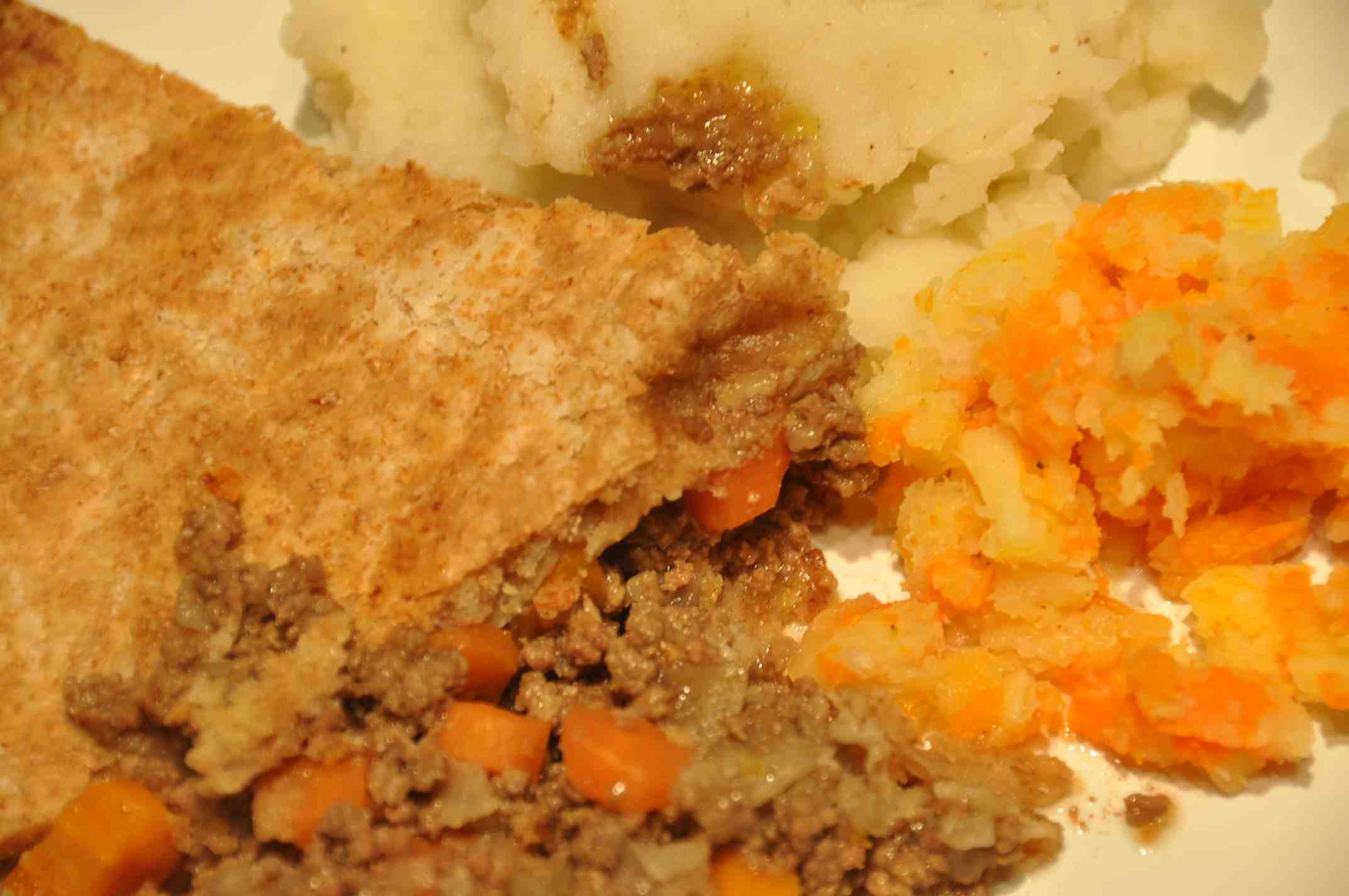
Fortunately, the beef pie was goooood.

Mince Pie

For pudding I really wanted rice pudding, but according to Anne (see below) that wasn’t available.  I’ve been trying everywhere to get semolina instead, but couldn’t find what I needed. So, I don’t know if it was a cheat or not, but we had tapioca with a splodge of strawberry jam.   We also nibbled on a few fresh strawberries afterwards. At this time of year they are so sweet and juicy.

Tapioca

I can’t tell you how much I’m enjoying having pudding every evening.  In ‘real life’ I rarely ever make them and was a bit anxious when I stood on the scales this morning.  Turns out I’ve lost 3 lbs since starting this eating regime. I can honestly – honestly – say I’ve never felt hungry once.

A few thoughts on pudding and fruit from Anne.

RICE pudding?  No, no.  You can only have semolina (unless you stocked up before September 39).  The best make of semolina was from the Marshall factories and was called Farola, but I don’t know when it came on to the shelves; a check on Wikipedia says Marshalls introduced their short-cut macaroni in 1935, but doesn’t give a date for the introduction of Farola.

Strawberries, yes – but I don’t know if they reached the whole of the UK.  In Kippen there was a huge fruit growers and I earned a lot of pocket money there.  Lots of children helped with that harvest and most went for the big fruits like strawberries because they were allowed to eat some while they picked!  I, on the other hand went for small ones – black and red currants, or jaggy ones – gooseberries, because the pay for those was six times that of strawberries.  Unlike you, I love gooseberries so did eat when I got to the big juicy dessert ones – red or yellow.   I suppose  you got these products in shops local to such nurseries – or as far as the petrol allocation let you take them.  

Wartime Rations – Day Nine

Another winner! My son didn’t have time to go home for dinner tonight between work and going to his night class, so I invited him over to share our rations. “It’ll be okay,” I assured him, but I’m not sure he was convinced.  Fortunately the three course dinner was a hit.

Pea soupWe started with vegetable soup made with dried peas instead of my usual lentils, followed by sausages, baked potato with butter, carrot/parsnip mash and raw broccoli. (My husband won’t eat green vegetables if they’ve been cooked.)

Bangers and mash

Sausages weren’t rationed during the war, but their meat content was very low with most of the filler being bread.

bread pudding

For pudding I decided on Bread Pudding and it was delicious.  I got the recipe from The 1940s  Experiment.com website.  If you haven’t checked it out yet, please do. There is so much fascinating content to be found there.

I haven’t been at all hungry on my rations.  In fact, I forgot to eat lunch today because I was still full from a late-ish breakfast of porridge and toast. But I can’t pretend I’m really experiencing what it must have been like during the war. Even though a food might be on the ration – eg eggs – if there weren’t any to be had, you did without. Sometimes the shortage lasted one week, often more. In that case it was make do and mend, and in that case, as Anne comments below, mothers usually denied themselves for their families.

From Anne:

Mothers, I am sure, became thinner before anyone else, though children and expectant mums got extra milk, vitamins and some rather horrid concentrated orange juice; sometimes there were eggs for ‘blue books only’. (Blue covers denoted children’s ration books.)

Soap and washing powders were rationed too. That wasn’t a problem to us in Glasgow. With its wonderfully soft water the ration was more than enough; in fact Mother used to send unused soap coupons to her family in the hard water areas of the Midlands who were finding the allocation too small.

Wartime Rations – Day Seven

Here in Canada it’s Mother’s Day.  My daughter and her husband invited us round for a glorious brunch, and there was no way I was going to insist, ‘I can only eat wartime rations’. Still, I might have felt a bit guilty about it had I not come across the following book. It appears that not quite everyone during the war was ‘In it together‘.  At least, not if you had money. So today I’m ‘pretending’ I had breakfast at the Savoy.

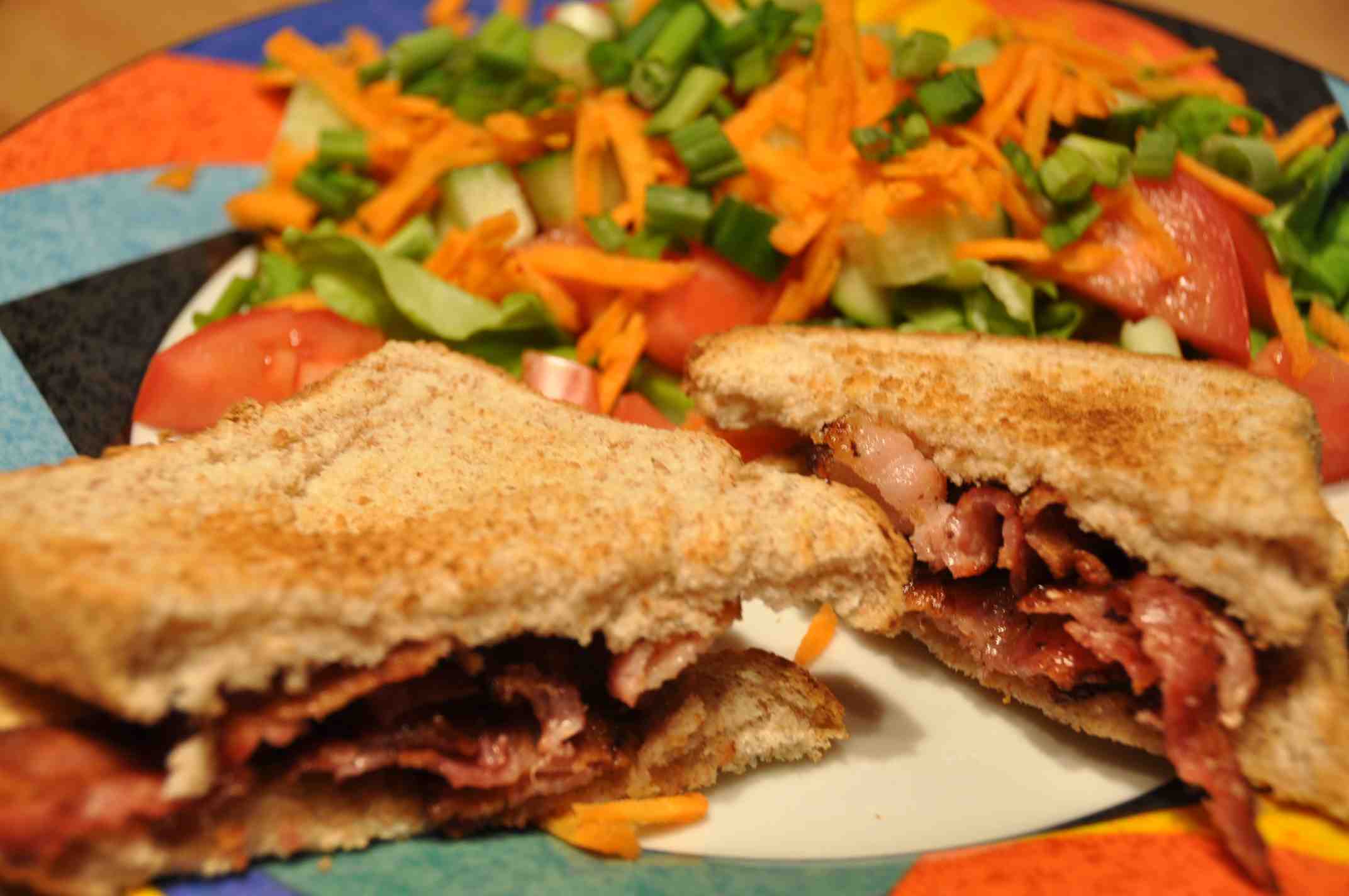
For dinner tonight… bliss.  A bacon sandwich, salad and stewed rhubarb.

Bacon Sandwich

The perfect end to the perfect day.

My original plan was to eat wartime rations for only one week, but I’ve decided to go for two as I feel I’m only just getting into the swing of things.  And I’ve persuaded my husband to join in – sort of.  He’ll be eating lunch out while he’s at work – just as people ate out during the war without it affecting their rations.  But if I can add his rations to mine then maybe I’ll have a little more flexibility in my food planning this week.

Besides, Anne still has some great memories to relate.

In the light of having a ‘luxury’ day, here’s one about the time her big brother brought home such a treat.  Known to the family as Alex, his professional name was Percy Huggins.  If there are any golf aficionados out there, they might recognise him as The Voice of Scottish Golf from the 50s through the 70s.

Alec & Anne  crop

After Alex had done many, many more than the stipulated number of bombing flights he was transferred to the Azores on anti-submarine patrol.  Here there were bananas, and when he came home on leave (after VE Day), managed to bring us a few – Mother made sure their skins were put right on top of the rubbish bins so that when the lid was lifted the dustmen could wonder at them!

Wartime Rations – Day Five

Britain declared war on Germany on September 3rd, 1939.  Although that declaration was followed by fighting in Norway and U-boat attacks on British ships in the Atlantic, so little happened for the next few months, that people in the UK started referring to it as The Bore War.

That all changed on Friday, May 10th 1940.  At 2am, the Germans invaded the Low Countries.  Three weeks later their grip on mainland Europe became absolute when the last soldiers of the British Expeditionary Force – including my dad – were evacuated from the beaches of Dunkirk.   It would be four long years before the British Army set foot on French soil again.

In 2009 I walked the 22 kilometre length of the Dunkirk beach with a friend. Unknowingly at the time, I took this photo of his dog tags very close to the spot where he actually stepped out on to the sands.

dunkirk beach

Getting back to my rations today.  No surprises when I tell you I had porridge for breakfast, eh?  Lunch was leftover Woolton Pie from last night with some Bubble and Squeak.  And then, treat of all treats – I had a piece of chocolate this afternoon.  My sweet ration is 3ozs of sweets/chocolate a week and I can’t tell you how wonderful that one single ounce of chocolate tasted.

Dinner was Beef Hot Pot and Beetroot (I’m really getting to like beetroot) followed by Apple and Rhubarb Crumble. Filling and tasty.

Rhubarb crumble Beef hotpot

A friend was telling me about how her father, who grew up in the countryside on the Isle of Wight during the war, was able to eat an egg for breakfast every day. When he got married and moved to the mainland, he was quite upset to discover his ration was now down to one egg per week – if they were even available.   When I mentioned this to Anne, she told me the following story.  I’ve never heard it before, and I think it’s a classic.

From Anne.

About the man from the IoW and his eggs – Yes, I’m sure that country folk fared better than us townies.  It isn’t easy to raise chickens in a city tenement, or to pot a rabbit or a pheasant with a shotgun.  Once when I was wandering alongside a stream in Kippen I came across a shot pheasant, dead but still warm, grabbed it and hid it under my coat till I got back to the house.  Mary (my mum) said she had no idea how to start preparing it so I’d better get on the bus to Glasgow and take it home.  Once there, I got the job of stripping off the feathers and then Mum, Dad & I had a good meal.  Took some of the best feathers back to Kippen to play cowboys and Indians.

Wartime rations – Day Two

The one thing I’m learning really quickly is that with such a limited ration of protein available, you definitely need to be organised to eat a wartime diet!  Not like these days when you just dip into your freezer and nuke dinner on a whim.

Today’s breakfast and lunch were much as yesterday, so no pictures for those.  However, I did add some chips/fries to my lunch as I met with a friend to go to a movie (the pictures!) this afternoon and knew I wouldn’t be home till late.

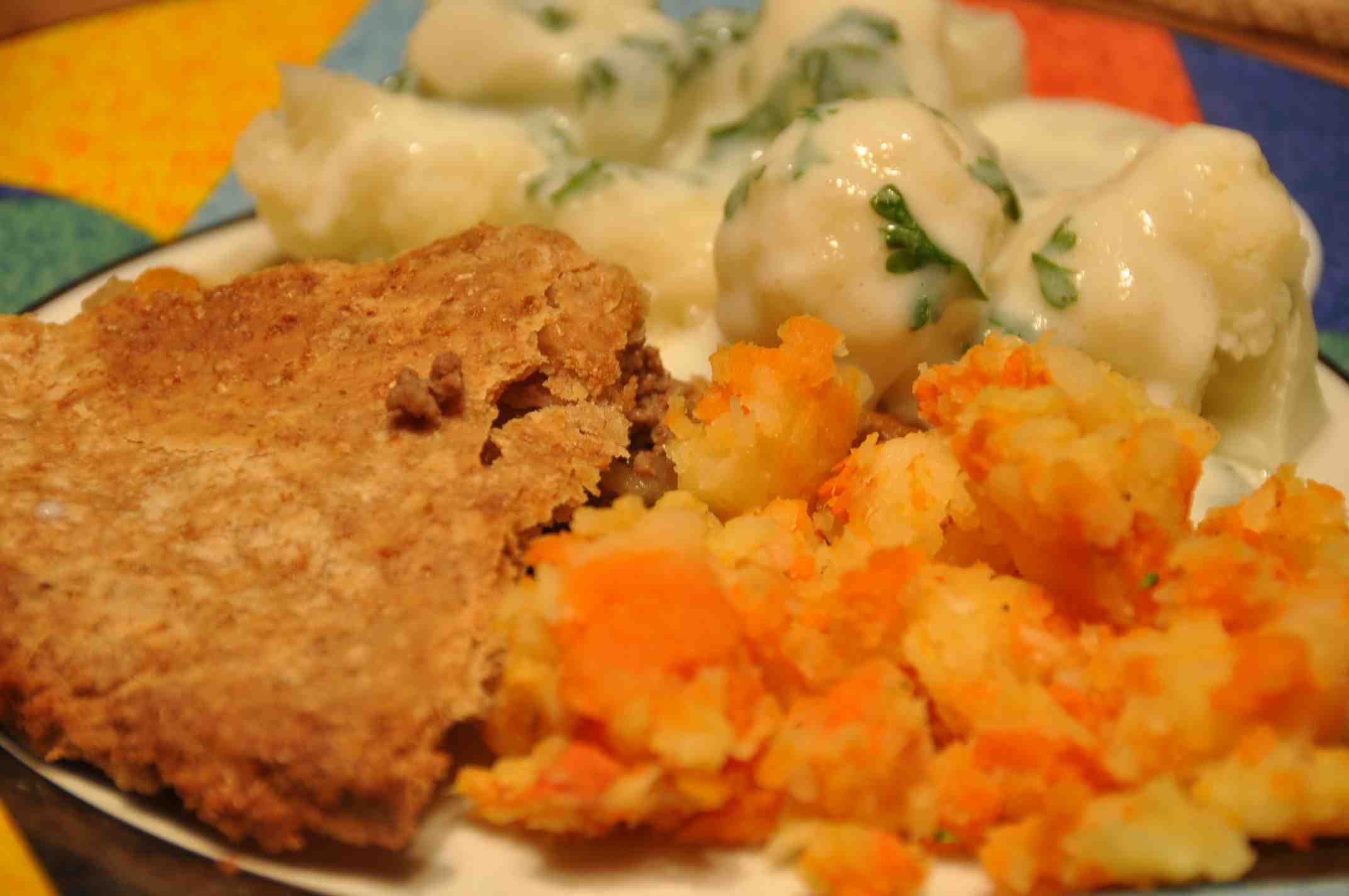
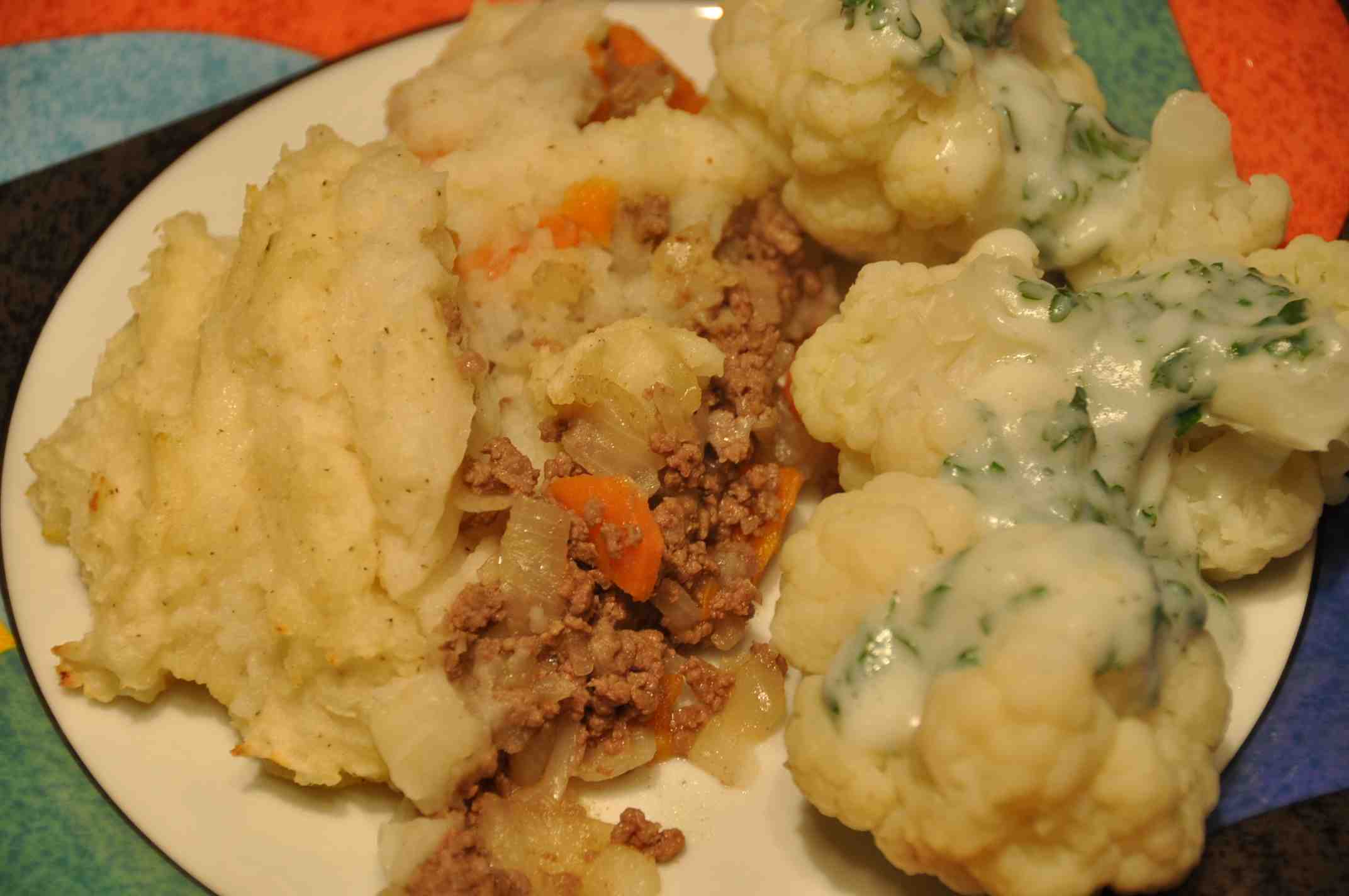
Dinner was supposed to be Woolton Pie – a dish created during the war – but wouldn’t you know it, I didn’t have the right veggies in.  So, it was soup from yesterday, followed by cottage pie and cauliflower with parsley sauce.  It looks a bit pallid in the picture, but tasted good, so with plenty pie left over for tomorrow, I’ll need to come up with more colourful vegetables to make it look a little more appetising.

cottage pie

Some conflicting memories of a particular wartime experience now, and for the fiction writers out there, an important lesson in age appropriate characterization.

Although they spent most of the war in the countryside, my Mum, Anne (who was 12 years younger than my mother) and my brother were in Glasgow during the Clydebank Blitz.

According to Wikipedia, over two nights, 528 people died, 617 were seriously injured and hundreds more injured by blast debris.  Out of approximately 12,000 houses, only 7 remained undamaged, with 4,000 completely destroyed and 4,500 severely damaged.  Over 35,000 people were made homeless.

My grandparents lived in a flat in Byres Road.  During those horrific raids, my grandmother pulled all the mattresses into the hallway – well away from the windows – for the family to sleep on.  If they were going to be killed, Mum said, they were going to die together.  It always brings me to the verge of tears when I think of that; my grandmother facing the possible loss of her whole family and my mum being unable to protect her infant son.  I can’t imagine the horror.

That’s an adult account of that experience.  Now here’s Anne’s .

A couple of years ago I was invited by the local junior school to talk to groups of children about wartime, and got many, probably enforced, thank you letters from them.  From these it was obvious that the bit they liked was when I confessed that during the Clydebank Blitzes (I was about 11/12) we had all gathered in the ‘safest’ place in the house but I several times made an excuse to go to the bathroom so that I could see the searchlights and the glow of the fires.

Oh, the wondrous resilience and fearlessness of youth!

If you have any stories of the war, I would love to hear them.