Wartime Rations – Day Twenty

January 25th. Robert Burns Day.  Even eating wartime rations, there was no way I could let today pass without a nod to Scotland’s famous bard. But haggis?  Was it even available in wartime Scotland?  My grandparents were English and didn’t celebrate Burns Night, so Anne was unable to answer that question for me.

haggisSo I checked out vegetarian haggis recipes online and decided upon this one from The Guardian newspaper.  The recipe included mushrooms (available in the summer), red kidney beans (available on points) and a lemon (very – very – hard to come by and probably only afforded by the rich), so it was a bit of a wartime cheat. It definitely smelled and looked like haggis, but although it tasted great (my husband gave it 8/10) it didn’t taste like any haggis I’ve ever eaten before.

scones

Staying on the Scottish theme, I decided to make some potato scones to go with our mid-morning cup of tea today. I haven’t made these since I was in Miss Lennie’s cookery class back in the day, but straight out the oven with butter melting on them… excellent.  And easy!

My husband’s work colleagues know he’s been eating wartime rations with me, so every morning he goes in to work he has to recount our meal from the previous evening. What they don’t quite believe is how cheap my weekly food shopping has been for the two of us over the past few weeks – around $60Cdn.  ($54.22US, $62.22Australian, 32.85British pounds.)

I’ve worked out next week’s menu and pulled together a shopping list. I’m heading to Safeway tomorrow morning, so will have an itemised bill to show you to prove (hopefully!) that you can eat really well and cheaply.

Wartime Rations – Day Nineteen

No new food photos today as I’m still working on leftovers.  However… I can promise a ‘treat’ tomorrow. January 25th is Burns’ Night, and as I’m a Scottish Canadian, I’ll be attempting a vegetarian haggis recipe that just might have been possible during the war.

(If anyone has any information on what Scots did on Burns’ Night during the war I would love to hear from you. Anne’s parents were English, so it’s not something they ever celebrated.)

Straight on to some of Anne’s other memories. Here are answers to a few random questions I asked.

anne2013Was there enough paper for school jotters? Yes, but the quality of paper became very bad as time went on; rubbing out became quite a problem.  Paper (like everything else!) was in short supply everywhere, newspapers slimmed down sometimes to only two sheets (4 pages, that is) from ten or twelve. The writers and reporters were given the slogan ‘Boil It Down!” to keep their items short. Books too – the paper was really dreadful.

What did you do during the war for presents and birthday cakes? I used to be given half-a-crown to buy five 6-penny presents for my siblings – usually sweets with my unwanted sweet coupons. I’d have to save up pocket money for gifts for Mum (e.g. a pretty ornament) and Dad (a fishing fly or ciggies).

Auntie Bessie (in England) was wonderful: she would occasionally have saved enough ‘points’ and rations to make and send us a fruit cake, and she was a great baker.

Wartime Rations – Day Seventeen

Tonight was an evening of leftovers, and struggling to not make them look like leftovers! Also, I’m trying to eke out our meat ration – one pound between the two of us for the week – over three meals.

Main course, cottage pie (mince topped with mashed potatoes, heated in the oven, then sprinkled with cheese and browned under the grill) with carrots and beetroot.

dinnerpudding

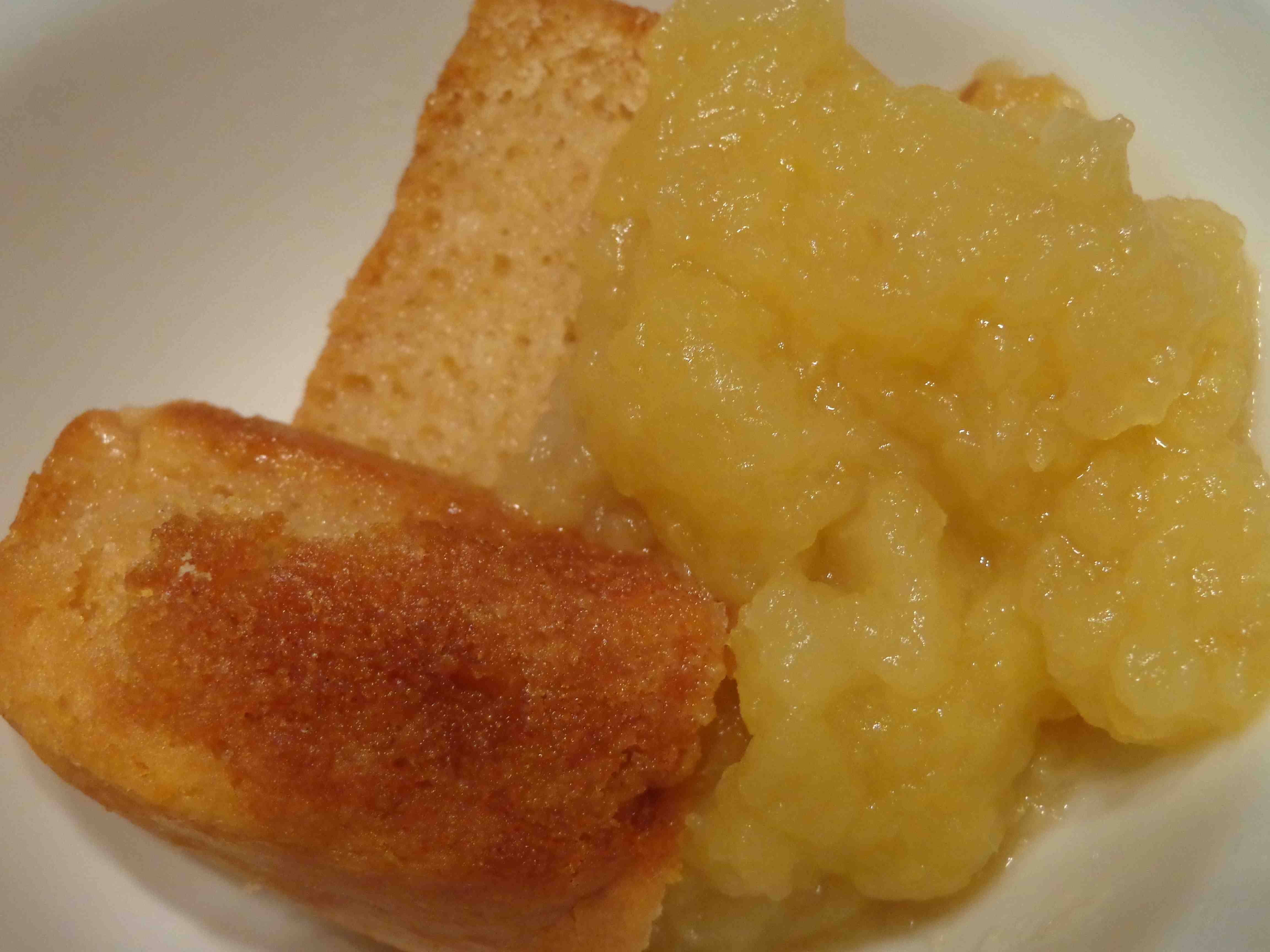
For pudding, the remains of the syrup cake I made the other day, with stewed apples and apple juice (liquid left over from stewing the apples) on top. My husband poked it with his spoon a few times, not too sure about the combination, but we both really enjoyed it.

I’m really interested in the war from a child’s point of view, so asked Anne some more questions about her schooldays. What was it like having to take her gas mask to school every day? Did they have air raid drills?

anne2013(Taking a gas mask to school was) a nuisance; it was on a string or tape over my shoulder. I never had a back satchel like many of the pupils; I always had to carry an attaché case – and over a mile to walk to get the school bus from Kippen to Balfron. But talking about the school bus: one day the bus didn’t arrive at 4 to take us home, and eventually we all started walking.

The two girls with me were all for getting to the front, but I encouraged them to hang back till we were the last of the crowd by quite a distance – I’d figured out that something would come up behind us to give us a lift! And so it turned out and we were able to wave to all the eager beavers ahead of us.

Air raid drills?  Oh yes, quite a lot to begin with, but they gradually tailed off.

Wartime Rations – Day Fifteen

I’m now officially addicted to wartime ‘oatmeal’ soup –  although it should probably be called leek and carrot soup as the oatmeal is only added to thicken it. Anyway, I made a big pot at lunchtime and there was plenty left over for dinner this evening.

MacaroneFor dinner, macaroni and cheese – adding a rasher of bacon and half a fried onion for a bit of flavour – with red cabbage coleslaw on the side. Very tasty.

Then, instead of pudding, and given that I still have 1/2 a jar of golden syrup left, I decided to make a syrup loaf. You’ve got to know that I haven’t made a cake in years, so I wasn’t holding out much hope for it. Especially when I saw the recipe. I was under the impression you needed fat, eggs and sugar along with flour to make a good tasting sweet loaf… but apparently not.

The picture doesn’t do the loaf justice because it tasted really good. And easy! The recipe comes from ‘We’ll Eat Again’ – Marguerite Patten’s recipes from the war years reissued by the Imperial War Museum.

SYRUP LOAFsponge

Cooking Time: 30 minutes.  Quantity: 1 loaf.

4 oz self-raising flour, or plain flour with 2 teaspoons baking powder

1/2 teaspoon bicarbonate of soda

pinch salt

2 tablespoons warmed golden syrup

1/4 pint milk or milk and water

METHOD: Sift flour or flour and baking powder, bicarbonate of soda and salt. Heat the syrup and milk or milk and water, pour over the flour and beat well. Pour into a well greased 1 lb loaf tin and bake in the centre of a moderately hot to hot oven (200C) for 30 minutes until firm.

anne2013Having talked about going to the cinema during the war last week, here are Anne’s memories of going dancing in wartime Glasgow.

Going dancing was the prime evening entertainment and Glasgow had lots of dance halls – the biggest one was the Green’s Playhouse in the city centre; Mary and Connie* used to go to the Plaza on the other side of town, but when it came to my day, I liked the smaller Astoria at Charing Cross even though it didn’t attract the big name bands. I loved dancing. I didn’t go to find a feller – I just wanted to dance, so kept my eyes open till I saw one dancing well, and when it came to a ‘Ladies’ Choice, there I was in front of him – didn’t matter what he looked like. Of course, we were doing real ballroom stuff – foxtrots, quicksteps etc and it was all very sedate. Hands had to stay where they ought to be – if they didn’t the MC (Master of Ceremonies) or one of his minions would have a word with you and if that didn’t work you were encouraged to leave. When the US Army moved in we were introduced to mild jitterbugging, and I enjoyed that too.

*Two of Anne’s sisters

Wartime Rations – Day Fourteen

I’m now at the half-way point and really starting to get into the flow of this. I’ll be honest, the first few days were a bit hard and I felt like I was depriving myself – mind you, it was just after the excesses of Christmas – but now I’m really enjoying it. This was supposed to be a history challenge, not a weight-loss diet, but amazingly, in spite of having three courses which include a pudding every night, I’ve lost 6 pounds in two weeks. I have more energy and I’m sleeping better. I wonder if it’s because all the food I’m eating now is fresh and made from scratch?  The only processed foods I’m currently consuming are bread, flour and sugar.

An interesting experiment in Britain nearly ten years ago, saw a group of schoolchildren being fed wartime rations while their classmates continued to eat 21st century meals. Eight weeks later, the ‘wartime’ children had grown in height, while the 21st century children had grown in width. The modern-day 9-year-old now weighs, on average, 17 lbs more than the 9-year-old of 70 years ago. Sober reading indeed.

baconAnyway, back to my rations.

With it being Sunday morning, I decided to forgo my regular porridge for some bacon and eggs. The bacon was great, but the eggs…  I only had powdered left so I scrambled them.  Not a great success. The only way I found them edible was to put them on toast and add a piece of bacon to every bite. From now on I’ll keep them for baking. But in the reading I’m doing, it sounds like children who grew up eating powdered eggs preferred them over the real thing for a long time after the war ended.

Roll on Week Three!

Wartime Rations – Day Thirteen

With it being the weekend, just food and photos tonight, no wartime memories from Anne or videos.

[arsnipStarter:  Cream of Parsnip soup. One pint of stock, one shredded parsnip, half a shredded leek, a little flour and  milk to thicken, then milk to taste instead of ‘cream’. I was going to say there was no cream in wartime, but of course there was. I well remember cream at the top of the milk bottles delivered to our back doorstep in the morning growing up – even though that was a long time after the war ended, I hasten to add.  It was always a rush to get to the bottles before the birds pecked open the silver tops.

hotpotMain Course: Lancashire Hotpot with boiled shredded cabbage. I boiled red and green cabbage together which resulted in the lilac appearance. Looked a bit odd, but taste fine. Especially with a splodge of butter.

pud

Pudding:  Ah, pudding. Our evening meal isn’t complete without dessert these days. I haven’t had a syrup pudding in for-e-ver – my mum used to make them all the time and they were wonderful –  but having bought a jar of golden syrup at the beginning of the week with my ‘points’, tonight seemed the perfect time to give it a go. It involved making a simple cake mixture – flour, butter and sugar – which I mixed with a REAL egg rather than my powdered ration. You then steam the pudding in a bowl for an hour (I only used 1/2 the recipe so it was less time). My mum used to have this great metal bowl with a lid on it that locked everything in. Today I struggled to seal the bowl with some greaseproof paper and string. And I mean struggle. I finally gave up – this being the 21st century there had to be a better method – and used an oversized rubber band.  (I can see you smiling already and giving me ‘that’ look, yes, that’s it, the same one my husband gave me about an hour ago when I told him what I’d done.)

Okay, okay, the band broke in the boiling water, breaking the seal and letting some water in. As a result, the pudding was a bit ‘heavy’… but, boy, it tasted good!

I wonder where you can buy those pudding bowls with lids these days…

Wartime Rations – Day 12

A very quick post this evening.  It’s been a busy day, tearing about all over the place, but I’ve managed to stick to my rations.  Breakfast and lunch: the usual – porridge, soup and a sandwich.

When I got home this evening, it was already pretty late and I’d forgotten to take any meat out the freezer.  (I know, I know…wartime housewives didn’t have freezers!)  Fortunately Friday evening has a laid back feel to it; it’s the end of the work week, and if dinner isn’t quite so formal as during the week, who cares. So, I quickly made a pot of oatmeal soup – to which I’m rapidly becoming addicted: chop up one leek and fry in a little butter, add just over one pint of stock, 2 grated carrots and 3 tablespoons of oatmeal.  Bring to the boil, then simmer for about 20-30 mins until the soup has thickened.  Seriously, it’s fast and dee-licious.

carrotFor the ‘main’ course, I made a quick red cabbage and carrot coleslaw to which I added 1/2 grated apple and tiny bit of mayo.  Fresh and tasty and colourful.

Pudding?  Do you really have to ask???  Ummm, I think that would be pear crumble!

So to my final cinema question for Anne this week.  What were your favourite war-time films?  Favourite film stars?

anne2013Too many to pick out a special few, really.  On the whole I liked the British dramas and comedy-dramas best, Powell & Pressburger sort of stuff.  Favourite stars?  Well, when I saw ‘The Man In Grey’ I fell head-over-heels with James Mason, even though his part was not the ‘hero’ I loved his voice as well as his acting – the one and only pin-up I ever had on my bedroom wall! Favourite actress – without doubt, Rita Hayworth. Apart from the fact she looked like a goddess, her dramatic abilities in serious films like ‘Miss Sadie Thompson’ and ‘Gilda’ were amazing, and that she also danced like a dream with both Astaire and Gene Kelly – what more could anybody ask for?

Wartime Rations – Day 11

A wee bit of a cheat day today.  Just because it was wartime didn’t mean that you couldn’t visit a restaurant for a meal or tea room for a cuppa.  Today I had a meeting at a well-known coffee-house, so I’m claiming my small latte and piece of lemon cake as my ‘wartime afternoon tea’.

sausageFor dinner, I made some of my homemade lentil/vegetable soup. That was followed by  bubble and squeak – mashed potatoes mixed with cabbage and onion fried in leftover bacon dripping – to accompany a sausage meat burger. I wasn’t too thrilled with the latter, but my husband enjoyed it – think he was just grateful for a decent quantity of meat! Carrots added some colour to the plate – wartime meals are a bit drab looking – and of course we ended with pudding.  You’ve guessed it, pear crumble.  With only apple and pear in season in January in the UK, it had to be one or the other.  Next week I must try to be a little more adventurous!

Today’s cinema questions for Anne were: How often did you and the family go to the pictures?  Any little tidbits you remember?

anne2013Me? Whenever I could raise the cash. I don’t remember dad ever going but he seemed strangely pro-Barbara Stanwyk. Mother loved the Jeanette MacDonald romantic musicals and would not miss anything with Greer Garson or Irene Dunne in it.  I usually went with her because she paid!

Re the tidbits… Don’t forget the magical appearance of the organ rising in front of the curtain in the interval – only in the posh cinemas in town. Also that, for your money, you got what was called ‘the big picture’, plus another not-so-good full-length film, plus newsreel, cartoon, another short – a travelogue for instance, or Pathe Pictorial. The programme cycled from about 2pm till 10/10.30 and you could, in theory, stay there for 8+ hours.

Wartime Rations – Day 10

Breakfast and lunch were the usual.  Although I’m using quick oats for breakfast, I’m still finding that soaking them overnight – as in the ‘olden’ days – really helps make the porridge much thicker and creamier.

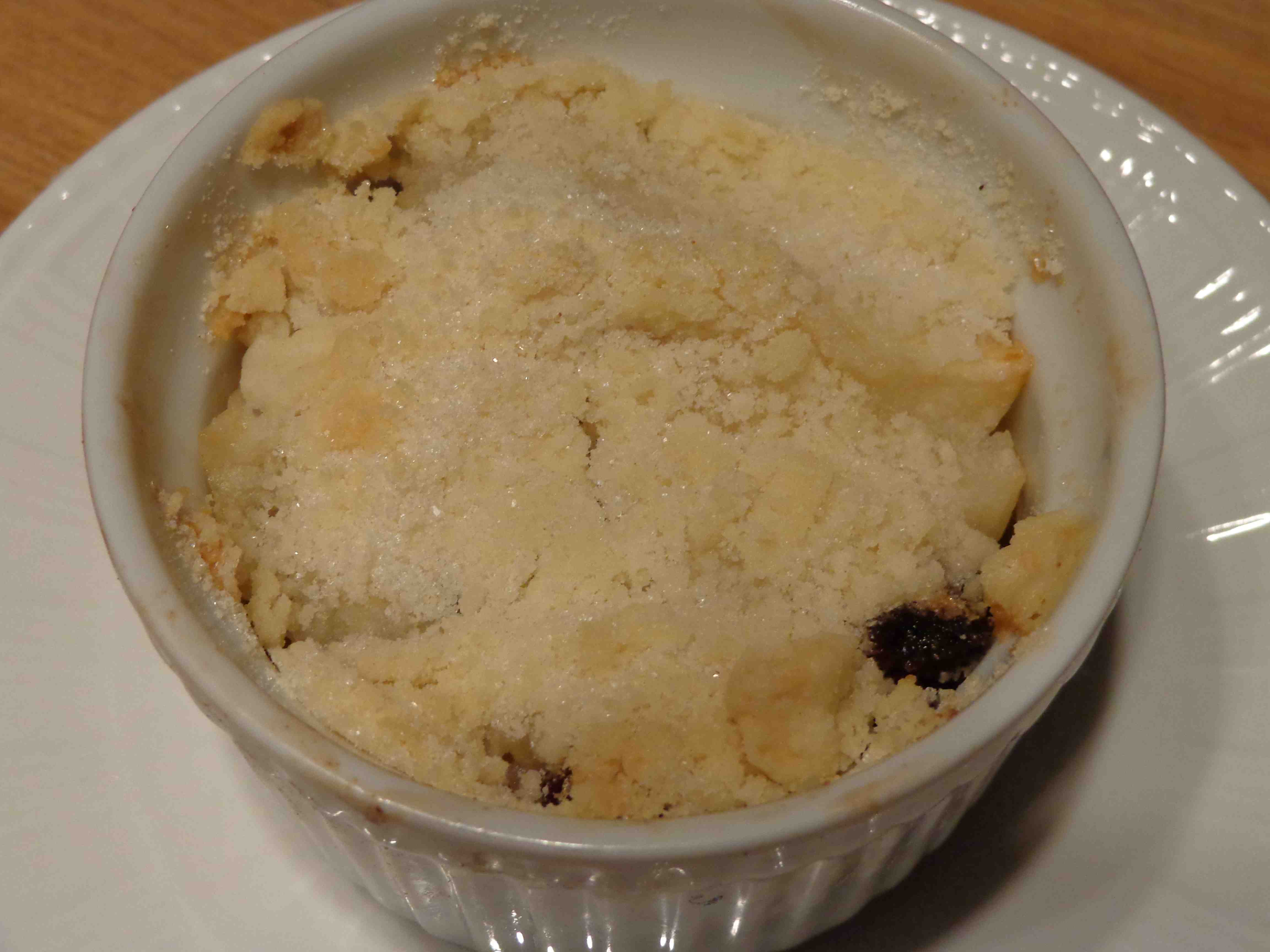
Dinner was ‘only’ two courses this evening; fish pie, with pear and sultana crumble to follow. (My husband, who hates fish, had the leftover casserole.) I’m loving these wee pudding ramekins. I made a full measure of crumble (stored the rest in fridge for the next few evenings) and shared one pear between us. Having something sweet at the end of the meal is such a treat and I’m finally starting to lose my craving for chocolate.  Long may it continue.

fish piepear crumble

Getting back to Anne’s memories of wartime cinemas… When war was first declared, all public places – theatres, cinemas etc – were closed for fear of mass casualties in bombing raids. But the ban didn’t last long and they were quickly re-opened. So I wondered if they continued to have Saturday morning films for the children and, if so, what kinds of treats were available to eat?

anne2013Yes, there were Saturday morning films at the Grosvenor but I only went a couple of times I think – not particularly to my taste. There were a few cartoons, not very good though I loved Donald Duck, and Goofy too but saw nothing funny in Mickey himself. There was often a cowboy film (Cowboys and Indians was the main game of boys still) and some slapstick of the Laurel and Hardy type – Charlie Chaplin was disappearing from screens, again not my type – even as a child I couldn’t bear the humiliation he, or Laurel and Hardy were suffering before my eyes, even if they finally came out on top.

As for treats… Not a lot if you hadn’t any sweetie coupons. Fruit and other foods were not forbidden but they were discouraged. I was OK – I went on to the Black Market and sold my sweet coupons so I could buy a cold scotch pie* or sausage roll munch through – disgusting, I was.

*’Scotch’ pies were originally called ‘mutton’ pies; minced mutton was the filling – though what they put in any wartime ones (few and far between) goodness only knows. It was only when lamb and not mutton was offered by butchers and lamb became much more expensive that ‘Scotch’ pies were filled with minced beef.  You’ll never know what a real Scotch pie tasted like!

Wartime Rations – Day 9

No photos today as everything I’ve eaten, apart from my morning porridge and toast, has been ‘leftovers’ – cauliflower soup and casserole. In fact, when my husband heard that dinner would be a choice between leftovers or fish pie, he very suddenly remembered he had an evening business dinner that he ‘had’ to attend.

So, I’ll go to straight to Anne’s memories. Staying on the cinema theme, I asked her the following: What do you remember of the cinema in those times?  Did the ushers always wear uniforms?

anne2013They were a world I wanted to live in.  Remember I was alone by now with my mum and dad, the others busy with babies or fighting, so home life was for me a bit dull – until *Clydebank, when the countryside and its freedom hit me like a nice kind of bombshell. Until then, the cinema was my escape and it was easy (if I had enough pennies) because of the Grosvenor and the little ‘Hillhead‘ cinema just around the corner near the top of Byres Road – it was 1/3d, 3d more expensive than the Grosvenor, but if I managed to save 5/- I could buy a book of 6 tickets which worked out at 10d a time.

Yes, the ushers did wear uniforms: a self-colour shirt-type dress or a skirt and white blouse; in the interval an apron was added if there was any ice-cream or drinks to sell.  And torches of course to guide you to a seat – not welcomed in the back row!

*Clydebank refers to the Clydebank Blitz, after which Anne, my mother and brother were evacuated into the countryside.

In searching – unsuccessfully – for some video footage of Glasgow cinemas during the 1940s, I came upon this homemade video showing modern day Byres Road, a popular street in the West End of Glasgow.  If you check the footage at 0.28 you’ll see the Hillhead Cinema Anne refers to above, at 1.14 the flat where Anne and my grandparents lived during the war and at 1.30 the bar where my mum used to go and buy a jug of beer for my grandfather.

http://www.youtube.com/watch?v=hVDkS-4TbuU