Lamlash Cemetery – Part Two

In which I continue with my fascination with cemeteries, and particularly Lamlash Cemetery on the Isle of Arran

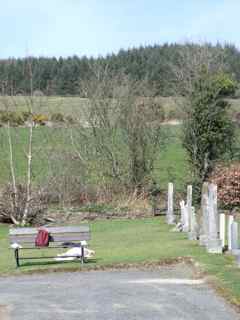
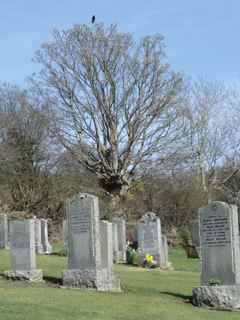
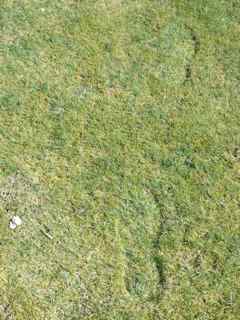
Other than gravestones, you never know what you’ll find in a cemetery.  A weary hiker sunbathing in his underwear just behind the bench… a crow (straight from a horror story perhaps?) perched atop a tree gazing down on his domain… or some rather creepy footprints embedded in the mossy grass.

Person         crow         footstteps

I did consider including some of the very beautiful contemporary headstones to be found, but decided against it. Some of the inscriptions were just a little too recent, and I would hate it if someone’s family member was to stumble on this blog and find a loved one’s marker. So you’ll just have to take my word for it – or visit yourself! – that there are some very thoughtful and moving memorials to be found.

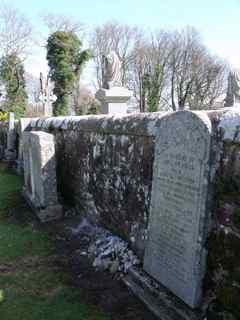
Making your way past the ‘modern’ cemetery, (which is where you will find the military gravestones illustrated in my first blog on Lamlash Cemetery) you come to the walls of the original graveyard.

old        ood2

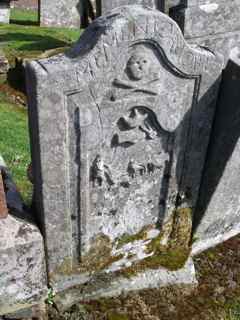
Amongst the more than one hundred or so gravestones ‘beyond the wall’, here are three of my favourites. The first one dates back to the 1700s and I find it interesting how the words roll into each other without a break. The inscription on the second, belonging to Lady Charlotte Erskine, eldest daughter of The Earl of Mar, intrigued me: ‘Where the tree fell, there should it lie’. Arran’s ‘gentry’ were the Duke and Duchess of Hamilton, so perhaps Lady Erskine was visiting them on the island when she died.

1700                     lady

As for last grave… well it’s certainly one I wouldn’t want to run into on a dark night!

skull


Mairi Chisholm

 51uRL4zJc4L._AA160_Aged just eighteen years-of-age,  Mairi Chisholm was one half of the two most photographed women of World War One.

Mad keen on motor-cycling, she met Elsie Knocker (30) at various motorbike competitions around the country. Following the declaration of war on August 4th, 1914, Elsie suggested to Mairi that they join the Women’s Emergency Corps.

After spending the first month of the war as dispatch riders in London, they were asked to join the newly formed Flying Ambulance Corps assisting wounded Belgian soldiers.  Mairi and Elsie landed in Belgium on September 25th, 1914 where their first job was ferrying casualties to a military hospital in Ghent.

51rJcwzV3bL._AA160_In November, they moved to Pervyse and spent the next three and a half years only 100 yards from the front line, performing first aid, transferring the wounded to hospital and retrieving bodies from No Man’s Land, from a cellar only six feet high. They funded this work themselves and often had to return to the UK to raise money.  Their work only ended on 17th March, 1918 when they were both almost killed in a gas attack.

Mairi Chisholm died in Scotland in 1981 aged 85.

Their full story has been told in the books Elsie and Mairi Go To War and, The Cellar House of Pervyse.


‘WAS’ is a four-letter word… or is it?

According to Michael Hauge, the job of the filmmaker is to elicit emotion in the audience. That responsibility holds equally true for the fiction writer. Our readers want to share in our characters’ journeys, experiencing in a visceral way their joy and despair, fear and courage, trust and betrayal etc.

As writers, we’re told the most effective way to do this is to ‘show’ our stories rather than ‘tell’ them. A simple technique to ‘show’ is to use active, rather than passive, voice.

Passive voice – telling – holds the reader at arm’s length, and merely informs.

Active voice – showing –  engages the reader, eliciting emotion in both reader and character.

One of the biggest culprits of passive voice?

Was.

It might only be a three letter word, but the writer must treat it with the same respect as its four-letter cousin.  Rely on was too frequently and your writing will lose its power.

The Argument AGAINST ‘was’:

Take this simple phrase:  He was walking.  ‘Was’ plus an —-ing verb is as passive as it gets, and is on the ‘No, no, no, no, no!’ self-editing checklist for many publishing companies.  It’s boring and very rarely elicits emotion in either character or reader.

He walked – is a little better, but it still doesn’t tell the reader much.

Now try these for size. He strode. He strolled. He sauntered. He paced. He plodded. He shuffled. He waddled. He marched. He meandered. He slogged.

As a reader, can’t you now see a picture in your head of how – exactly – the character ‘was walking’? Doesn’t that image suggest the emotion the character is feeling? And now don’t you want to use that other three-letter-word ‘Why?’ to ask why the character is feeling that way?

Get your reader to ask ‘Why?’ and you’ve engaged him. You’ve elicited an emotion – at the very least, one of curiosity. And curiosity is good, because it makes the reader ask, “What happens next?” and turn the page to find out!

The Argument FOR ‘was’:

It’s often suggested that during our final edit, we plug was into our search option and eliminate its every use.  That’s a great idea, but do remember that ‘was’ does – sometimes – have a place in our stories.

Where?

In character dialogue, especially when he or she is passing on information. ” You know, she was telling me the other day…”  “I heard she was going into the army.” “There was a sale at the shops downtown.”

And there is an argument to be made that too much showing can adversely affect the pace of a story. Think about the phrasing or pacing of a song. If the singer sings each word, each phrase, at the same volume and with the same intensity, it’s boring and turns the listener off. You need the quiet moments, the loud moments, the fast and the slow to give variety, interest and hold the listener’s attention. That’s one of the roles of ‘was‘ in your book. Sometimes you just need that moment where you want to slip in a fact or piece of incidental information without making a big deal of it.

Ah, but what about the beginning of A Tale of Two Cities? I hear you ask.  In his famous opening line, It was the best of times, it was the worst of timesDickens uses the word ‘was’ ten times.  That’s right, ten times!

As always, whenever there’s a rule, it can be broken. But it’s not something I suggest you try to emulate. Dickens’ effectiveness has everything to do with the poetic nature of his introduction and the fact that he was a genius. That’s not the case for most of us.

So how many times is it okay to use ‘was‘ in your story. Is there a ‘magic’ number?

Check out the  links below and see how these best-selling authors deal with this simple three letter word.

(Disclaimer:  I’ve taken all these examples from the internet and am assuming they are genuine and error free.)

Hunger Games/Suzanne Collins:

Chap One:      5,187 words           was x22

Twilight/Stephanie Meyer:

Chap One:       6,783words         was x195

Harry Potter/JK Rowling:

Chap One:      4588 words             was x92

Chap Five:      6,579 words            was x92

Chap 13:        3,189  words             was x49

Chap 16:        6,432 words              was x75

Pride and Prejudice/Jane Austen:

Chap One:      847 words                was x8

Chap Two:      796 words                 was x1

Sherlock Holmes/Study in Scarlet/Sir Arthur Conan Doyle:

Chap One:      2,771                          was x28

Carnal Innocence/Nora Roberts:

Prologue:        1,539                         was x31

Chap One:      6,917                          was x118
Island of Islay – Vivien Martin

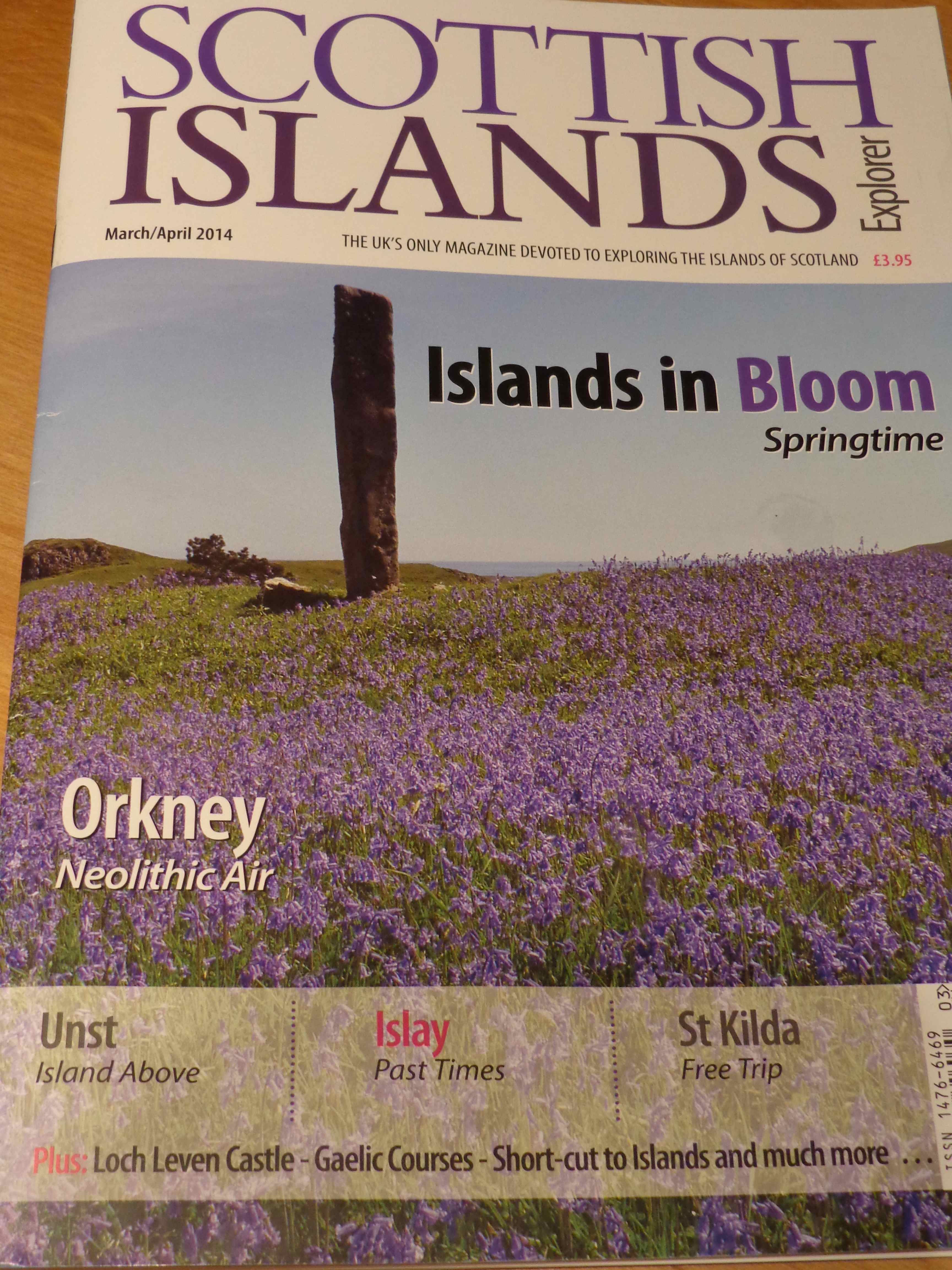
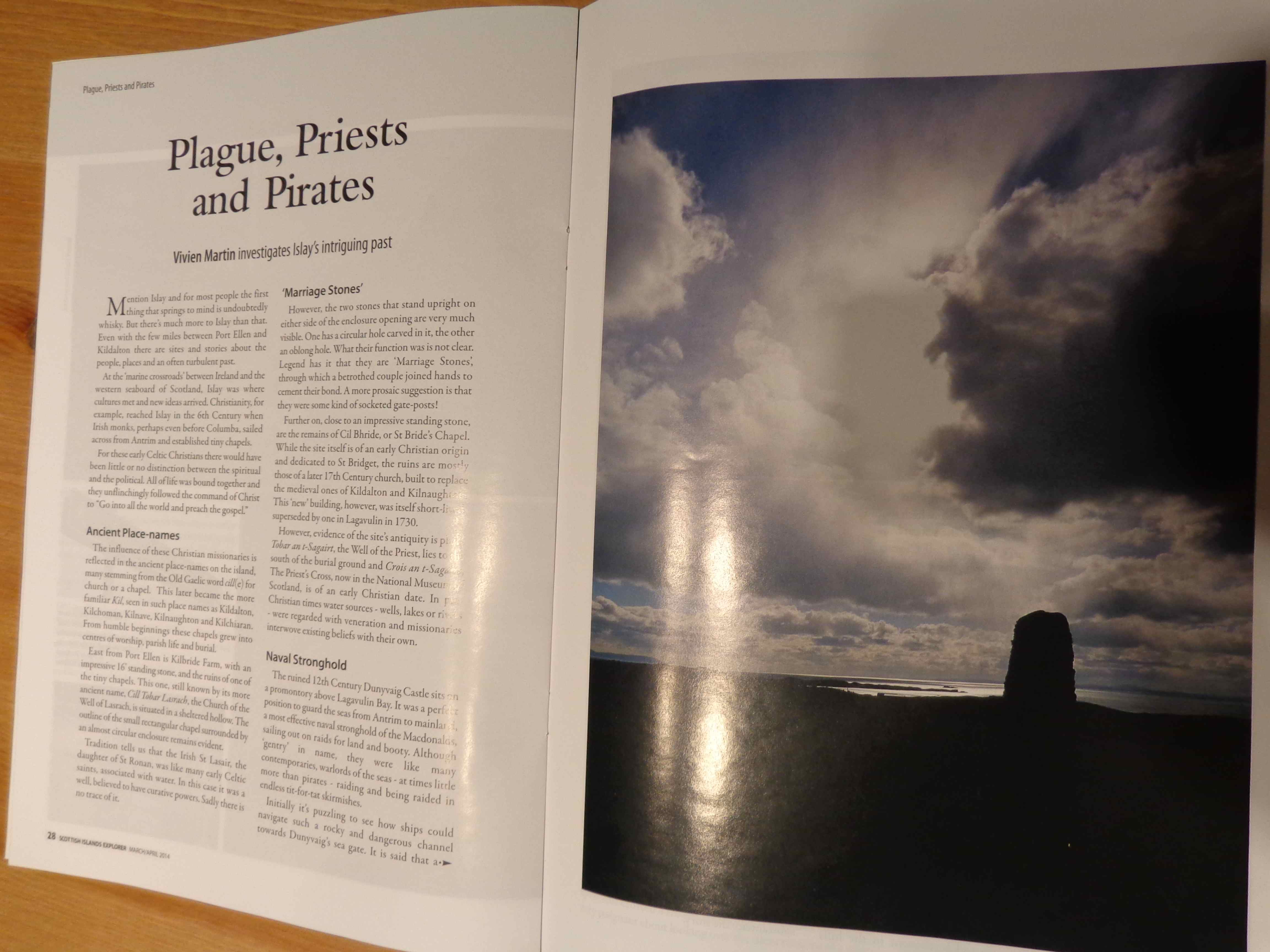
I’ve known Vivien since – ahem – First Year at Jordanhill School in Glasgow back in the ‘olden days’ of the 20th Century. As well as running her own publishing company and being a regular contributor to Scottish Islands Explorer magazine, Vivien is  currently coaching actors in Gaelic for auditions for Diana Gabaldon’s Outlander series presently being filmed in Scotland.

cover

According to Wikipedia, Scotland has a total of 790 offshore islands.  Although I’m Scottish by birth, I can – sadly – only admit to having visited four of them:  Arran, Bute, Skye and Mull.

The southernmost island of the Inner Hebrides, The Island of Islay, lies 40 km north of the Irish coast. With a population of 3,000, the island’s main industries are agriculture, whisky and tourism and was featured in the film The Maggie which led to a long-running series on BBC TV, The Vital Spark.

In her latest article in this month’s edition of Scottish Islands Explorer, Vivien offers insights into the history of the Island of Islay: Celtic saints, marriage stones, naval strongholds, ancient ruins, plague villages and shipwrecks.  Please check it out, and if you plan to visit Scotland, consider visiting this beautiful island.

page onepage two

Lamlash Cemetery

Given my fascination with graveyards and the fact that I discussed my visit to a Russian cemetery in my blog post last week, I thought I’d talk about one of my favourite Scottish ones today – Lamlash Cemetery on the Isle of Arran.

Arran is an island off the West Coast of Scotland, two hours from Glasgow by car/train and ferry. It’s known as Scotland in Miniature because anything you can find in Scotland – apart from a major city – can be found on the island. Four thousand year-old standing stones? Check. Iron Age Forts? Check. Mediaeval Castle? Check. Victorian Castle? Check. Palm trees. Palm trees?? Yes, palm trees. Check.

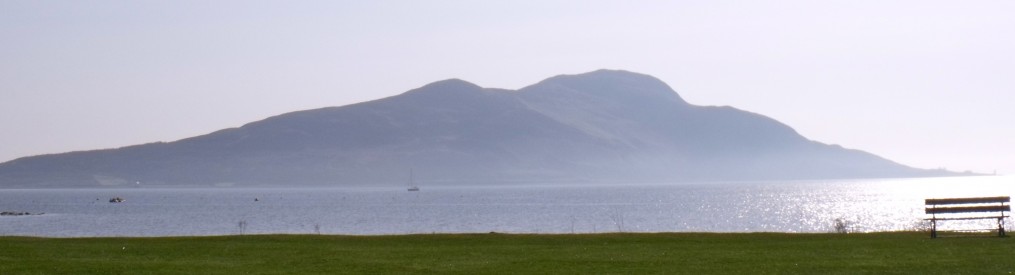
Lamlash Cemetery commands a stunning view. Situated on a softly rising hillside, it overlooks a golf course in one direction and the Holy Isle in Lamlash Bay in the other.

bay

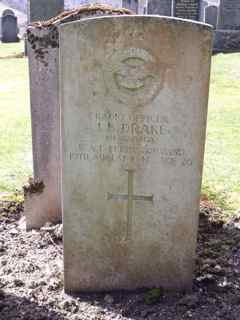
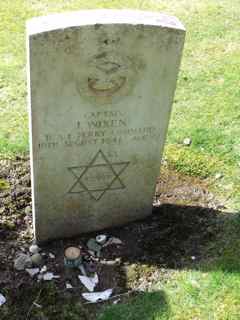
But as someone who loves reading about history of World War Two, what I find most fascinating about the place is a row of war graves. They commemorate the men of RAF Ferry Command whose plane crashed into a foggy mountainside on the island in 1941, shortly after taking off from the mainland. I’ve visited Arran every year since the age of seven, and on each trip I make a pilgrimage to the cemetery to wonder about the stories of the men buried there.

ROW

These were men of all ages, nationalities and religion. As well as the two Canadians whose graves are shown here, there was a third Canadian, two Americans and an Australian amongst the Brits. It was their job to ‘ferry’ planes from the factories in North America to Britain. They were returning to North America from one such flight when their plane went down.

DSCF1093DSCF1092DSCF1091

I don’t know if it’s true or not, but I ‘remember’ hearing a tale that, following the war, the family of one of the men wanted their son’s remains returned to his home. However, when they visited the cemetery and saw him buried by his comrades in such a peaceful location, they decided to leave him where he lay.

Kirsty Wark, a highly respected TV journalist and fellow Arran-ite, has written a novel which features the plane crash. Entitled The Legacy of Elizabeth Pringle, it is scheduled for publication on March 13th, so please check it out.

If you would like more information on the events of that crash, please click here and scroll half way down the page.

The Past Is A Foreign Country…

… they do things differently there.  L.P. Hartley

I, along with thousands of my generation, learned about The Great War at school. And what a boring subject it was. The Schlieffen Plan. Gallipoli. Trench Warfare. Who cared? If World War Two (which my parents lived through) was ancient history, then World War One was positively prehistoric.  What relevance could it have to my life?

It’s probably only as one grows older and – I hope – a little wiser, that one starts to realise that EVERYTHING that went before influences the lives we live now.

In commemoration of the Centenary of The Great War, the BBC has commissioned a four-year project of 130 programmes and 2,500 hours of TV and Radio Programming (documentaries, drama, children’s, news, arts) exploring the period from 1914-18.

The opening programme was Jeremy Paxman’s four-part TV series Great Britain’s Great War – with accompanying book. I have to say, this is the first time I feel I’ve ever ‘got’ the First World War, and it’s a fascinating story.

Of course he talks about the politics and battles of the war,  but he also examines the personal stories behind the conflict:  The notice that appeared in the personal column of The Times:  Lady, fiance killed, will gladly marry officer totally blinded or incapacitated by the War; The stories of men, so hideously injured either physically or emotionally, they remained within the walls of the hospitals where they were treated for the rest of their lives.

But stirring stories too. Of unscrupulous landlords who tried to take advantage of the male population’s absence at the front to raise domestic rents – only to be beaten down by a rebellion of women.

The war years laid the path for so much change that it’s interesting to think that the Britain of 1919 would be more recognizable to someone from the 21st Century, that someone from 1913.

So what had it all done to Britain?  Men who had fought together in the trenches – and women who had worked together in the factories – had first-hand experience of what ‘the other half’ was like… The efforts made and the risks taken by all classes meant that proper democracy in Britain could be denied no longer.  Jeremy Paxman.  Great Britain’s Great War.  p 285

Even if you don’t live in Britain, it’s worth checking out this book as I’m sure many of the experiences were shared by those living in Canada, Australia, New Zealand and other countries around the world.

Searching For…

I’m really excited about the project the writing group I belong to – The Alberta Romance Writers’ Association/ARWA – is currently involved with.  (I know, I know… the prepositions in that sentence are in the wrong places, but it sounded too formal written the ‘proper’ way!)

Back in November, under the stewardship of multi-published author Jessica L. Jackson, ARWA decided to promote a series of books with the theme Searching For…

The cross genre novels are between 40-70,000 words, the link between them being the main character must be Searching For… something.  That ‘something‘ can be a person/place/thing/peace of mind,  so the writer’s imagination is not limited.

This week saw the launch of the first book in the Searching For Series.  Written by Mahrie G. Reid, it’s a mystery entitled, Sheldon Harris Came Home Dead.

Please check it out.  I will be announcing future releases on this blog as they are published.

Mahrie

Novodevichy Cemetery

A few years ago I had the opportunity to visit Moscow. Growing up in the west in the 60s, 70s and 80s, for me Moscow conjured up the frightening May Day parades in Red Square, reported by the BBC, where the Soviet Union displayed its terrifying nuclear arsenal.

basil

So to actually visit …  Yes, I was scared, but also excited.

I’ve never cried in a museum before, but I cried in The Armoury Chambers of the Kremlin Museum. Unfortunately you’re not allowed to take photos in there, but if you ever want to witness the skill and imagination and wonders that human beings can create, many of them are gathered there. I doubt there is a museum in the world that can hold a candle to the glories they have on display.

But with no photos of the museum, what else captured my imagination in Moscow?

Chapel

I don’t know if it’s a ‘writer’ thing or not, but whenever I travel, I love to check out the local cemeteries. I have some friends who believe that graveyards are literally a waste of space, but I love wandering through them and discovering the stories they tell.

Surgeoangynae

So in Moscow, I visited The Novodevichy Cemetery where many of the great and the good of the Soviet era are buried.  As someone who grew up in a country where graves are very understated, to see the dead realised as if in life was more than a little bit creepy.

stalin

And then there was the grave of Stalin’s second wife –  Nadezhda – to whom he was married from 1919-1932.  Officially she died of illness, but the belief is she committed suicide after quarreling with Stalin.

Following the death of his first wife –  Ekaterina – who died of typhus in 1907, Stalin is reputed to have said at her funeral: This creature softened my heart of stone. She died and with her died my last feelings for humanity. Interesting to speculate how history might have been different had she lived.

Finally, the grave of Boris Yeltsin, memorialized by the modern-day Russian flag. When I was at university in the early 80s could I have envisioned the fall of the Soviet Union? In a single word – No.

yeltsin

The Wartime Woman

Having just been to see the film Monuments Men this afternoon, I’m back in WW2 mode!  But this time with a little bit of a twist.

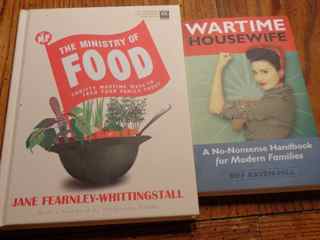
During my research for my month of eating rations in January, I came across these two books.

Wartime woman

The interesting twist on both these books is that not only do they give you a sense of what life was like for women during WW2, but they also bring it up to date: How to be a wartime woman in the 21st Century.

Please check them out.

The Ministry of Food and Wartime Housewife.

Also, here are two great websites.  The first concentrates mostly on wartime recipes, the second (which I only discovered last week) examines women’s lives in the 30s and 40s with an interesting emphasis on the Australian experience.

I highly recommend both of them.

The 1940s Experiment

The Wartime Woman

Writing Sexual Tension – Tammy Lyn Carbol

Tammy Lyn photo

Calgary writer Tammy Lyn Carbol presented a fabulous workshop on Sexual Tension at the Alberta Romance Writers’ Association meeting last week.

Using examples from the movies Zorro and Pride and Prejudice (2005), she reminded us that sexual tension is NOT about the sex act.  It’s about anticipation.  It’s slow, deliberate and can take time.

How to achieve that?

1) Make the attraction each character feels for the other blatantly obvious to the reader.

2) There must be conflict between the couple.  No conflict = No tension.

3) Use internal dialogue. Does the hero have to clench his hands at his side to prevent him reaching out to touch the heroine?

4) Even when they are not together, they should be thinking of the other.

5) Be patient. Take it slow.  Build the anticipation.

6) Then… give them a taste… then pull back.

7) When it looks like their relationship is going to work, pull them apart again. (Perhaps through the external conflict.) Tease the reader.

8) Try not to resolve their relationship until the very end.

Tammy cautioned us to be very aware of the different reactions between a man and a woman in a sexually charged situation.  A man will respond in a sexual manner while the woman’s response will be more emotional. As writers we must remember that if our characters are going to sound ‘real’.

Tammy also recommended that we watch the proposal scene from Pride and Prejudice (2005). It crackles with sexual tension. Watch Darcy and Elizabeth. They can’t take their eyes off each other.  And watch (around 2.37) where they lean in and – just for a moment – we think they might kiss.

Thanks, Tammy Lyn, for a GREAT workshop! And if you would like to check out more of Tammy Lyn’s writing, please visit her website: http://www.tammylyncarbol.com