Famous Scottish Writers

Typing ‘Scottish writers’ into Google brings up pages and pages of names. As I said in Monday’s post, for such a small country, Scotland has produced a disproportionate amount of talent.

Here are just a few of those names.

Thomas Carlyle – I’m embarrassed to admit I’ve never read any of his work, but he was one of the most important philosophers of the 19th Century. Click here to read some of his most famous quotes. The one I found most inspiring: ‘He who has health has hope; and he who has hope has everything’.

Robert Burns – If you’ve ever sung Auld Lang Syne at New Year, you’ve sung this famous poet’s words.

Sir Walter Scott – Ivanhoe, Rob Roy.

J.M. Barrie – Peter Pan.

Robert Louis Stevenson – Treasure Island.

Sir Arthur Conan Doyle – The creator of Sherlock Holmes

A.J. Cronin – not quite so popular now, but a huge name in the 40s with The Citadel and Dr Finlay’s Casebook.

Alistair MacLean – The Guns of Navarone. Where Eagles Dare.

Muriel Spark – The Prime of Miss Jean Brodie

Kenneth Graham – Wind in the Willows. (I have to admit this was a surprise as it has always seemed a very ‘English’ book to me.)

Iain Banks – The Crow Road

Ian Rankin – Rebus Detective Series

Val McDermid – Crime Writer (Tony Hill Series)

For the Scottish Independence Referendum in September this year, the Scottish Government defines a Scot as someone who chooses to make Scotland his or her home. Under those ‘rules’, here are a few other names you might recognise.

Louise Welsh – Crime writer

Julia Donaldson – Children’s writer.  (The Gruffalo)

J.K. Rowling – Harry Potter series.

Not bad for a small country. What names would you add to this list?

Guest Blogger – Sarah Kades Talking About Scotland

I’m delighted to have Sarah Kades as a guest on my blog today. (Please check out her website at  www.sarahkades.com) Sarah is a great person and writer, full of enthusiasm for life, who I met through the Alberta Romance Writers’ Association.  She’s writing about one of my favourite subjects today – Scotland – so, over to you, Sarah, with many thanks!
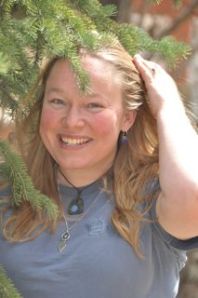
Sarah When Diana asked me if I would be a guest blogger, I immediately said yes. Then I wondered what in the dickens was I going to write about? First thing that popped into my head was Scotland. It is Diana’s homeland and I was lucky enough to call it home for one epic semester.

Scotland. Hearing reference to it brings a smile to my face and rekindles the joy I felt there. It is a magical place full of welcoming people and stunning landscapes. Its history, like most places, is deeply layered into its fabric. That can add to tension, but it can also add to resilience and strength. I needed resilience and strength when I was there.

The summer after I graduated from high school, I was gearing up for my freshman year at University. Before classes even started I received a brochure in the mail from the international office about the study abroad opportunities available.

What is this magic? I can go study in other countries? Where do I sign up? I headed to the office and checked out my options. There were several but three stood out; Sweden, Latvia and Scotland. Quite a mix. But there was something about Scotland that said, You need to pick me. Right now.

It happened to be the most affordable, too. Handy, that, as I was paying for my own schooling. (Thank you student loans and grants!) I applied for the following year, the soonest option available. When I was accepted I told my parents what I was doing. I don’t know exactly what was going through their heads during those conversations, but they both looked a bit shell-shocked. Now that I am older, I have a bit more perspective and can imagine the myriad of WTHs that must have been going through their heads. No one in our family traveled and I was flittering off across an ocean. My thoughts, Weeeeeeeeee!; their thoughts, Eeeeeek!

As the time came closer, my parents were divorcing and it was a rather tumultuous time in my family history. I briefly toyed with the notion of staying home. But a friend stated loudly and with much feeling; Sarah do not pass this opportunity because your parents are divorcing. You’ll regret it forever. Go! 

So I went. And it was perfect. I had a series of those pinging life experiences. You know, one after another, after another, after another of experiences absolutely perfect for the course of your life. Seriously, life made sense there, and worked on so many levels. I went to class, traveled, played rugby, met wonderful people, hiked energetic and incredibly beautiful landscapes, walked down stone pathways grooved by eons of footsteps, sat on benches older than my homeland’s Constitution, danced, played and overall had the perfect time. And I met myself there. The real me, the uncensored, happy hippy kid in love with life.

Back home I had a role in my family. I’m sure others can relate. It’s not bad, it’s just, well, baggage. Family is awesome, but when you want to bust out your wings and see where you can fly, sometimes finding a new launch area is in everyone’s best interest. I’m lucky my family is supportive of my black sheep tendencies. Thanks guys!! 🙂

In Scotland, I was free to be me. I was 19; it was a great time to explore who the heck I was and who I wanted to be. Scotland gave me the opportunity, and the support system of new friends and nurturing landscapes to help me do that. And fun, oh my goodness, I laughed so much! I also gained a confidence in myself that I had never experienced before. Navigating the foreign countries for side trips, meeting other travelers from around the world, tasting new foods, smelling new air, walking paths no one from back home had heard of let alone danced on was really good for me. I was learning how to forge my own way, not because back home was bad, it just wasn’t the setting for the next chapters/books of my life.

Scotland was also a lifeline when I didn’t even realize I needed one, teaching me that resilience and strength I mentioned above. A writer friend once asked why can’t adult children of divorced parents just get over it? When she asked, my first feeling was offense at her insensitivity. Maybe now I can shed some light. Just like the history of a country, the history of a family is woven. It is the blanket you know. Pull out some strings and the blanket is not the same. Reweave those strings into a new pattern and they might flow seamlessly, creating a beautiful new picture or pattern, different, but still a warm, functioning blanket. Or pull out strings and the whole damn thing snags. Forget about a pattern or picture, getting the knots out needs to happen first. Finessing those snags and knots back to smooth might happen in short order for some families, or it can take years, if ever.

As serendipity and my writing muses (i.e. my loud, adorable characters) would have it, I started writing The Tanner Series, five books featuring a family torn apart by divorce and old secrets. Now to be clear, my experience as an adult kid of divorced parents didn’t include CSIS agents or European crown princesses or bull riders, but this series is awesome to write. 🙂 I hope those who read it find each book filled with love, humor, compassion and healing, in all areas of life. For more information, available titles, and/or to subscribe to my newsletter for release dates, check out www.sarahkades.com).

Scotland provided me with a sense of home and community while the one I knew back home was snagging. It also gave me the opportunity to let myself be welcomed into friends’ family-groups. A skill that has served me, and my Canadian husband, well throughout our travels and all the places we’ve called home.

To our adopted families all over, Thank You. To one of my adoptive homes, Scotland, Thank You. You welcomed me in with open arms and kept hugging. Thanks! To my parents and siblings and Wisconsin, thanks for the amazing foundation you provided, along with continuing hugs. Those were/are epic chapters of my life and I can fly now because of them. 🙂

Happy Travels! Happy Reading!
All you need to know about Scotland in four items!

GTrayI’m excited to have  Sarah Kades writing on my blog on Wednesday.  She’ll be talking about her visit to Scotland, so I’ve decided to keep with the ‘theme’ and examine a little about the history of Scotland today and some of its great writers on Friday’s post.

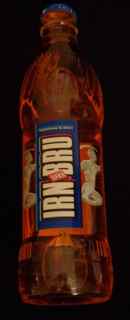
Arriving in a Glasgow hotel room, we found the following four items waiting for us; a bottle of Scottish spring water, a bottle of Irn Bru, a Tunnock’s Caramel Wafer and an apple. My husband commented that those four items told you everything you needed to know about Scotland, so although I might be stretching things a little in places, here I go!

waterWATER: As part of an island nation, Scotland is surrounded on three sides by water. The sea has exerted a great influence on the country’s history and culture. It has brought invaders (Romans and Vikings), Christianity and commerce (fishing, sugar and tobacco trade, oil and gas) to its shores.

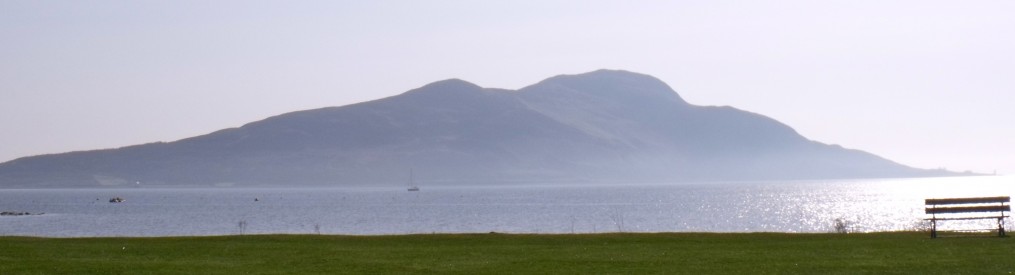
For an island nation, it also harbours over 790 offshore islands within its total boundary, the main ones being Shetland, Orkney, and the Inner and outer Hebrides, but there are plenty more.  The Isle of Arran, which I’ve written about before, is only 2 hours travel west of Glasgow and known as Scotland in Miniature.

Because of its latitude, Scotland should experience similar winters to Scandinavia, but the presence of the Gulf Stream protecting its shores means that even in winter you can always find palm trees on the west coast.

Don’t forget the water which is essential in whisky making – uisge beatha – literally the water of life, or the rivers and streams famous for their salmon.

And… oh yes, it does rain in Scotland.  Sometimes quite a lot.  But that’s what makes it such a lush, green and beautiful place.

irn burIRN BRU: A local soft drink, produced since 1901, it continues to outsell the giants – Coke and Pepsi – in Scotland. As such, I think it symbolizes the uniqueness of Scotland and its people who posses a real warmth and friendliness – but also a bloody-mindedness.

Over the past few hundred years, Scotland’s influence on the world has been way out of proportion for its size of population. Although many factors are involved, some credit is often given to John Knox, an influential Presbyterian minister, who insisted that every single child in Scotland (rich or poor ) learn to read the Bible. An educated population gave Scotland a huge advantage during the Enlightenment and Industrial Revolution.

According to Wikipedia, 75% of US presidents can claim some Scottish Ancestry, and the first permanent settlement in America – Jamestown – was named after a Scot.  (King James VI of Scotland/I of England.)

Scots make up the 3rd largest ethnic group in Canada and the first prime-minister of the Dominion was Scots-born Sir John A. MacDonald.

caramelTUNNOCK’S CARAMEL WAFERS: Like Irn Bru, Tunnock’s is a successful Scottish company, created in the 19th Century and still going strong. (It’s also one of the few food companies who continue to refuse to make ‘own’ label products for supermarkets.)

Much has changed in the Scottish economy since I was a child. At one time, Glasgow was known as the Second City of the Empire because of its strong industrial base and I still remember the fading days of shipbuilding, steel, coal mining, car manufacturing, sewing machine manufacture and railway engine building in the Central Belt.

That has all gone now.  Modern industries include Oil and Gas, Banking and Finance, Computing and Pharmaceuticals while the traditional agriculture, forestry, fishing – and let’s not forget whisky! – continue to flourish.

appleAPPLE: Hmmm.  Scotland’s diet is not the healthiest in the world – remember that this is the country that gave the world the ‘Deep Fried Mars Bar’!  Even a Scottish government report admits that the Scots’ poor diet is the second major cause (after smoking) of poor health.

But… Scottish food is amazing.  Here’s just a ‘taste’ of what’s on offer.  Haggis, Cullen Skink, Finnan Haddie, Smoked Salmon, Black Pudding, Mince and Tatties, Square sausage, Stovies, Blaeberries, Lanark Blue Cheese, Cranachan, Marmalade, Oatcakes, Butteries, Tablet, Tattie scones, Shortbread, Heather Honey.

So there you go, a brief  look at Scotland through four items found in my hotel room.  But there’s so much more that I haven’t even touched on. The scenery for one thing.  It truly is gorgeous.

I guess there’s only one thing for it – you need to come here and see it all for yourself!

Elinor Glyn – Part Three – Screenwriter

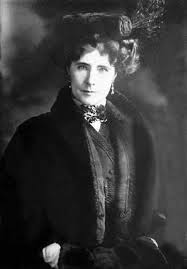
elinorCheck out imdb and you will find that Elinor Glyn has 28 screenwriting/story credits, three producing credits and two credits for directing. She also wrote 30 novels (some which were turned into films) a collection of short stories and at least 6 non-fiction books.

Her most famous film, ‘It’ starred Clara Bow, and introduced a new expression into the English language which we still use today. Elinor was paid $50,000 for that particular movie.  When I tried to convert that into a modern-day equivalent, various websites suggested between $660,000 and $8 million.  A huge difference, but I think it’s still fair to say it was – and is  – a lot of money.

Elinor Glyn defined ‘It’ as… that quality possessed by some which draws all others with its magnetic force. With ‘It’ you win all men if you are a woman and all women if you are a man.  She also said of an ‘It’ Girl, that, ‘She must be entirely unselfconscious and indifferent to the effect she is producing. Self-consciousness destroys ‘It’ immediately.’

Clara Bow was ‘the girl’ in ‘It’ and Elinor Glyn is credited with boosting not just Bow’s career, but also that of Gloria Swanson, turning the latter from ‘giggling starlet to elegant star’.

Although Elinor Glyn has been portrayed on-screen by Joanna Lumley in The Cat’s Meow, I think it’s about time this remarkable and inspiring woman got a movie – or TV series – all to herself.

Until then, click here, to see Elinor Glyn make an entrance (at 45 seconds) in her own movie ‘It’.


Elinor Glyn – Part Two – At Montacute

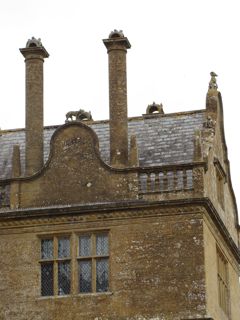
MONTACUTE4Montacute House is a late Elizabethan house in the village of Montacute in Somerset, England.  Its original owner, Sir Edward Phelps, was the prosecutor during the trial of the Gunpowder Plotters, who included Guy Fawkes.

The Phelps family owned the house until 1929 when it was put up for sale, valued at 5,882 GB pounds ‘for scrap’. Fortunately it was bought by the grandson of Thomas Cook (of the travel company) and donated to The National Trust.

The house has been used in several films: Sense and Sensibility (1995), Elizabeth (1998) and The Libertine (2004)

MONTACUTE5So where does Elinor Glyn come in to all this?  Elinor lived at the house with her lover, Lord Curzon, for 18 months. Did Elinor hope to become Lady Curzon? Curzon was an ambitious man. A former Viceroy of India, he had dreams of becoming Prime Minister, but would the public have accepted Elinor in the role of Prime Minster’s wife?

MOTACUTE1Elinor was staying at Montacute awaiting Curzon’s return from London when she read in the Sunday papers of his marriage to a rich American widow.

Very hurtful and very humiliating.

But he never did become Prime Minister and she went on to find fame and fortune in Hollywood.


Elinor Glyn – Part One

A screenwriting friend recently drew my attention to an article she found on-line. In contrast to women’s experiences in modern-day Hollywood, did you know that once upon a time, women were the most famous and well-paid screenwriters?

As I scrolled through the list of names, the picture of Elinor Glyn caught my attention. I’d never heard of her until a few years ago when I visited the stately home of Montacute in Southern England where she lived with her lover Lord Curzon – but what a woman! Once again I have to ask, Why hasn’t someone made a film about her life?

Elinor Glyn was born Elinor Sutherland to a Scottish father and Canadian mother on the Channel Island of Jersey in 1864.  Following the death of her father, her mother took Elinor and her sister Lucy (who went on to become the famous dress designer Lucille) back to Guelph, Ontario.  They remained there until Elinor was eight before returning to Jersey on her mother’s remarriage.

Elinor married Clayton Louis Glyn, a barrister, in 1892.  They had two daughters, but due to his recklessness with money, Elinor was forced to begin writing to keep the family financially afloat.  Elinor essentially created the modern romance novel, her most famous work being the ‘scandalous’ (for its time) Three Weeks.

It was an unhappy marriage and Elinor had several affairs which scandalized Edwardian Britain. A famous poem of the time was: Would you like to sin With Elinor Glyn On a tiger skin? Or would you prefer To err with her On some other fur?

Following the death of her husband in 1915 and the end of her relationship with Curzon, Elinor moved to Hollywood in 1920 where she became a very successful screenwriter – but more about that on Friday!

Advice To A Young Author – Arthur Conan Doyle

I visited the Surgeons’ Hall Museum in Edinburgh on my last visit there, a fascinating – but quite gruesome – place. One of the exhibits detailed Sir Arthur Conan Doyle’s training as a doctor at The Royal Infirmary of Edinburgh before he became celebrated as the creator of Sherlock Holmes. It included the following poem, which I found both inspirational and thoughtful.

ADVICE TO A YOUNG AUTHOR by Arthur Conan Doyle

First begin

Taking in.

Cargo stored,

All Aboard.

Think about

Giving out,

Empty ship,

Useless trip!


Never strain

Weary brain.

Hardly fit,

Wait a bit!

After rest

Comes the best.

Sitting still,

Let it fill.

Never press,

Nerve Stress

Always shows

Nature knows.


Critics kind,

Never mind.

Critics flatter,

No matter.

Critics curse,

None the worse!

Critics blame,

All the same.

Do your best,

Hang the rest!

Guernsey

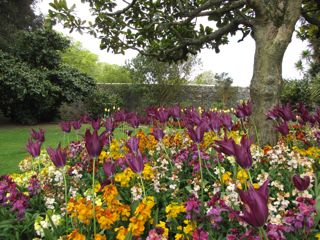
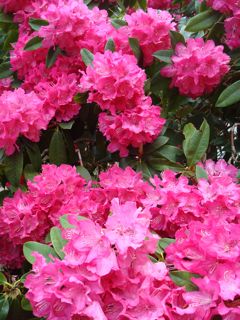
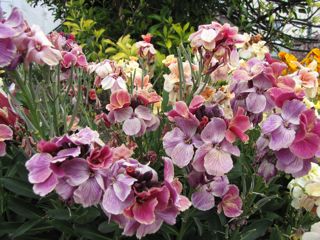
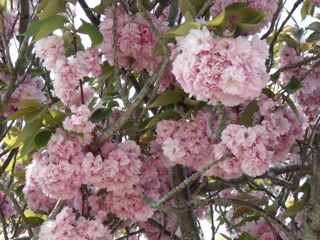
It’s April 1st, and I’m getting just a wee bit sick of looking out at snow. Oh, to see some greenery or colour! So I went through an old photo album and came across a few pictures I took on a trip to Guernsey a few years ago.

Closer to France than Britain, the Island of Guernsey is a British Crown Dependency. I’ll talk more about the island and its history in next Wednesday’s travel blog, but for now just enjoy some of the wonderful displays of flowers to be found there!  (And let’s hope spring arrives in Calgary soon!)

garden 2garden

roddiesmoneky


purlepink

Vera Brittain

It’s never been hard to find books chronicling men’s experiences in war. However, the first account I can remember reading of a woman’s experience during World War One was that of Vera Brittain in her book Testament of Youth.  It’s the harrowing true account of a young woman who loses her fiance, her brother and many of his friends in the killing fields of Europe. Not willing to sit idly by and watch the war from the sidelines, Vera trained as a nurse and served overseas.

Vera Brittain’s story was first told on-screen by the BBC in an adaptation which can be found on Youtube.  Just weeks ago, filming began on a new adaptation of Testament of Youth, a feature-length film, also by the BBC.  It will be released in 2015.

Although I knew Vera Brittain was a novelist, I didn’t realise she’d also written poetry. Here is one of her most famous war poems, The Sisters Buried at Lemnos, written in 1916 after she visited the graves of two Canadian Army Nurses buried on that island.

THE SISTERS BURIED AT LEMNOS

O golden Isle set in the deep blue Ocean,

With purple shadows flitting o-er they crest,

I kneel to thee in reverent devotion

Of some who on thy bosom lie at rest!


Seldom they enter into song or story;

Poets praise the soldier’s might and deeds of War,

But few exalt the Sisters, and the glory

Of women dead beneath a distant star.


No armies threatened in that lonely station,

They fought not fire or steel or ruthless foe,

But heat and hunger, sickness and privation,

And Winter’s deathly chill and blinding snow.


Till mortal frailty could endure no longer

Disease’s ravages and climate’s power,

In body weak, but spirit ever stronger,

Courageously they stayed to meet their hour.


No blazing tribute through the wide world flying,

No rich reward of sacrifice they craved,

The only meed of their victorious dying

Lives in the hearts of humble men they saved.


Who when in light the Final Dawn is breaking,

Still faithful, though the world’s regard may cease,

Will honour, splendid in triumphant waking,

The souls of women, lonely here at peace.


O golden Isle with purple shadows falling

Across thy rocky shore and sapphire sea,

I shall not picture these without recalling

The Sisters sleeping on the heart of thee!


Story Inspiration

On Monday morning, I’ll be sending my novel – Invincible Summer – out into the world in search of an agent. It’s a story I love and have carried in my heart for many years, so I will be releasing it from my laptop with hope… and not a little trepidation.

Invincible Summer tells the story of Maggie MacDonald, a twenty-one year-old Scottish nurse, who finds herself thrown into the crucible of World War Two when she volunteers for the Queen Alexandra Imperial Military Nursing Service. Despite facing many dangers, Maggie survives the war, but struggles to survive the peace.

I always find it interesting to find out where authors find the inspiration for their stories, so here’s a little background on Invincible Summer.

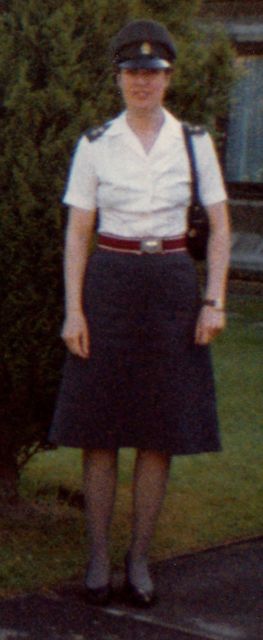
DianaQABack in 19-something or other, I received a commission as a Lieutenant in the Queen Alexandra Royal Army Nursing Corps – Reserve.  (QARANC)  The Reserve part means that I was in the Territorial Army, living my normal daily life, attending training sessions once a week and a minimum of two full training weekends a year. Should Britain have gone to war, I would have been called up to serve with the Military Hospital to which I was attached.

I also had the opportunity to attend a one-week Junior Officers Training Course in Aldershot, and during that time, we were taken to visit the QA Museum. (Now part of the Army Medical Services Museum.) There were all kinds of fascinating items on display, but two objects in particular caught my attention and ultimately inspired Invincible Summer.

The first was a rosary made from tiny bits of tar, looped together with thread taken from the uniform worn by an inmate Roman Catholic priest at Belsen Concentration camp. As I remember it, he gave it to the QA who ‘saved his life’. Until that time I hadn’t realised British army nurses had been amongst the first military personnel into the concentration camps following their liberation in 1945. Accounts of what they experienced are horrific, but those young women cared for their patients with kindness and professionalism.

The second was a QA cape. Inside were sewn army badges from many of the patients its owner had cared for; soldiers from all services in the British Army, Canadians, Australians and more. Remember that most of these QAs were young women in their early 20s, fresh out of nursing training. As commander of the British Army, Field Marshall Montgomery ordered that QAs serve as close to the front line as possible to raise the morale of the fighting soldiers. And whereas nurses in civilian hospitals were expressly forbidden to wear make-up or perfume, a hint of lippy and scent was actively encouraged amongst the QAs – again to raise morale.

QA2That week in Aldershot, I also had the opportunity to meet the inspiring Dame Margot Turner who I have spoken about in a previous blog. (Someone really needs to make a film about her life!) And I also picked up a book where I learned that at the start of World War Two there were six hundred and forty or so serving QAs scattered around what was still the British Empire. However, less than ten months later, 1,300 young QAs found themselves standing shoulder to shoulder with the soldiers of the British Expeditionary Force awaiting rescue from the beaches of Dunkirk. Until then, I had NO idea there were army nurses at Dunkirk.

The road to submitting Invincible Summer has been a long one. Working with my writing partner Margaret Thomson, we drew up a first draft of a novel entitled ‘Promises’ which told the story of 3 young student nurses who meet in Glasgow in 1936 and follows their lives through to 1946. We followed that up with an idea for a TV series, ‘The Scarlet and The Grey’, focusing on 4 QAs in a Field Hospital in World War 2 France.  A major British production company  shopped The Scarlet and The Grey around the TV networks… but sadly it didn’t get picked up.

And now comes Invincible Summer. Please wish it well as it sets out on its journey in search of a publisher.