Longbourn – Jo Baker

dt.common.streams.StreamServer.clsI’m putting my cards on the table here; I’m a Jane Austen fan. My three favourite books of her are – in order – Persuasion, Pride and Prejudice and Emma.

Because I love her characters so much I’ve read a few Pride and Prejudice spin-offs, but most of them have left me rather underwhelmed.

Until now.

Maybe that’s because most writers have tried to re-imagine Jane Austen’s beloved characters whereas in Jo Baker’s book Longbourn, she observes them. They impact the story only as their actions affect her main characters – the servants.

When I was studying Pride and Prejudice at university, my tutor complained that although Jane Austen was writing during the Napoleonic wars, she never discussed the conflict or its impact on society.

Then, as now, I found that comment very unfair. Austen frequently talks about the presence of the militia and she was writing to an audience who was well aware what was going on in Europe.

Unless one is personally involved in a conflict, war remains an abstract concept. Following the end of English Civil War in the mid-17th century until the first air-raids during World War One, England did not experience war first hand on its soil.

My tutor also complained that we only got glimpses of the servants in her books. But Jane Austen was not writing about the lives of the servants.  For me the fact that she doesn’t mention them reveals a huge amount about Jane’s class and society – and my tutor’s prejudices. (‘scuse the pun.)

All his reservations are addressed in Jo Baker’s Longbourn. Told from the servants’ POV, this is a delightfully fresh approach to a very familiar story allowing us to see the Bennet family, and others, in a completely new light.

I loved this story and particularly loved Jo Baker’s voice.  I look forward to reading more by this excellent writer.

http://www.youtube.com/watch?v=53C78TclDyE


Blog Hop – Victoria Smith

meA few weeks ago, Victoria Smith joined in my blog hop. Here are her answers to the four writing questions. For more about Victoria, please check out her website: http://girltrieslife.com

Thanks, Victoria!

1) What am I working on?

Due to Camp NaNo, I’ve put edits for Girl Tries Life on hold at the moment so that I could write new material for  Book 2, Girl Tries love. It’s a series set on Rothnarr, a remote island on the West Coast of Scotland.  During Camp NaNo I was also inspired with ideas for a couple of children’s books, and I have a new adult contemporary romance on the back burner set in S.E. Asia.  So… I have plenty to keep myself busy.

2) How does my work differ from others in the same genre?

There are billions books of books out there in the world, so how do I really know that my work is different? I believe that I give my characters a strong voice. I think I straddle the line between chick lit and contemporary romance.  Crazy things happen to my characters, but they are ultimately strong women.  Love, however, can make the strongest person do strange things.

3) Why do I write what I write?

I’m not going to say I have a literary masterpiece in me… it might happen yet, but until then I write what I enjoy reading. I read across multiple genres, but the ones that make me feel good, laugh and smile as I close the pages are generally chick lit.

4) How does my writing process work?

Process?  Hmmm, depends on the month.  If it’s Camp NaNo or NaNoWriMo, I’m in my sprinting element.  Outside of those months of productive chaos, the process is all over the place.  The one thing I learned and learned HARD from my first draft of my first book is that I need a strong outline. While I’d much rather, in the spur of the moment, write to my heart’s content, if I’m honest with myself I have one or two scenes perfectly envisioned, but don’t know how to tie the rest of the story together. If I properly spend time on the outline, then I can keep the writing momentum going and there is much less rework at the other end.  It makes my first draft pretty darn clean.

Other bits of my process?  Coffee, coffee and coffee.  Okay, occasionally tea, but coffee to start.

Gary Bonn – Blog Hop

gary


Many thanks to Gary Bonn for tagging me in his blog hop last week.

Here are his answers to the same questions.

For more information about Gary and his writing, please check out his website: http://garybonn.com or Twitter @garybonn


What am I working on?

I shouldn’t be writing. What I should be doing is…

1) Editing other people’s books to help them (and my bank account)

2) Re-writing six books I’ve already written and bringing them up to a better standard.

3) Doing a final structural edit of two of my books that are about to be published.

… but what I’m actually doing is writing a book about a young woman who is snatched from her apprenticeship, thrown, against her will, into university, and asked to save the world from mathematicians, who are inadvertently in league with the devil.

How does my work differ from other works in the same genre?

I write in… let me count… um, lots of genres. Help! I don’t know how to answer this question. I have a note from my mum and everything.

My Y/A books, already published, are theme-driven and the themes are pretty unusual. Sadly, there are no girls falling in love with vampires, but there is 17 year-old Jason who has lived feral on beaches since he ran from a children’s home at 11 and thinks in a way that is pivotal in resolving a nationwide crisis (Expect Civilian Casualties), and Beatha, of the same age, whose struggle with mental illness inspires the rest of humanity; well, those people who don’t want her dead (The Evil and the Fear).

Why do I write what I write?

Themes! As well as editing fiction I edit autobiography. There’s nothing more inspiring and mind-blowing than the themes that develop through someone’s life. They are the intoxicating revelations, the passions, the motivations behind whole crusades, heroism and the paradigm-shifts that turn our perceptions upside-down. These are what my life is about and I want to share them.

How does my writing process work?

A bit like a prototype racing car. Terrifying, unpredictable and high-octane, or sat in the garage for days while people scratch their heads.


Dougie Maclean – Caledonia

dougie2I’m still thinking about Dougie Maclean’s concert last week and playing his music on my iPod as I’m writing this. All his songs are very beautiful and powerful but, when people go to one of his concerts, there is one song, above all, they want to hear.

Caledonia.

Caledonia was the name the Romans gave to Scotland, the country beyond the wall that they were unable to conquer.  (Sound familiar, Game of Throne-ers?) Somewhere around Perth (not Hadrian’s Wall) is where The Roman Empire ended. Caledonia, the song, has become popular world-wide.

The Americans love it, the Irish claim it as their own. It’s played at weddings, funerals, football matches, military tattoos, rugby games, adverts and is often called Scotland’s unofficial national anthem.

Dougie Maclean calls Caledonia his loveable monster because it’s taken on a life of its own. He wrote it a long – long – time ago on a beach in France when he was feeling very homesick. It’s a song of longing – and belonging – written from the heart.

And therein – I believe – lies its magic.

As writers we’re told to write about the specific, not the general. By writing about the specific – in the case of Caledonia, Maclean’s homesickness – he touched on one of the unique experiences and emotions every single person in the world feels, understands and relates to.

You don’t need to be Scottish to understand the love you have for your homeland – whatever that country may be – or your need to be with your ‘ain’ folk.

You just need to be human.

There are all different versions on Caledonia available on Youtube, but even though I’ve already posted this one several times it remains my favourite.  Enjoy.

Dougie Maclean – The Scythe Song

I’m on my holidays and finding it hard to stick to my routine of Mon/Wed/Friday posts on History/Travel/Writing. Which is a good thing really, because holidays are a time for stepping back and taking time to look at yourself in the world.

Dougie maclean1One of my best experiences this trip has been the opportunity to hear Dougie Maclean perform in a tiny village hall in the back-of-beyond Perthshire. For those of you who don’t know of him or his music, if you’ve ever watched the film The Last of the Mohicans and listened to that wonderfully hypnotic music – that’s his. Or how about ‘Caledonia‘, a song that people around the world have taken to their hearts – his ‘loveable monster’ as he calls it – and which one day may become Scotland’s national anthem.

One of the songs he performed the other night was The Scythe Song, a haunting and incredibly wise song about learning, practise and patience.

He told us the story behind it; of how his father, a farmer, was skilled at scything the old-fashioned way, slicing through the wheat which then fell to the ground with a softly whispered hishh. Dougie tried to copy him but was unable to match his father’s skill.

“Oh, this is not a thing to learn inside a day,” his father says in the song. “Stand closely by me and I’ll try to show you the way. You’ve got to hold it right, feel the distance to the ground.  Move with a touch so light, until its rhythm you have found. Then you’ll know, what I know.”

The final verse suggests that years later Dougie’s daughter asked him to show her how to play like him. “So little dancing girl you want to learn to play a tune. One that your heart can fill to help you shine under the moon.”

His reply? “Well, it’s not a thing to learn inside a day. Stand closely by me and I’ll try to show the way.”

Then, by changing one single word and adding another, he completes the circle and teaches all of us that, no matter what our passion, whether it’s writing, singing, knitting, sports, building, engineering, science, the answer is the same.

“You’ve got to hold it right feel the distance to the sound
Move with a touch so light until its rhythm you have found
Then you’ll know what I know now.”


Famous Scottish Writers

Typing ‘Scottish writers’ into Google brings up pages and pages of names. As I said in Monday’s post, for such a small country, Scotland has produced a disproportionate amount of talent.

Here are just a few of those names.

Thomas Carlyle – I’m embarrassed to admit I’ve never read any of his work, but he was one of the most important philosophers of the 19th Century. Click here to read some of his most famous quotes. The one I found most inspiring: ‘He who has health has hope; and he who has hope has everything’.

Robert Burns – If you’ve ever sung Auld Lang Syne at New Year, you’ve sung this famous poet’s words.

Sir Walter Scott – Ivanhoe, Rob Roy.

J.M. Barrie – Peter Pan.

Robert Louis Stevenson – Treasure Island.

Sir Arthur Conan Doyle – The creator of Sherlock Holmes

A.J. Cronin – not quite so popular now, but a huge name in the 40s with The Citadel and Dr Finlay’s Casebook.

Alistair MacLean – The Guns of Navarone. Where Eagles Dare.

Muriel Spark – The Prime of Miss Jean Brodie

Kenneth Graham – Wind in the Willows. (I have to admit this was a surprise as it has always seemed a very ‘English’ book to me.)

Iain Banks – The Crow Road

Ian Rankin – Rebus Detective Series

Val McDermid – Crime Writer (Tony Hill Series)

For the Scottish Independence Referendum in September this year, the Scottish Government defines a Scot as someone who chooses to make Scotland his or her home. Under those ‘rules’, here are a few other names you might recognise.

Louise Welsh – Crime writer

Julia Donaldson – Children’s writer.  (The Gruffalo)

J.K. Rowling – Harry Potter series.

Not bad for a small country. What names would you add to this list?

Elinor Glyn – Part Three – Screenwriter

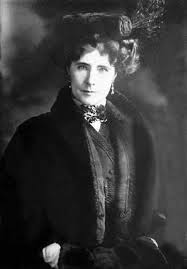
elinorCheck out imdb and you will find that Elinor Glyn has 28 screenwriting/story credits, three producing credits and two credits for directing. She also wrote 30 novels (some which were turned into films) a collection of short stories and at least 6 non-fiction books.

Her most famous film, ‘It’ starred Clara Bow, and introduced a new expression into the English language which we still use today. Elinor was paid $50,000 for that particular movie.  When I tried to convert that into a modern-day equivalent, various websites suggested between $660,000 and $8 million.  A huge difference, but I think it’s still fair to say it was – and is  – a lot of money.

Elinor Glyn defined ‘It’ as… that quality possessed by some which draws all others with its magnetic force. With ‘It’ you win all men if you are a woman and all women if you are a man.  She also said of an ‘It’ Girl, that, ‘She must be entirely unselfconscious and indifferent to the effect she is producing. Self-consciousness destroys ‘It’ immediately.’

Clara Bow was ‘the girl’ in ‘It’ and Elinor Glyn is credited with boosting not just Bow’s career, but also that of Gloria Swanson, turning the latter from ‘giggling starlet to elegant star’.

Although Elinor Glyn has been portrayed on-screen by Joanna Lumley in The Cat’s Meow, I think it’s about time this remarkable and inspiring woman got a movie – or TV series – all to herself.

Until then, click here, to see Elinor Glyn make an entrance (at 45 seconds) in her own movie ‘It’.


Elinor Glyn – Part Two – At Montacute

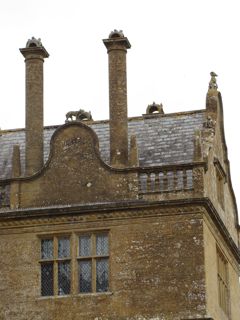
MONTACUTE4Montacute House is a late Elizabethan house in the village of Montacute in Somerset, England.  Its original owner, Sir Edward Phelps, was the prosecutor during the trial of the Gunpowder Plotters, who included Guy Fawkes.

The Phelps family owned the house until 1929 when it was put up for sale, valued at 5,882 GB pounds ‘for scrap’. Fortunately it was bought by the grandson of Thomas Cook (of the travel company) and donated to The National Trust.

The house has been used in several films: Sense and Sensibility (1995), Elizabeth (1998) and The Libertine (2004)

MONTACUTE5So where does Elinor Glyn come in to all this?  Elinor lived at the house with her lover, Lord Curzon, for 18 months. Did Elinor hope to become Lady Curzon? Curzon was an ambitious man. A former Viceroy of India, he had dreams of becoming Prime Minister, but would the public have accepted Elinor in the role of Prime Minster’s wife?

MOTACUTE1Elinor was staying at Montacute awaiting Curzon’s return from London when she read in the Sunday papers of his marriage to a rich American widow.

Very hurtful and very humiliating.

But he never did become Prime Minister and she went on to find fame and fortune in Hollywood.


Elinor Glyn – Part One

A screenwriting friend recently drew my attention to an article she found on-line. In contrast to women’s experiences in modern-day Hollywood, did you know that once upon a time, women were the most famous and well-paid screenwriters?

As I scrolled through the list of names, the picture of Elinor Glyn caught my attention. I’d never heard of her until a few years ago when I visited the stately home of Montacute in Southern England where she lived with her lover Lord Curzon – but what a woman! Once again I have to ask, Why hasn’t someone made a film about her life?

Elinor Glyn was born Elinor Sutherland to a Scottish father and Canadian mother on the Channel Island of Jersey in 1864.  Following the death of her father, her mother took Elinor and her sister Lucy (who went on to become the famous dress designer Lucille) back to Guelph, Ontario.  They remained there until Elinor was eight before returning to Jersey on her mother’s remarriage.

Elinor married Clayton Louis Glyn, a barrister, in 1892.  They had two daughters, but due to his recklessness with money, Elinor was forced to begin writing to keep the family financially afloat.  Elinor essentially created the modern romance novel, her most famous work being the ‘scandalous’ (for its time) Three Weeks.

It was an unhappy marriage and Elinor had several affairs which scandalized Edwardian Britain. A famous poem of the time was: Would you like to sin With Elinor Glyn On a tiger skin? Or would you prefer To err with her On some other fur?

Following the death of her husband in 1915 and the end of her relationship with Curzon, Elinor moved to Hollywood in 1920 where she became a very successful screenwriter – but more about that on Friday!

Advice To A Young Author – Arthur Conan Doyle

I visited the Surgeons’ Hall Museum in Edinburgh on my last visit there, a fascinating – but quite gruesome – place. One of the exhibits detailed Sir Arthur Conan Doyle’s training as a doctor at The Royal Infirmary of Edinburgh before he became celebrated as the creator of Sherlock Holmes. It included the following poem, which I found both inspirational and thoughtful.

ADVICE TO A YOUNG AUTHOR by Arthur Conan Doyle

First begin

Taking in.

Cargo stored,

All Aboard.

Think about

Giving out,

Empty ship,

Useless trip!


Never strain

Weary brain.

Hardly fit,

Wait a bit!

After rest

Comes the best.

Sitting still,

Let it fill.

Never press,

Nerve Stress

Always shows

Nature knows.


Critics kind,

Never mind.

Critics flatter,

No matter.

Critics curse,

None the worse!

Critics blame,

All the same.

Do your best,

Hang the rest!