History Mystery

Although I’ve chosen to make Canada my home, I still love my country of birth. So when I find a historical story that connects the two I get really excited!  But sometimes that excitement can lead to ‘historical’ frustration.

The book,  TEA AT MISS CRANSTON’S, (not related – at least, I don’t think so) recounts the memories of Glaswegians growing up in the city in the first half of the 20th Century. Inside its pages I found this fascinating nugget.

Chapter 15 – Their Weans Would Never Be. P127

Another fleeting recollection of 1915 was the swift passage through wartime Glasgow in a bleak week of smirring drizzle and gloom, of an exotic party of Canadian Indian troops commanded by Chief Clear Sky.  They were on their way to the war and sampled Glasgow hospitality enjoying a first, and no doubt last, taste of black pudding.

But they left one young Indian behind.  His name was Gay Flier.  He was very very ill with flu and died in Govan Military Hospital.  My grandpa had been seeing to Chief Clear Sky’s men when they were in Glasgow and so’s not to let the boy get buried in an unmarked grave he claimed the body and saw to it that there was a right funeral in Glasgow with magistrates there, a gun carriage and a party to fire a salute at the grave.  It wasnae among his own open-air folk, but it was better than being not heeded at all.

Absolutely incredible! I had to find out more, so the last time I was in Glasgow I headed to The Mitchell Library to undertake some research on this young native Canadian soldier. Although I came up with plenty of newspaper coverage of the regiment landing in Glasgow and going through to Edinburgh (click on this link) there was nothing about the soldier himself.

I’m determined to solve this mystery. If anyone out there has any ideas how to go about this, I would love to hear from you!

Outlander

The first book in the Outlander series definitely ranks in my top ten list of favourite reads. If what you want is to lose yourself in a blockbuster story, it’s got it all; great characters, a love story, adventure, history and a little fantasy to boot. Best of all, it’s set in Scotland!

It’s taken a long time to get this to the screen. There was talk of a movie at one time, but it’s too big a story for a two-hour film. Now, probably partly due to the success of Game of Thrones, it’s just started filming in Scotland with a 2014 TV air date.

I’m excited yet nervous at the prospect, and can only hope the producers manage to realise Diana Gabaldon’s vision in the same way David Benioff and D.B. Weiss managed with G.R.R. Martin’s epic.

We’ll have to wait and see, but until then you might want to check out this website to keep up to date on the series’ progress.

http://outlandertvnews.com/2013/10/photos-of-outlander-filming-1940s-claire-and-frank

The Great Canadian Bucket List.

My daughter has travelled the world and one of her favourite travel writers is Robin Esrock.  He was here in town a few weeks ago promoting his new book The Great Canadian Bucket List so I went along to hear his talk.

We all know Canada has the most amazing scenery and fabulous history.  Living here in Calgary, I’m fortunate enough to have the Rockies in my backyard. But I didn’t know Canada has its own Dead Sea.  Or its own Da Vinci Code? Did you?

I’ve always fancied a cycling holiday in France – all that great scenery, food and wine  – but it turns out I don’t have to cross the ocean to savour the experience. Quebec has its own 230 km bike trail Le P’tit Train Du Nord (ski trail in winter) that sweeps through forests and villages, past rivers and golf courses and – best of all – is mostly FLAT!

Yesss!

Dame Margot Turner

Of the four women I’ve presented in this run up to Remembrance Day, Dame Margot Turner is my personal favourite. While we bandy around the word ‘hero’ rather easily these days, I’ve found that the mark of a true hero(ine) is that you often don’t realise you’re in their presence. 

As a young Lieutenant in the QAs (British Army Nurse), part of my training in Aldershot included a visit to the QA Museum. It was a fascinating place and when the tour was complete, I duly went into the bookshop to buy a book on the regiment’s history from the older, grey-haired woman, dressed in a yellow sweater and beige trousers, serving behind the counter. Our instructor nudged my arm. “That’s Dame Margot Turner,” she said. “You should ask her to sign your book.” I had no idea who Dame Margot might be, but my army instructor had told me to ask for a signature, so I asked for a signature.

What a revelation.

Born in 1910, Margot Turner joined the QAs in the 1930s.  Her first overseas posting was to the Far East and she was serving in Malaya when the Japanese invaded in 1941.  Ultimately the only survivor after her ship was torpedoed, she kept herself alive on a makeshift raft, under the blazing sun, by condensing water in her powder compact until she was picked up by a Japanese ship.

Margot Turner then survived the following three and-a-half years in various brutal prison camps. After the war was over, she continued serving in the Queen Alexandra Royal Army Nursing Corps rising to the rank of Colonel Commandant before retiring. She was awarded the MBE and DBE for her service.  This video shows her accompanying Princess Margaret on a tour of the QARANC Centre in Aldershot.

Dame Margot Turner’s story was told on the British Television Show This is Your Life, where she was reunited with some of her former camp colleagues.  The show ended with them singing The Captive’s Hymnwritten by one of their own, which they had sung in the camps.  A young producer watching the show, was so inspired by Dame Margot’s story that she went on to create one of the BBC’s most loved series of the 1980s Tenko, which told of the horrors these brave women experienced.

Dame Margot Turner.  1910-1993.  True Heroine.

http://www.youtube.com/watch?v=2CmSsQWTWgw&list=PLinfu3kfxgIsBGa-Mwc24Kl-BzcVrNPpI

Remembrance Sunday

My Dad, who served in WW2, was one of the 350,000 soldiers rescued from the beaches of Dunkirk in May 1940. Thereafter, he attended church for only one of 4 reasons;  Baptisms, Weddings, Funerals and Remembrance Sunday.

The Saturday evening before Remembrance Sunday, we’d gather around the TV as a family to watch the Festival of Remembrance from The Royal Alberta Hall in London.

Then, as now, the two minute silence and falling of the poppies, each one representing a soldier (male or female) who perished in a British War, remains one of THE most profound ceremonies I have ever witnessed.

That Men May Fly

I took in a show at Lunchbox Theatre here in Calgary yesterday.  It’s playing until November 16th at Lunchbox Theatre, and if you’ve an interest in the Albertan experience during World War Two it’s worth catching before it ends.

Theater programme

Between December 1939 and March 1945, 107 schools in Canada trained over 130,000 graduates for the RAF and RCAF through the British Commonwealth Air Training Plan. That Men May Fly, written by Winn Bray, tells the story of two of those airmen and a female mechanic stationed in Fort MacLeod, in Alberta.

If you would like to learn more about the BCATP, it’s worth checking out the Canadian film For The Moment, starring Russell Crowe.  At one point, he recites the poem High Flight, which was written by  John Gillespie Magee, a young American who flew with the Royal Canadian Air Force and was killed at the age of 19, flying over England in 1941.

High Flight

Oh! I have slipped the surly bonds of Earth
And danced the skies on laughter-silvered wings;
Sunward I’ve climbed, and joined the tumbling mirth
of sun-split clouds, — and done a hundred things
You have not dreamed of — wheeled and soared and swung
High in the sunlit silence. Hov’ring there,
I’ve chased the shouting wind along, and flung
My eager craft through footless halls of air….

Up, up the long, delirious, burning blue
I’ve topped the wind-swept heights with easy grace.
Where never lark, or even eagle flew —
And, while with silent, lifting mind I’ve trod
The high untrespassed sanctity of space,
– Put out my hand, and touched the face of God.

The Bechdel Test – Part 2

You know how, when you get pregnant, you suddenly start noticing pregnant women and babies everywhere?  That’s how I’m feeling with The Bechdel Test this week.

Even though it was created in 1985,  I’d never heard about it until ten days ago, but now it seems to be, well… all over the media!

It’s not a perfect test, but it does make you think about how women are portrayed on-screen and in books. And it turns out the Swedish government are taking it to heart and considering a proposal that all films released in that country now carry a Bechdel rating.

Interesting.

Click Here to read an article on Sweden’s decision in this week’s Independent newspaper.

Bonfire Night!

Remember, Remember, The Fifth Of November, The Gunpowder Treason And Plot…

Of course our school teachers taught us the history behind Guy Fawkes Night – how he was captured in an attempt to blow up the Houses of Parliament and executed – but as children, November 5th meant only one thing. Bonfire night – with fireworks on the side!

Oh, the excitement when Dad came home brandishing a brand new blue box of Brock’s Fireworks. I can see it all in my mind’s eye; my breath puffing in front of me like dragon’s breath in the dark frosty night, the damp air heavy with the scent of rotting leaves and chimney smoke.  Dad places the rockets in empty milk bottles and pins Catherine wheels to the trunk of the lilac tree before setting them off in a burst of colour. And don’t forget the sparklers! Oh no, don’t forget that explosion of golden stars in your hands.

guy fakwes

Then joining neighbours for a bonfire in the street, and next morning, us kids scouring for spent fireworks to see if we could relight them. (Thank goodness Health and Safety wasn’t around in those days.  They would have spoiled all the fun.)

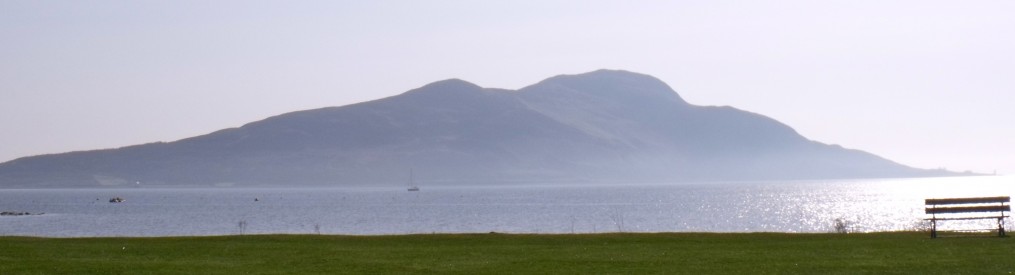
But one of the most magical Guy Fawkes nights I remember was exactly ten years ago on the Isle of Arran.  Standing on the beach, with the bonfire roaring behind us, we looked across the 20 mile stretch of black water to the Ayrshire coastline as tiny prickles of colour – blue and red and silver and green and gold – sizzled to north and south as far as the eye could see.

Magic.  Pure magic.


Nurse Edith Cavell

Edith Cavell, the daughter of an English minister, was born in 1865. After spending 5 years in Brussels working as a nanny, she returned to London in 1895 to train as a nurse.

In 1907, she set up her own training school for nurses in Brussels.  She was home visiting her mother in England in 1914 when war was declared but decided to return to Belgium. When that country fell to the Germans, her clinic and training school were taken over by the Red Cross.  Some of her nurses chose to leave for Britain, but Edith Cavell remained, treating Allied and German soldiers alike.

As a member of the Red Cross, she should have remained neutral, but she actively helped over 175  British and Allied soldiers – or men of military age – to escape to neutral territory. This was to be her downfall.

Arrested by the Germans in August 1915, she confessed to helping the Allies. A military trial followed. Although the Germans had the law on their side by sentencing her to death, their decision outraged the world.  Despite appeals from the American and Spanish embassies, she was executed by firing squad on the morning of October 12th, 1915.

Just before she was taken out to be shot, Edith Cavell made this statement.  Standing as I do, in view of God and eternity, I realise that patriotism is not enough. I must have no hatred or bitterness towards anyone.

After the war, Edith Cavell’s body was returned to England and she is buried in her hometown of Norwich. Memorials to her memory were created around the world, including a statue erected close to Trafalgar Square in London, and a mountain in Jasper National Park being named in her honour.

Released in 1939, the year the Second World War began, the film Nurse Edith Cavell recalled her actions for a new generation.

Please link to this website for more information on Edith Cavell’s remarkable life and upcoming celebrations scheduled for the First World War remembrances in 2014.

The Bechdel Test

Two friends discuss the following subjects over lunch: projects they’re currently working on; agenda topics for an upcoming board meeting; plans for the weekend; current events and the silent rise of China; a BBC documentary on Britain in the 1970s; The Fall of the Ottoman Empire and its impact on modern day Middle Eastern politics; The Bechdel Test.

Can you guess their gender from their conversation?

The correct answer is female, but if you write for film, television or a large percentage of book fiction, they could only be male. According to most films and TV shows, two women talking together can only discuss one subject – the men in their lives!

Enter The Bechdel Test. Put simply, for a story to pass The Bechdel Test, it must meet the following 3 requirements:

1) It must contain at least one scene with two named women in it…

2) Who talk to each other…

3) About something besides a man.

One scene. It’s not really aiming the bar very high, is it?  But it’s depressing how few films manage to achieve even that.

Here is a list of famous movies that fail The Bechdel Test. The Social Network, Harry Potter and the Deathly Hallows Part 2, Avatar, The original Star Wars Trilogy, The entire Lord of the Rings Saga, Run Lola Run. (To read why, click here.)

And here are some more popular films that also failed.  The Dark Knight, Ghostbusters, Wall-E, Pirates of the Carribbean (all), Men in Black, Austin Powers (all), The Princess Bride, Braveheart, When Harry Met Sally, Home Alone, Shrek, Gladiator, Up.

What I find depressing about the second list is how many of those films were geared towards women and children.

So, all you writers out there, I challenge you to include at least one – just one – scene in your story, whether it’s for the screen or page, that would pass The Bechdel Test.

And if you’re still reading this post… here’s an interesting article on how Shakespeare fares when you apply The Bechdel Test to his works. You might be surprised!