Disengage the digital and engage the mind.

I’ve been having trouble focusing on my writing recently. I might claim writing’s the most important thing in my life  – after my family –  but over the past few weeks I’ve not been giving it the attention it deserves or requires. To try and help get my focus back, I picked up a copy of MANAGE YOUR DAY from Kindle and have been working my way through it.

One contributor to the book remarked that we can’t seem to allow ourselves to enjoy the moment nowadays – that faced with a few minutes of ‘spare time’ we immediately plug ourselves in to some kind of electronic device (phone/e-reader) and cut ourselves off from the world.

So…long story short.  About an hour ago I found myself waiting for a bus downtown. (Last time I used transit, a single adult fare was $1.65.  Now it’s $3.) My immediate response was to pull out my Kindle, but then I thought: Wait a minute. Doesn’t that mean I’m doing exactly what the writer of the book says I shouldn’t do?

So, from 1402h to 1406h, on 5th and 5th in Downtown Calgary, I put down my Kindle, and this is what I saw.

A car that had bronze rims – instead of silver – over black tyres. They looked really cool.

A slim guy, in running gear, running along the sidewalk, discussing a business deal while talking on his phone – he was so fit that he was neither breathless nor breaking a sweat. 

A slim guy, in a business suit, running along the sidewalk (late for a business meeting?) red in the face and out of breath.

Two food trucks driving past.  City council okayed them a while ago – must try one out sometime. 

The bright blue metal transit seat I was sitting on had an open mesh/grated design.  Is that because we get snow in the winter and it melts easier?

A burst of laughter from five window cleaners across the street taking a break.  Four guys, one girl (with blue hair). What does it feel like to clean the 40th floor windows?  And how do you prevent yourself from getting a blue face when you dye your hair that colour?

A few people wearing ear buds on their iPods (closing themselves off to the world – according to the book) but quite a few people wearing headphones of really funky colours.

It’s 20C out today, so quite a few open top cars.

Several men of ‘a certain age’ wearing ponytails.  Is that because they grew up in the seventies… or an attempt to hide their bald patches?

I ‘unplugged’ for four minutes and collected a wealth of data for setting a scene in a downtown location.  Am I likely to use it in the near future?  Probably not, but you never know. But what if we, as writers, take four – oh, go on, make it five – minutes each day to unplug and just look, listen, smell and feel what’s going on around us?  Imagine the detail we’d have for our stories.

BTW, if you’re on a Calgary bus, trying to exit out the back door, and don’t want to look like a total numpty who hasn’t been on one since the fare was $1.65, a word of advice: when the green light goes on above the door, you PUSH the door open!  :o)

Working with a Critique/Feedback Group

The Alberta Romance Writers’ Association (ARWA) runs a winter and summer writing ‘challenge’ programme. This is an opportunity for small groups of members (3-4) to meet online once a week to read and offer support and feedback on current works in progress. The aim is to produce a first draft manuscript over a 3-5 month period.  Currently we have an 80% completion rate and interest in the ‘Challenges’ continues to grow.

For those of you who have never been a member of a critique group, what kinds of things should you consider before taking the plunge, either with ARWA or with your own writing group?

Being a member of a critique group involves both Giving and Receiving.

GIVING:

1) Tread with care. It seems to be human nature for us to remember the negative things people say about us rather than the positive. There’s a line in the movie You’ve Got Mail where Tom Hanks tells Meg Ryan, “It’s not personal, it’s business.” She responds with, “It’s PERSONAL to ME.” Writers who offer their work up to peers for review are putting themselves on the line.  If you flat out say ‘I don’t like it,’ that’s as good as telling someone their baby is ugly. If something doesn’t work for you, try and figure out why.

2) Focus on the positive. My personal creed is to preface my feedback with at least 2-3 things I liked about the manuscript and also end on a positive note.

3) Ensure your comments will help the writer tell the story s/he wants to tell, not how you would write it.

4) Try to find out what the writer wants from a critique.  If they ask for something specific – eg I think my hero might be too unsympathetic – then focus on instances where a little tweaking of a word/action could turn that around.

5) If you feel the writer has a lot to learn, don’t try and overwhelm them with feedback. Concentrate on the one thing you feel is most important to address in that week’s particular submission – eg POV, passive voice etc.

6) Try to give at least one checkmark or ‘nice’ on each page –  eg. for a piece of dialogue/description etc.

7) On a personal note, if I’m critiquing a hard copy of a manuscript, I prefer to use a pencil rather than a pen.  If I’m commenting digitally, I will use a grey font colour rather than a coloured one.  (Never use red – too much like school!)


RECEIVING:

1) Make sure you take note of the positive things people say about your manuscript.  Sometimes we only hear the bad things, so be very careful you don’t throw the baby out with the bathwater if/when you decide to do a rewrite based on the feedback you receive.

2) Most feedback is subjective.  (Remember the dozen or so editors who turned down Harry Potter?) However, if you have two or more people saying the same thing – eg POV/weak characterisation – then that’s maybe something you should look at.  However, you might also get into a situation where 2 people like something and 2 people don’t. Who is right and who is wrong?  It’s up to you to decide. It’s your story.

3) Don’t defend your manuscript or get into an argument over it. If someone doesn’t get what you’ve written, they don’t get it.

4) A discussion is not the same thing as an arguement. Discussions can be very useful.  For example, going back to the unsympathetic hero, I might make a suggestion which the writer doesn’t like – eg what if he helps an old lady across the street –  but that might trigger a comment from someone else which does work for the writer, or at least sets the writer on the path to find his or her own solution.

5) Remember, this is YOUR story.  It’s up to you to decide whether or not to use the feedback you’ve been given.


I love – love – watching TV!

I’ve just been watching the Queen’s 60th Anniversary of her Coronation on TV. I wasn’t alive at that time, but I know that my parents bought their first TV – as did thousands of others up and down the country – to watch the ceremony. I still have the table on which that original TV sat – it now holds my printer – and I remember that it took a while for the TV set to warm up after you turned it on. I loved – loved – that warm dusty smell when I switched it on at lunchtime to watch The Woodentops.

I can’t tell you how much I loved – and still love –  watching television. Growing up, my Mum and Dad accused me of having ‘square eyes’.  If I wasn’t reading a book, I was watching TV or going to the cinema.

Here’s a list of just some of the programmes that have captured my imagination over the years.   (I’m giving you fair warning – my tastes are not particularly sophisticated.)

I would love it if you’d tell me some of yours.

The Woodentops.

Andy Pandy.

Blue Peter

Doctor Who

Z Cars

The Valiant Years

Star Trek

The High Chaparral

Alias Smith and Jones

The Forsyte Saga

Poldark

Starsky and Hutch

The World At War

The Jewel in the Crown

Dallas

Dynasty

Hill Street Blues

The Sandbaggers

Tenko

To Serve Them All my Days

Flambards

The Young and The Restless

China Beach

Star Trek Next Generation

Brides of Christ

Cracker

History of Britain

Highlander – told you I wasn’t very sophisticated!

The Rector’s Wife

Taggart

Brideshead Revisited

Rebecca (Charles Dance and Emilia Fox version)

Pride and Prejudice

North and South (UK version)

Goodnight Mr. Tom

Band of Brothers

Rome

Dexter

Game of Thrones

Two posts in one day!

I know, I know, but this is just a bit of fun.  I saw it on Graham Norton on the Beeb on Friday  – I LOVE Graham Norton – then gmail sent me an e-mail advertising it about an hour ago.  Please enjoy.  And if you feel it’s a bit slow at the beginning, fast forward to 3.45mins, or 4.35mins.

I’m still smiling!

The Magic of What If? and Why?

When I first started writing I had one – just one – idea for a story. That was a bit scary.   Would I ever come up with a second?

And then, as I immersed myself in the craft and process of writing, that wonderful thing happened – as it does to most writers – where everything I saw, read, heard, or did threw up thousands of potential ideas.

But there’s a huge difference between having an idea and transforming it into a story. That’s where the two magical writing questions – and I truly believe there is a magic to them – of What If?  and Why? come in.

For example, here’s an article (click here) I saw in the Daily Mail (please don’t judge me!) a few weeks ago.  This gives you the What If?  What if an apartment in Paris lay empty for seventy years?   (It doesn’t have to be an apartment.  It could be a single room.  A cupboard, even.  And it doesn’t have to be in Paris.  It could be set in London, or Glasgow, or Calgary, or anywhere. It doesn’t even have to be contemporary find. The room/house/building might have been discovered in the 18th Century.  Or the 6th.)

Now comes the most important question – the one that allows you to develop an idea into a story.

Why?

Why was the house abandoned?  What happened here? Does it hold a secret? Was it, perhaps, cursed, and if so, why? Why did no-one ever cross the threshold in seventy years. Why did the neighbours not question what lay behind the doors?

Why then leads you on to the next important question –  Who?  Who did the property belong to? Who was s/he?  (Or they?) Why did s/he never return?  Out of fear? Grief? Denial? Laziness? Forgetfulness? Did the owner perhaps die and her children didn’t even know the apartment existed?  (If not, why not?) What, if any, impact did abandoning this house have on his or her life?

Then come other questions.  When did this happen? What was going on during this time period in the character’s personal life? What was going on in the wider world around him or her?

Where did it happen and why is this place so significant?

Don’t always accept the first answer you come up with – if you dig a little deeper on each question you will probably come up a more interesting and less clichéd answer.

If you still can’t find an answer, maybe you’re trying to force things, or perhaps shift your focus to one detail – e.g. the painting – in the building.  What if the painting is of the owner?  (What if it’s not?) Why was it painted? When was it painted? Who was the artist? Why – if it’s so valuable – was it left in the apartment?

The questions are endless but the two most important  – the ones that will always get you started are:  What If?  Why?

Guess Who?

Randy Bachman (ex Guess Who and Bachman Turner Overdrive) has recently been touring the country talking about his career and performing some of his greatest hits.  Having seen his show in Banff, it struck me that some of his insights apply to us as writers, not just musicians.

1) When inspiration strikes, BE READY!

Randy and his band were in the middle of a performance when one of the strings on his guitar broke.  Apparently it was a fancy guitar, so the rest of the band went off for a drink while he set to restringing. When it was done, he tried a riff to make sure everything was in tune… and realised the riff he’d come up with was something special.  Knowing that if he stopped playing he’d forget it – this was in the days before recording devices on cell phones! – he called the drummer from the wings to keep the rhythm going, then the other guitarist and then finally the lead singer.  “Sing something!” he told him. There and then, on that stage, they came up with both the music and lyrics for their iconic American Woman. (Something similar happened to Paul McCartney with ‘Yesterday’ which he initially called ‘Scrambled Eggs’, and we’ve all heard about J.K. Rowling coming up with the story of Harry Potter on a train.

Moral:  When a great idea strikes you, write it down – or record it in some way – IMMEDIATELY.

2) Sometimes when you’re at your most relaxed and not trying, you come up with your best work.

‘You Ain’t Seen Nothing Yet’ was their ‘work song’ – the song they used to warm up before performing or recording.  Not thinking it had much merit they had no plans of recording it, but when they were persuaded to do so, it became one of their biggest hits.

Moral: Sometimes you don’t always know what’s best. Listen to what others say.  You might not like a particular story you’ve written, but if it strikes a chord with others, you might have captured a piece of magic.

3) Get yourself noticed.

Originally a hit in Europe, RB’s band covered Shakin’ all Over. However, there was a legal issue with the band’s name at the time and the record company decided to put the record out with a white label and the title Guess Who?  This led to speculation that some of the musicians included Paul McCartney and Keith Richards and generated enormous interest.

Moral: As writers, we are responsible not just for writing the best stories we can, but for getting them and ourselves out there and noticed.

There’s a feeling… Part Two

It’s absolutely bucketing with rain here in Calgary today, but when the weather is dry, one of my favourite places to visit – and a ‘must’ if you’re visiting the city in summer – is Heritage Park. When we moved to Calgary I worked as a docent in the Park telling schoolchildren tales of the pioneer days. It was a wonderful way to learn and experience the history of this land. I even had the good fortune to meet the daughter of an early pioneer.  She was in her 80s at the time, and she and her family had moved to Alberta in the early part of the century from Chicago.  Her father had gone on ahead to build a house for the family who followed on several weeks later.  When they arrived, she recalled her mother just sat in the wagon for hours and sobbed.  They’d left a house with beautiful furniture and stained glass windows to live in a ‘soddie’, similar to the one in the photo below. Those early pioneers certainly had grit.

SoddieThere is so much to do and see here that you really need to spend the whole day in the park.  And there is something for everyone; original houses filled with history and stories, train and steam boats rides, an old fashioned fairground and lots of shops selling everything from little nick-nacks to gingerbread men and old fashioned candies.

Sweet shop

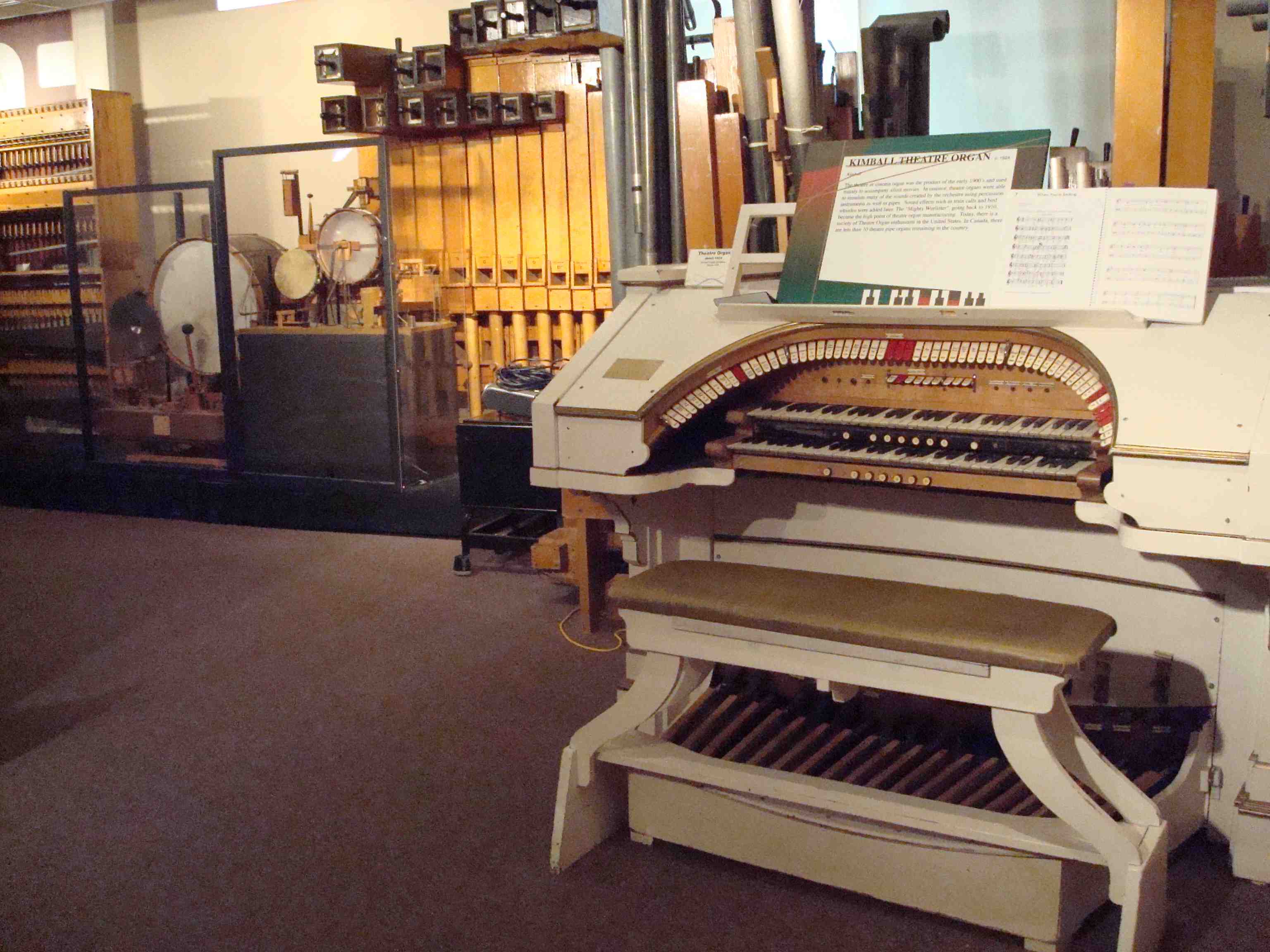
Another absolute city gem – which most Calgarians aren’t even aware of – is the Cantos Music Foundation. Situated in a red brick downtown office building, it holds a treasure house of keyboard instruments, some dating back almost 400 years.

Cinema organ

The picture above is only part of an old 1920s cinema organ. In the early days of silent films, the organist wasn’t just responsible for providing the musical accompaniment, but also for creating the necessary sound effects, and that’s what you can see lining the wall behind the organ. Absolutely fascinating.

Keyboard

The museum offers everything from harpsichords to the latest electronic keyboards. Sitting amongst all these beauties is the simple white upright piano on which Elton John wrote ‘Your Song’. On his last tour through Calgary he made a special visit to the museum to play on it once more.

As I said, an absolute treasure house for anyone interested in music.

There’s a feeling in the air…

The tradition within the North West Mounted Police on their March West across Canada in 1874 was that the Inspector establishing a fort was given the honour of naming it after himself. Therefore, when Inspector Brisbois arrived at the confluence of the Bow and Elbow rivers, he did just that. Unfortunately for him, Colonel James Macleod (his superior officer) suggested the name be changed to Calgary, after Calgary Bay, a place he’d visited on the Isle of Mull in Scotland. But maybe it was just as well. The Brisbois Stampede doesn’t have quite the same ring to it as the Calgary Stampede, does it? CalgaryBay CalgaryHouseWhen we first moved to Calgary, the skyline was sparse with the tallest building being the Calgary Tower. Now the tower is dwarfed by a forest of skyscrapers, and one of my favourite things to do is go to the bluff in Crescent Heights and watch the sun set on the city. The combination of city lights, setting sun and image of the mountains in the distance is magical. CalgarySkylineBack in the day, one of the local TV channels ran a great advertising spot which – to me – reflected the energy of this young city.  It looks a bit dated and hokey now, but the video still makes me smile.  Oh… and just recently, Calgary was voted the cleanest city in the world! Not bad for a city only 138 years old.

From the sublime…

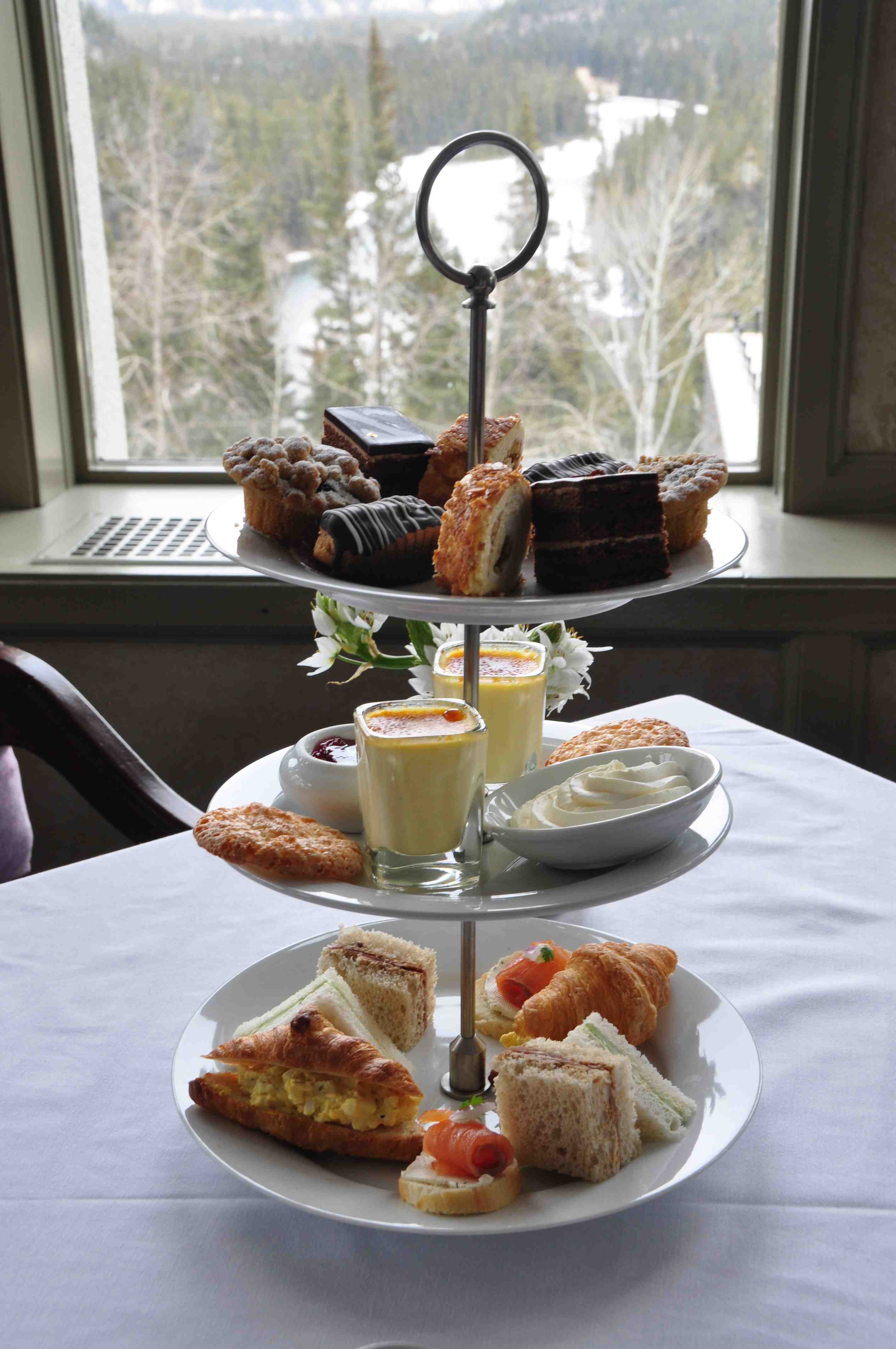
There’s nothing like going from eating Wartime Rations to a slap up afternoon tea at the Banff Springs Hotel.Afternoon tea

Growing up in Scotland, our family frequently took summer holidays in Banff in the north east of the country, so it sort of fits that I now find myself living with another Banff in my backyard.

Any visit to Southern Alberta isn’t complete without a trip to this mountain town.  One and a half hour’s drive from Calgary – if you stick to the speed limit – it’s the perfect place to visit no matter what the season.

Banff HOtel

The image of the Banff Springs Hotel (and yes, there is also one in Scotland, but not nearly so impressive) is world famous.  If your budget doesn’t stretch to staying here for a night or two, try and take in the afternoon tea. ($41 per person) enjoyed in the Rundle Lounge where the view stretches down a river valley surrounded on all sides by mountains.

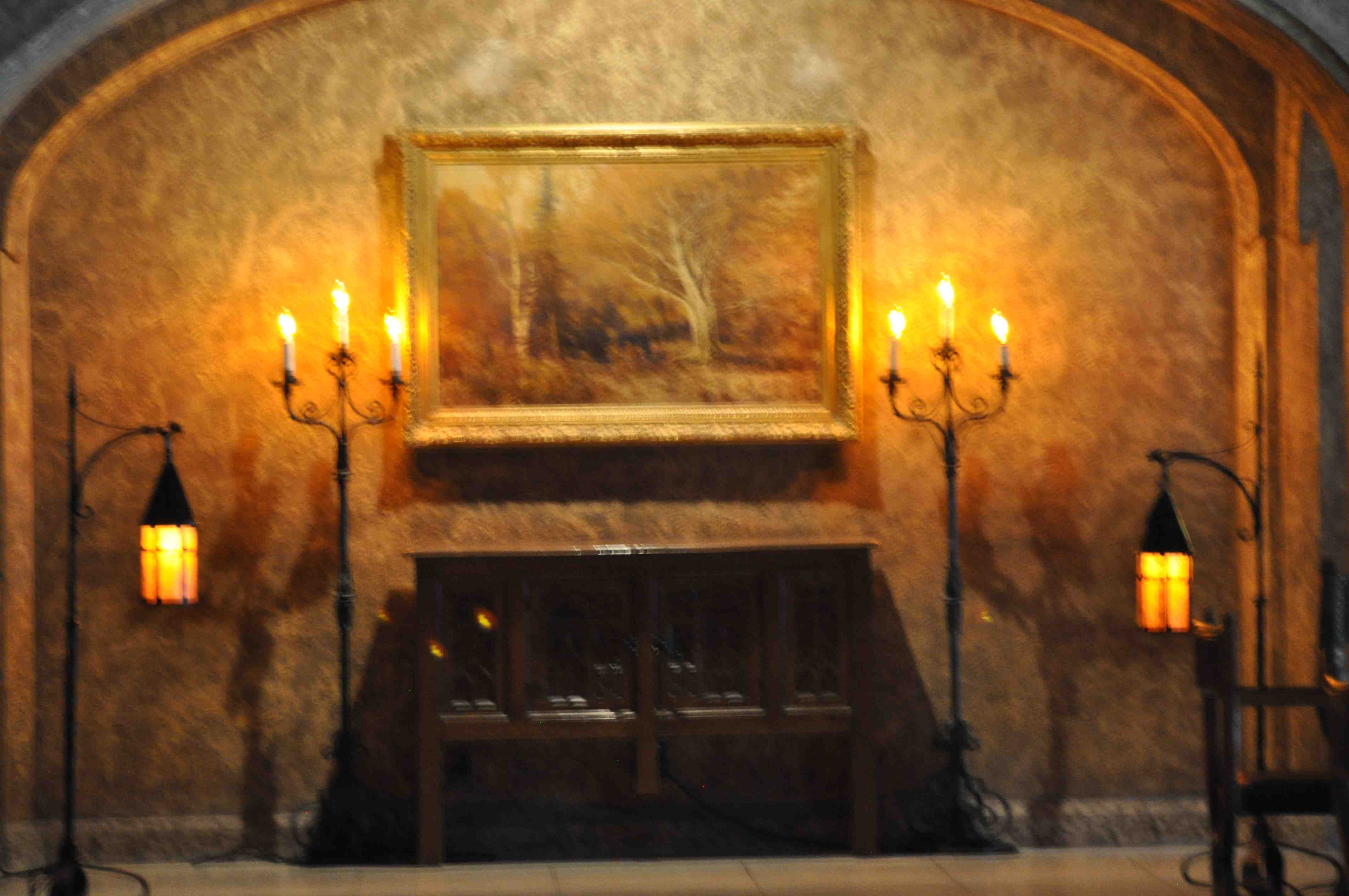
Owned by the CPR, the original hotel was built in 1888 with the replacement (current) structure commencing in 1911. When its president Cornelius Van Horne came out to check on its construction, he discovered that the builders were building it back to front with the kitchens overlooking the million dollar view.  Well, he soon sorted that out.  In commemoration he painted a picture which currently hangs in the Spanish Gallery.  If you look closely in the bottom left hand side you’ll notice he signed it… back to front.

Van Horne picSo much for my plans to return to blogging about writing.  Well, I did say I’d be writing about travel in this blog too, so maybe I’ll just stick to my neighbourhood for the rest of the week and tell you about some of my favourite places in and around my current home city of Calgary.

Wartime Rations – Day Fourteen

Apologies for not putting up the final post in this two week experiment yesterday. My hay fever exploded last week and I started taking an OTC ‘non-drowsy’ anti-histamine. Well, neither the anti-histamine nor the non-drowsy seemed to work as I’ve spent the last few days wandering around like zombie, barely knowing what day it is, with my eyes streaming.  I stopped the pills on Friday, and now, although my eyes are still streaming, I’m at least finally awake!

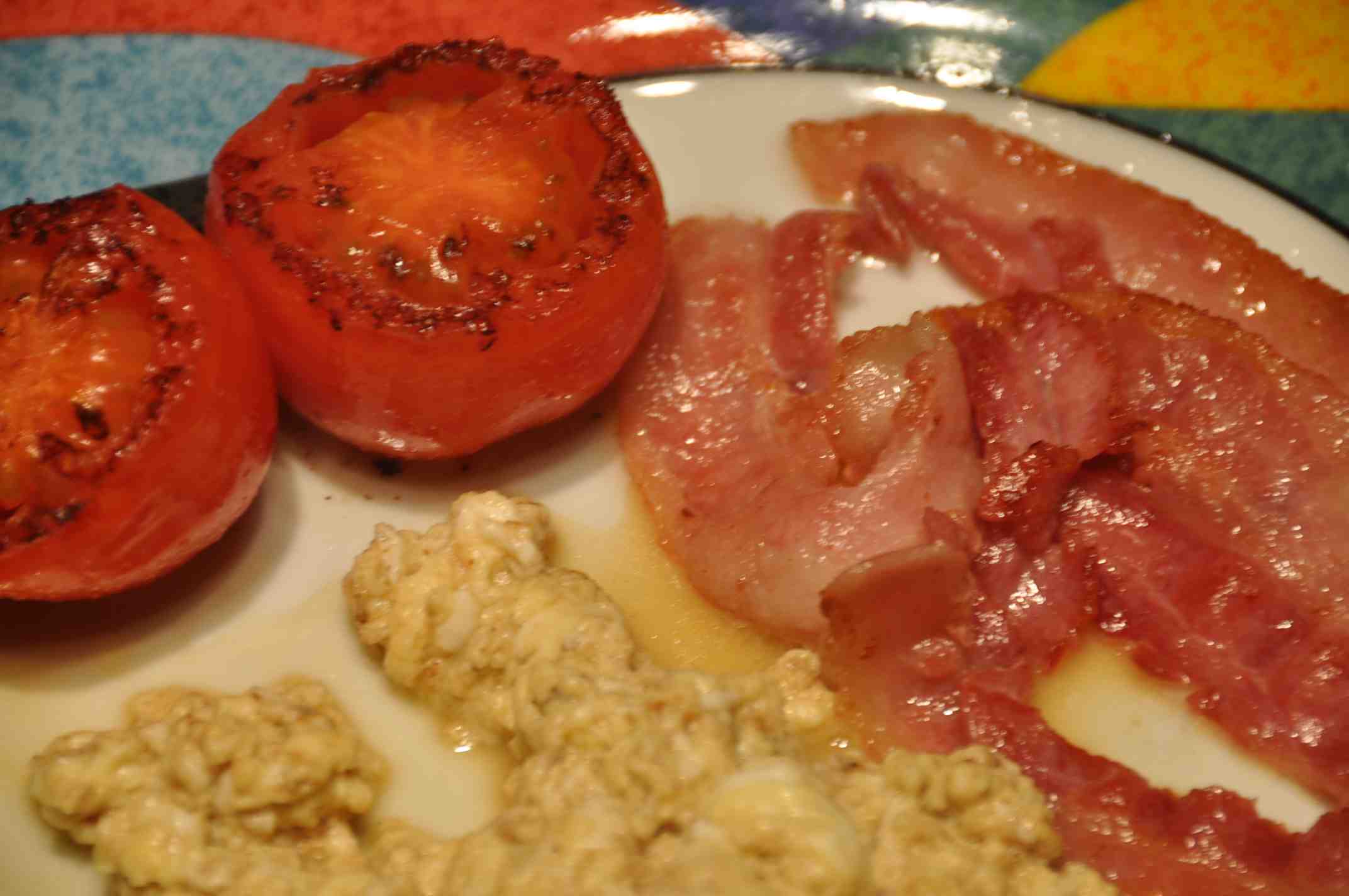
With Sunday being my last day of rationing, I treated myself to a proper bacon and eggs breakfast. After such a hearty start to the day, some soup, a sandwich and fresh fruit was all I needed to satisfy me for the rest of the day.

Baconandeggs

So what have I learned from my two weeks of rationing?

1) The food was healthy, but very – very – time time consuming.  With lack of cold storage, no modern microwaves, endless queues at the individual shops and rations not always being available, it must have been extremely hard for the working married – or single – woman to find the time to cook a nutritious meal at the end of the day.  Factories and the workplace often supplied a hot meal through their canteens, so I’m sure the temptation must have been to eat lunch as the main meal and then come home to a sandwich or slice of toast.

2) Although I was born well after rationing ended in the UK, many of the meals these past two weeks have been very familiar from my childhood.  Which makes sense.  My mother was married in 1938 so out of the first 16 years of her married life, 14 of them were spent under full or partial rationing. These were the foods – and recipes – she would have used.

3) I don’t remember ever seeing Mum throw food out (nor paper nor empty jam jars) and I’m sure that was as a result of the war.  I have a friend whose mother was the same age as my own. Although my friend grew up in Canada, her British mother kept a closet packed with tinned food – just in case. Both of us found our mothers’ actions a little – eccentric – but they are a clear reminder to the writers out there that a character’s current behaviour and attitudes are influenced by his or her past experiences.

Another example: My mother-in-law was a real tea jenny. The teapot sat on the stove from the moment she woke up till the moment she went to bed.  If it got cold, she simply added water and boiled it up again. Once more, I’m sure that was a throw-back to the shortages during the war.

So am I going to continue with the rations? In a scaled down form, yes.  There are some recipes – carrot and apple jam for example – that I would like to try, and I’ll write about them in weekend blogs, but for the next little while, I think I’m going to go back to writing about writing.

 Some last thoughts from Anne about life after VE and VJ Day.

As the US troops withdrew and went home, they left behind plentiful supplies of tinned food, so that was the first time I tasted sweet corn. Then we were introduced to Spam, but that Spam tasted really good and was a real treat – can it be that it was a better quality for their forces, compared with its lowly place on food favourites now? But there were all sorts of veg and fruits (first time for lychee, too, for me), and tins of stews and even butter. I can’t clearly remember which tins were subject to the Points system.  All the tins were covered in khaki paint with the name stencilled in black.

Some friends of mine lived in Ealing then, and Alan discovered that many tins which had illegible or non-existant description found their way, very cheaply, to city street markets. Some of the cheapest were the very large tins, about 10″ high and 8″ diameter – remember there were no fridges – so too large for most people. My friends had four young children at the time so Alan used to get a couple or so of these anonymous large tins every week. He knew that the contents of most of them would be eaten quite quickly at home; those that were not to their taste… well… that’s when he took up winemaking, and in a big way. Anyway, we were glad the US had abandoned such bounty – and wished it could have lasted longer.