Night Shift

Despite all the dangers of social media – once you post anything on e-mail/Facebook etc it is there for ev-ah even if you think you’ve deleted it – the net truly is one of the wonders of the modern age.

Take last night…

I was on Facebook around 4.30pm Calgary time when my friend R from my Student Nursing days put up a post in Scotland.

What are you doing up at that time of night? I asked.

Unable to sleep.

Minutes later, the third member of our trio, B, also in Scotland, posted – Looks like we’re all working nightshift tonight.

And you know, just for a minute, there we were, the three of us stepping onto the dim, quiet wards of The Royal Infirmary of Edinburgh at the beginning of a night shift.

Eidnburgh royal

There’s something special about working while the rest of the world is asleep. Most nights were quiet – routine obs, turning patients q4h, changing drip bottles – interspersed with both scheduled and fly tea breaks and the occasional moments of panic.

I still remember the terror of my first junior nights when the nurse in charge (a second or third year student nurse) went on her break. Left alone with only an auxilliary to care for up to thirty patients, I tiptoed from bed to bed, shining the tiny beam from my miniature torch onto my patients’ chests to make sure they were still breathing.

Now, all these years and thousands of miles later, those days have taken on a rosy glow and I’ve forgotten the hard times the three of us experienced on those wards: having a child die on Xmas Day; a ward sister hurling a bottle (of something you don’t want to know what it contained); sitting behind the screens with a patient holding their hand so they wouldn’t die alone in the dark.

And yet there were magical moments too – great moments of joy and friendship –  and that’s what I felt last night as we whispered to each other across the silent net.

Thanks, guys!

Fabulous Fashionistas!

This has to be one of the most inspiring documentaries I’ve seen in a long time.

These women are absolutely amazing. If you want to check out the whole documentary, type the above title into Youtube to watch it. (Just be aware you’ll have to plough through a few adverts first!)

My Mum could have been one of those women – as is her sister Anne, my aunt, who has contributed to this blog and is currently helping me edit my novel.

I think we tend to think of our mums as ‘just Mum’, but when I stand back and look at the things my mum did in her life, she, too, was amazing.

Putting aside what she went through in the war – separated from her husband, a child who almost died, experiencing bombing in Glasgow – it’s how she dealt with her later years that is just as inspiring. Mum was in her early sixties when my Dad died. Having given up work when she got married to become a traditional wife and mother, she had little experience of the working world, but after she became a widow she found herself a job in a doctor’s surgery and took in a boarder. When the boarder finally left she figured out what it was that she liked doing – cooking and looking after people – and organised herself some ‘wee jobs’ as a housekeeper in London. I remember driving her to her first interview, decked out in her ocelot fur coat and claiming to be ten years younger than her actual seventy six years.

Of course she aced it.

My siblings and myself weren’t too keen on this sudden show of independence. Maybe we thought it reflected badly on Dad – he’d left her well provided for,  she didn’t have to work – but now I understand.  No, she didn’t HAVE to work, she wanted to.  But on her terms.  One month on for the challenge, and one month off to return to her island home and enjoy her home, friends and village.

Older women rock!!

All change!

I love learning new things, and this was a great weekend to do so.

First off, I watched a BBC documentary – Nelson’s Carribbean Hell-hole: An Eighteenth Century Naval Graveyard Uncovered – and learned the following facts:

1) Faced with a choice of committing all their Royal Navy resources to fighting the Americans in The Revolutionary War or protecting their lucrative West Indies sugar-trade, the British government decided their priority was the latter rather than the former.  (They never taught us THAT at school!)  Had Britain chosen to concentrate on war with the US rather than sugar and rum, history could have turned out very differently. Hmmm.

2) There are no rivers in Antigua therefore all water comes from ‘the sky’ and must be collected in specially designed water-chambers.

3) Although many – many – sailors in the West Indies died from tropical diseases, the majority probably died from lead poisoning from the bottles containing the rum they drank.

But the most important thing I learned this weekend came from an Alberta Romance Writers’ Association workshop. It turns out there’s a whole new genre of fiction out there! Boomer-Lit. Who knew? But it makes absolute sense, doesn’t it?

There are millions of boomers out there and they want to read about themselves.

Check out this Goodreads site for more info – and happy writing!

(And reading!)


Voice

At the two writing conferences I’ve attended this summer, editors have made it very clear that they’re looking for writers who possess a strong narrative voice.

But what IS voice? How do you define it?

Consider the immediately identifiable voices of the following famous actors, radio personality and singer; Kathleen Turner, Alan Rickman, Jian Gomeshi and Frank Sinatra. They might use the same words we all do, but there is a quality to their tone and phrasing that make their voices uniquely theirs. So with our own writing voice. We must write in such a compelling way that no-one else could have written our words.

Some of it, it has to be said, is down to natural talent, but writing is also a craft. Craft can be studied and learned.

Ernest Hemingway’s advice was to Write drunk; edit sober. You’re welcome to accept his advice literally, but I think what he really meant was to write your first draft without any inhibitions. Be free and creative in the knowledge that no-one else is ever going to read that draft, then once it’s completed go back and hone your words so your story sounds as you want to tell it.

A solution we discussed at The Alberta Romance Writers’ Association meeting on Thursday was to compare your first and fourth chapters. Do they sound the same? Chapter Four will probably have a stronger voice than Chapter One? It can take a while to hit our stride writing a novel.  By Chapter Four we’ve usually settled in with our characters and plot and aren’t thinking so hard about the actual writing as the story takes over. It starts to flow more naturally, and as you relax, your natural voice is more likely to shine through. Identify the strengths of your voice in Chapter Four then go back and take a look at Chapter One again and make sure your voice is clear and true from the first page.

Character and Characterization

Years ago I took a Russian class. Our teacher had taught English ‘back home’ in his native Moscow and found the English language very frustrating.  In Russia, it seems, there is an exact word for everything.  You want to describe the placement of a pen situated 2 inches to the left and one inch in front of a book? Apparently there’s a word to describe precisely that position. (I don’t know for sure – I only took the class for 12 weeks – but I’ll take my teacher’s word for it!)

That vagueness is the problem we run into when discussing Character and Characterization. For many people, the words are interchangeable, but they’re not.

When we talk about a character’s ‘character’ – see what I mean about English being imprecise? – we are talking about the internal make-up of the person.  Think of it in Jane Austen terms: He was a man of good character. Character speaks to us of values, ethics and morals, and all of these are internal.

Consider one of Harry Potter’s conversation with Dumbledore. Because both Harry and Voldemort can speak to snakes, Harry is concerned that he might be swayed to following The Dark Lord.  Dumbledore reassures him by responding – We are our choices.  And that is key.  Even from a very young age, Harry’s choices were very different to Tom Riddle’s.

As Robert McKee writes in his book Story: True Character is revealed in the choices a human being makes under pressure – the greater the pressure, the deeper the revelation, the truer the choice to the character’s essential nature.

So what is Characterization? Robert McKee says: Characterization is the sum of all observable qualities of a human being, everything knowable through careful scrutiny 

For me, simply put, character is internal while characterization is the external manifestation of the internal.

For example, if your character’s ‘character’ is petty and mean-spirited, how will that reveal itself externally in your character’s actions? Will he leave a tip for the waiter? If he does, will it be exactly 10%. Will he count the money out in change down to the last penny?

If your character’s ‘character’ is cowardly, will he act to save someone’s life if it means he personally must face personal danger to do so?

Revealing ‘character’ (choices) through characterization (external actions) creates drama and conflict on the page.

Don’t Write A Book. Write A Poster!

The idea of sitting down to write anything from a 50,000-100,000 word novel is pretty daunting. The former consumes at least half a box of paper, the latter will eat up the entire 500 sheets.

Sgtaplspaper

Add in revisions, synopses and query letters…  that’s a whole lot of dead trees and empty pages to fill.

Even more challenging than completing the physical pages is the emotional energy expended creating a book.  As Red Smith said:  There’s nothing to writing.  All you do is sit down at a typewriter and open a vein.

500 pages.

Gulp!

This summer I visited Platform 9 3/4, the shop containing all things Harry Potter at King’s Cross Station.  In amongst the wands and Gryffindor scarves, I noticed something that – to me –  was truly magical. A poster containing the full text of of JK Rowling‘s Harry Potter And The Philosopher’s Stone.

HPPOser

It so captivated me that I went back to the shop three times to look at it before finally buying it.  A poster, no matter how small the text, couldn’t contain the WHOLE text – 76,944 words – could it?

Well.. yes it could.

I might not be able to write a book as amazing as Harry Potter –  and the idea of facing 500 empty pages may be very intimidating – but I CAN write a poster.

And so can you!

Favourite Friday Website

There seems to have been a bit of a Scottish bias to my posts this week. Tomorrow I’m changing focus, but I’ll stick with Scotland just for today.

Friday mornings, I always check the BBC website, not just to catch up on the news, but to enjoy browsing photos taken around Scotland that week.

Here are the pictures for the week 16th-23rd August.  If you look carefully to the right hand side of Picture #4 you might see Hogwarts, and Picture #11 was taken on Arran which I talked about yesterday.

Enjoy!

http://www.bbc.co.uk/news/uk-scotland-23809866

Favourite Place

In response to Tuesday’s posting on my favourite poem, Anne sent me this verse by Rudyard Kipling.

God gave all men all earth to love
But since our hearts are small
Ordained for each
One spot shall prove
Beloved over all.

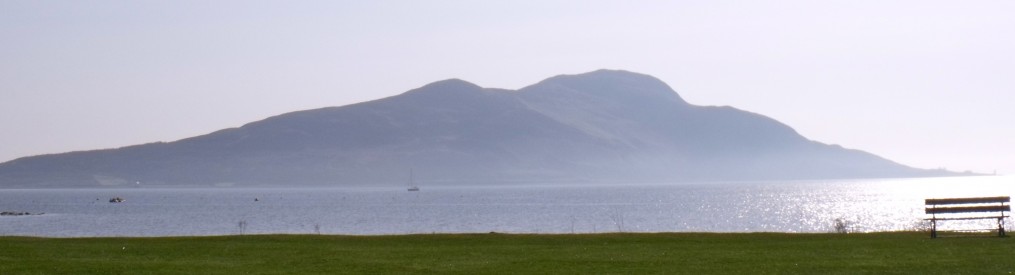
Her favourite place is the Isle of Mull (although she’d settle for Blair Atholl). Mine is also a Scottish island – the Isle of Arran. (Click)  Less than two hours from Glasgow (45 minutes in the car plus 50 minutes on the ferry), it’s often referred to as Scotland in Miniature.

Brodickview1

Except for a cityscape, everything to be found in Scotland is in Arran; mountains, pasture, towns, villages, caves, forests, ancient standing stones, castles, beaches, waterfalls and even palm trees.  Yes, palm trees!

Machriemoor

I’ve visited Arran at least once a year since I was seven and I love it. It’s where my soul breathes. If you ever get the chance to visit, go!

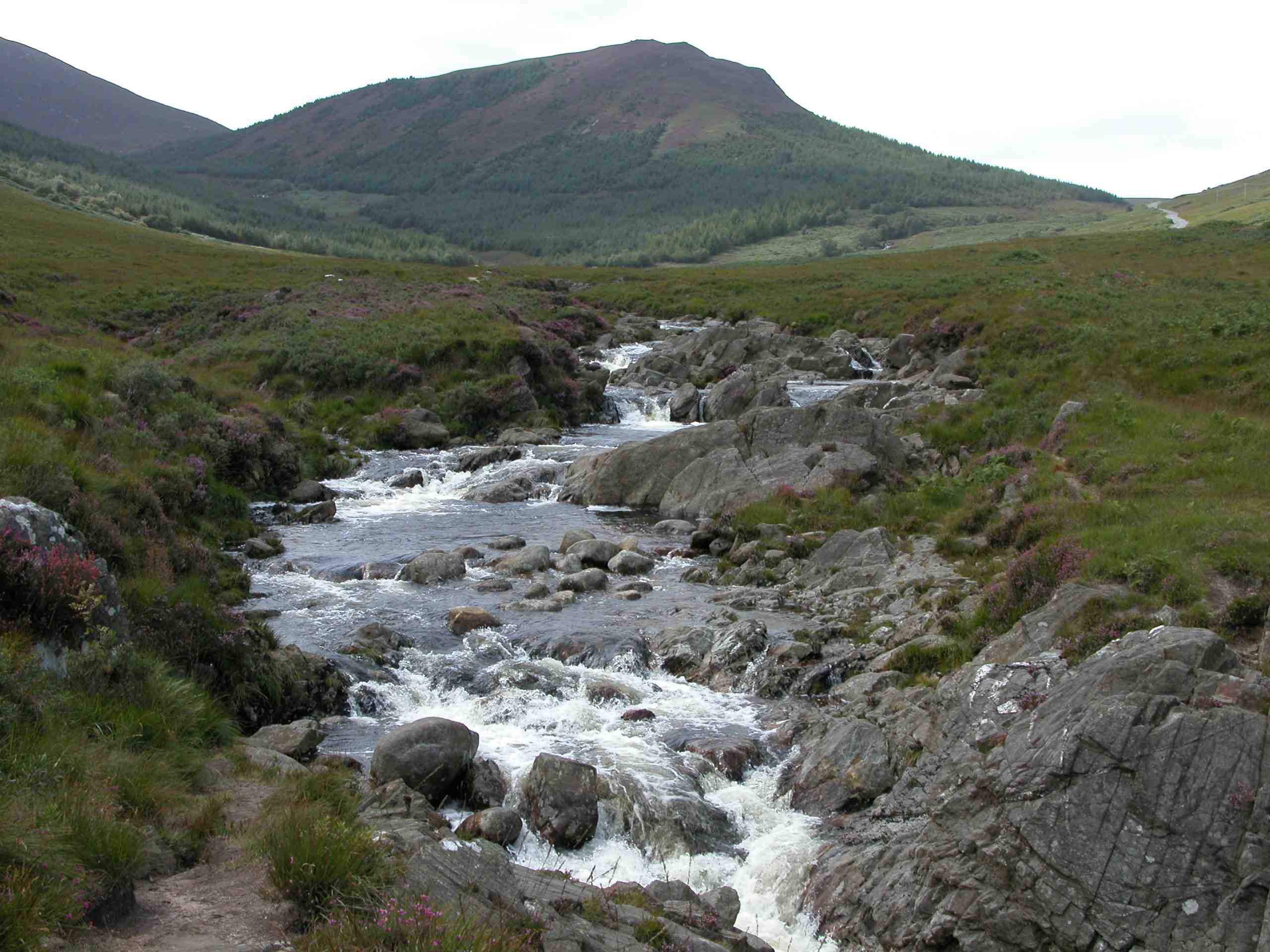
Waterfall

Favourite e-mails.

I love e-mails. I love their immediacy and the fact they can consist of only a single word or a whole screed.

I’m currently having a great e-mail conversation with my aunt.  She’s helping me edit one of my books which is set during WW2. But it’s not just her professional feedback I’m enjoying, it’s the little tidbits about her family life growing up that she keeps dropping in. Totally fascinating. I just love firing up my laptop in the morning and sitting down with my breakfast cup of tea to see what’s in my mailbox from her. (And one of these days I hope to persuade her to start her own blog on Growing up in Glasgow in the 30s and 40s so everyone can read her stories.)

But just edging her out this week was an e-mail I received yesterday which made me really – really – happy.  I’ve known Dee Van Dyk for… let’s leave it at a long time! She was my first introduction (via snail mail!) to the Alberta Romance Writers’ Association (ARWA) and has grown from being a colleague to a good friend. For many years she’s focused on non-fiction, publishing articles in many major magazines, but a few months ago – after several years of puttering around with a YA novel idea – she joined ARWA’s Summer Challenge to complete a first draft over the summer months.

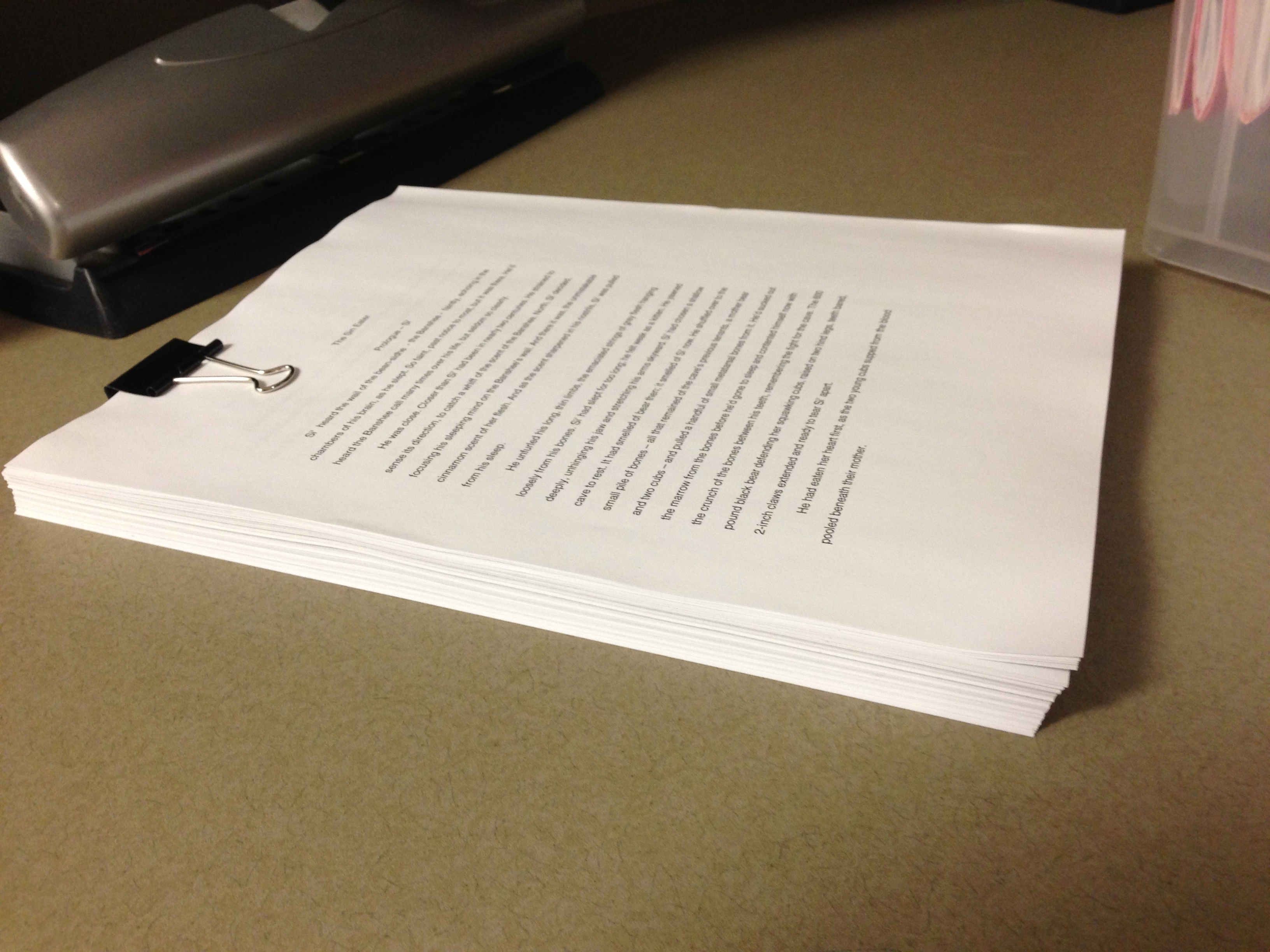
Yesterday morning I woke up to the following e-mail header:  Do you know what this is?

And when I clicked on the image?

Her completed first draft of her YA Novel The Sin Eater!

dee imagge

It just shows what a person can achieve if they have passion and persistence.

Having read the first thirty pages, I can’t wait to read  the completed manuscript. Dee’s a hugely talented writer with a unique, vibrant voice. She’s going to the Surrey International Writers Conference this fall to pitch Sin Eater and I have no doubts it will be snapped up.

When she hits the bestseller list, don’t forget that you heard her name here first.

Way to go, Dee!

And keep those good news e-mails coming!

Favourite Jane Austen Novel

Pride and Prejudice seems to be ‘the’ novel most Jane Austen fans prefer.  (Maybe Colin Firth in ‘that’ scene has a lot to do with it.) But for my money, my favourite is ‘Persuasion’. I’m currently listening to it on an audio book and once again I’m struck by just how perfectly Jane Austen observes and captures the human condition. (Click)

I love the fact her main characters are a little older.  That they’ve experienced love and loss. That they’re smart and serious yet not jaded. That life offers them a second chance.

If you’re not a keen reader, check out the Ciaran Hinds/Amanda Root film version. Adapted by Nick Dear, he remains faithful to the soul of Austen’s work.  (And the music by Albertan group Nickleback on the video below is pretty good too!)