Ma Wee Gas Mask

Before I start a post, I usually have a clear idea of what I want to write about. However sometimes I can get pulled off track and this evening was one of those occasions. So this is going to be a long post, but if you hang in, there’s a rather sweet Youtube video at the very end!

With the 70th Anniversary of D-Day rapidly approaching on June 6th, I thought it would be interesting to look at The Glasgow Herald from June 2nd, 1944 and see if I could find any hint of the approaching invasion.

As noted in previous blogs, paper rationing meant each issue was comprised of only 8 pages. The Glasgow blackout began at 11.52pm and ended at 4.28am, a far cry from six months earlier when it lasted from 5.25pm until 9.17am the following morning!

As always, the war news was buried in the middle of the paper, so there were all kinds of fascinating articles to read through first.

Films showing in Glasgow included:
Lifeboat – Tallulah Bankhead.
Jack London – Susan Hayward
Madame Curie – Greer Garson
For Whom the Bell Tolls – Gary Cooper
The Cross of Lorraine – Gene Kelly
Life and Death of Colonel Blimp – Deborah Kerr

A list of legacies given to The Western Infirmary – remember this was 4 years before the NHS came in to being.

Mr Herman Anton Andrews, a London banker, bought the Scottish islands of South Uist, Benbecula and Eriskay. Following the purchase, the Scottish National Party sent him a letter detailing their concern that the buying up of large tracts of land by those operating from London and other centres outside the borders was contrary to the interests and people of of Scotland. (Given that Scotland is voting on Independence in September this year, I this particularly apt.)

And then came the war headlines.

Germans ‘getting a licking’ in Italy.

Notification that 47% of US Army troops (3,500,000 men) were stationed overseas.
The US Air Force had 50% of its personnel (2,357,000 men) and more than 50% of their machines stationed overseas.

Allied Gains on the Burma Front.

Three beachhead columns were moving on Rome.

4,000lb bombs were dropped at Roumania’s Iron Gate (where the Danube narrows), reducing German barge traffic and their ability to repair their railways.

Admiral Sir William M James, Chief of Naval Information in London, said the Navy would soon appear again in the public eye. ‘Before long, we shall reach that stage when we begin to launch a great amphibious expedition… We are going to have dramatic moments soon.” So there it was, the hint that something big was in the air.

And then it was back to general news, where one item in particular caught my attention. The Half-Past-Eight Show, starring entertainer Dave Willis was playing at the King’s Theatre.

As a child in the 60s, I remember going with my mother to see The Half-Past-Eight Show starring Dave Willis! I had no idea it had been going for so long. Before the 1930s, it had been the tradition for theatres to close during the summer when the citizens went on holiday. In the early 30s, however, it was decided to produce a high quality summer variety show. It was so successful it became an annual tradition lasting a long – long – time.

I seem to remember one of Dave Willis’s famous songs was about fox-hunting, but I’ve been unable to find any mention it on the internet. If anyone out there has any information, I would love it if you could send it to me.

Another song he sang during the war was Ma Wee Gas Mask.  I was unable to find a video of Dave Willis singing it, but I did find an absolutely charming video.  Enjoy!

In ma wee gas mask
Ah’m working oot a plan
The weans a’ think that Ah’m the bogey man
The girls a’ cry, an’ bring their friends to see
The nicest lookin’ warden in the A.R.P.

When there’s a raid on, ye ought tae hear me cry
‘An aeroplane, an aeroplane awa’ wa up a kye’
They a’ rin helter skelter, bit dinna rin efter me
Ye’ll no get in ma shelter for it’s faur too wee.

Blog Hop – Victoria Smith

meA few weeks ago, Victoria Smith joined in my blog hop. Here are her answers to the four writing questions. For more about Victoria, please check out her website: http://girltrieslife.com

Thanks, Victoria!

1) What am I working on?

Due to Camp NaNo, I’ve put edits for Girl Tries Life on hold at the moment so that I could write new material for  Book 2, Girl Tries love. It’s a series set on Rothnarr, a remote island on the West Coast of Scotland.  During Camp NaNo I was also inspired with ideas for a couple of children’s books, and I have a new adult contemporary romance on the back burner set in S.E. Asia.  So… I have plenty to keep myself busy.

2) How does my work differ from others in the same genre?

There are billions books of books out there in the world, so how do I really know that my work is different? I believe that I give my characters a strong voice. I think I straddle the line between chick lit and contemporary romance.  Crazy things happen to my characters, but they are ultimately strong women.  Love, however, can make the strongest person do strange things.

3) Why do I write what I write?

I’m not going to say I have a literary masterpiece in me… it might happen yet, but until then I write what I enjoy reading. I read across multiple genres, but the ones that make me feel good, laugh and smile as I close the pages are generally chick lit.

4) How does my writing process work?

Process?  Hmmm, depends on the month.  If it’s Camp NaNo or NaNoWriMo, I’m in my sprinting element.  Outside of those months of productive chaos, the process is all over the place.  The one thing I learned and learned HARD from my first draft of my first book is that I need a strong outline. While I’d much rather, in the spur of the moment, write to my heart’s content, if I’m honest with myself I have one or two scenes perfectly envisioned, but don’t know how to tie the rest of the story together. If I properly spend time on the outline, then I can keep the writing momentum going and there is much less rework at the other end.  It makes my first draft pretty darn clean.

Other bits of my process?  Coffee, coffee and coffee.  Okay, occasionally tea, but coffee to start.

A Tale of Two Parks

I recently spent a few days in New York City.  It’s the third time I’ve visited and it’s a city I love, love, love. This time we decided to try a little ‘new’ along with the ‘old’, so along with the trusted Central Park, we also took in Prospect Park and the Botanical Gardens in Brooklyn.

park

CENTRAL PARK is great. Created in the 1850s, this magnificent expanse of greenery and lakes lies slam-bang right in the middle of Downtown, But, because it’s Downtown, everywhere you look there are tourists – I know, I know,  I was one of them!

bobbiesturtles

Amongst them, a group of British Policemen and women over from England running for charity.  And turtles.  Who knew there were turtles in Central Park?  (Although, as I recall, the Heroes in a Half-Shell used to live in the NYC sewers, didn’t they?)

imagine

And then of course, there’s Strawberry Fields, with its iconic Imagine mosaic. Definitely worth a visit.

So how did PROSPECT PARK measure up against its better known neighbour?

Extremely well, indeed.

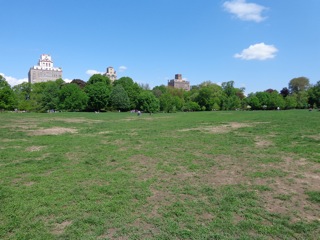
Built in the 1860s, it covers 585 acres and is only a short subway ride from Manhattan. We visited on a Sunday to find an oasis of tranquility with family groups enjoying picnics and multi-generational games of baseball.

PP1 pp2

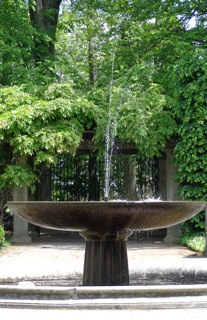
Just next door are the Botanical Gardens and they are gorgeous.  We just missed the cherry blossom and lilacs, but loved the bluebell woods and displays of azaleas, iris, peonies.

fountain   iris

And don’t forget the Japanese Gardens. With a great visitor centre and restaurant, this is a great place to get away from the hustle and bustle of Manhattan and allow the scents and scenery to soothe your soul.

japanese

Family History

I love history. I love reading books and watching TV programmes about history. I love visiting museums, castles, stately homes, heritage parks, tenement museums. You name it, if a thing or place tells a story about the past – and particularly people who lived then – I’m in.

What is so exciting about history these days is that we’re interested not just in the lives of the ‘rich and famous’, but in those of ‘everyday folk’. Maybe that’s why we’re so drawn to TV programmes like Upstairs, Downstairs and Downton Abbey because, while we may fantasize about the aspirational, we acknowledge the ‘reality’.

And I love the fact that so many people these days are interested in their own family histories. Take last week, for example, when I received a parcel from my sister. On initial inspection, it looked like an ordinary shoebox…

box

… but inside was a veritable treasure trove of four generations of my own family’s history, written and created in their own hand.

My Mum’s 21st birthday cards from March 15th, 1937, including one from her then boyfriend who would become her husband, my Dad. A homemade birthday card her sister Anne – who has contributed her own wartime memories to this website – made for her.

21               anne card lower

Letters I wrote to my Mum describing our early years in Canada, postcards from a great-aunt on Mum’s side of the family, a dress and hat my grandmother (again on my Mum’s side) crocheted for one of my dollies. A Christmas card I made for my parents many – many – years ago.

envelopscard

It’s important we always remember that, like many things, history begins at home!

What family memories, or artifacts, do you treasure?

Gary Bonn – Blog Hop

gary


Many thanks to Gary Bonn for tagging me in his blog hop last week.

Here are his answers to the same questions.

For more information about Gary and his writing, please check out his website: http://garybonn.com or Twitter @garybonn


What am I working on?

I shouldn’t be writing. What I should be doing is…

1) Editing other people’s books to help them (and my bank account)

2) Re-writing six books I’ve already written and bringing them up to a better standard.

3) Doing a final structural edit of two of my books that are about to be published.

… but what I’m actually doing is writing a book about a young woman who is snatched from her apprenticeship, thrown, against her will, into university, and asked to save the world from mathematicians, who are inadvertently in league with the devil.

How does my work differ from other works in the same genre?

I write in… let me count… um, lots of genres. Help! I don’t know how to answer this question. I have a note from my mum and everything.

My Y/A books, already published, are theme-driven and the themes are pretty unusual. Sadly, there are no girls falling in love with vampires, but there is 17 year-old Jason who has lived feral on beaches since he ran from a children’s home at 11 and thinks in a way that is pivotal in resolving a nationwide crisis (Expect Civilian Casualties), and Beatha, of the same age, whose struggle with mental illness inspires the rest of humanity; well, those people who don’t want her dead (The Evil and the Fear).

Why do I write what I write?

Themes! As well as editing fiction I edit autobiography. There’s nothing more inspiring and mind-blowing than the themes that develop through someone’s life. They are the intoxicating revelations, the passions, the motivations behind whole crusades, heroism and the paradigm-shifts that turn our perceptions upside-down. These are what my life is about and I want to share them.

How does my writing process work?

A bit like a prototype racing car. Terrifying, unpredictable and high-octane, or sat in the garage for days while people scratch their heads.


Visiting Fort William

I spent an afternoon in Fort William a few weeks ago. I’d recently read an article which said the drive from Glasgow to Mallaig ranked amongst the best in the world – just don’t stop in Fort William. Well… that’s a bit harsh. Given that the town clings to the shores of Loch Linnhe, the surrounding scenery is pretty stunning.

A wee bit of history about Fort William. According to Wikipedia a ‘Fort was constructed to control the population after Oliver Cromwell’s invasion during the English Civil War and then to suppress the Jacobite uprisings of the 18th Century’. Nowadays, the town is more famous for being the end point of The West Highland Way, a 96 mile walk from Milngavie (just outside Glasgow) to Fort William.

highlandway

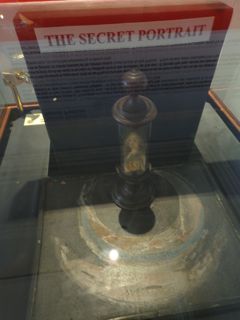
Whilst there, we visited the West Highland Museum. It’s a great wee museum, covering everything from traditional Highland life to the training of commandos during World War Two. But the highlight for me was The Secret Portrait, a fascinating piece of anamorphic art. (I’d never heard of anamorphic art or illusion before. Basically it’s when an image only reveals itself when viewed from a particular angle.)

bonnycharlieAfter the Jacobite defeat and Bonnie Prince Charlie‘s retreat back to France, the English government banned all things Scottish and any reference to a Stuart king. When toasting ‘The King’ – meaning King William – Jacobites would pass their glass over the fingerbowl in a silent toast to ‘the King over the Water’, but the English soon got wise to that and banned fingerbowls from Scottish tables.

But where there’s a will there’s a way. Anamorphic trays were designed with special metal glasses.  When viewed from a particular angle, Bonnie Prince Charlie’s image appeared on the goblet. Should the ‘enemy’ arrive on the doorstep, the goblet was removed, revealing only a messy looking tray.

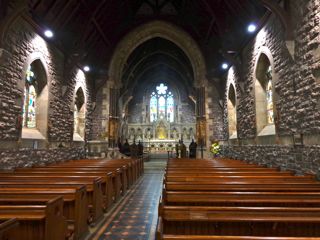
I also popped in to St Andrew’s Episcopal Church on the main street. Silent and peaceful, beautiful and welcoming, it’s definitely worth a visit.

.church1church2

Blog Hop

Many thanks to Gary Bonn for tagging me in this blog hop and posing the following four questions:

What am I working on?

Sitting here at my desk today, I have to; catch up with my blog as I’ve ignored it while on holiday, write an article for a writing group newsletter, prepare a presentation for a writer’s workshop on Saturday on Raising the Stakes, try to complete my list of tasks for a writer’s group board meeting plus update the group’s website and Facebook pages, read and edit chapters for an online critique group meeting tonight and remember to turn on Skype at 7pm for same meeting.

If I can squeeze any actual writing time today, I want to edit the first chapter of the current novel I’m working on – Sing Inside The Thunder.  I didn’t do any writing when I was on holiday – just got back last night so I’m pretty jet-lagged and have mounds of laundry to get through – but I got in some very valuable thinking time and have lots of ideas to strengthen/deepen the story I’m currently working on.

How does my work differ from other works in the same genre?

That’s a difficult question because I write in a few genres – romance, women’s fiction and children’s – and like every other writer out there, my aim is to craft ‘a good story well told’. So how is my work different? My voice, tone and personal outlook on life, I hope.

Why do I write what I write?

My stories all come from the heart with characters and situations I feel passionate about. However, I have noticed a common theme which frequently creeps in – the idea what we get second chances in life. Interesting, given that my favourite book of all time is Persuasion by Jane Austen.

How does my writing process work?

Irregularly irregular.  Sometimes I write like a fiend for days, sometimes I just do a lot of planning or editing and rewriting. But I do try – when I’m not on holiday – to get in at least one hour every day of solid new writing.  (Sadly, won’t happen today. The pile of laundry seems to be growing!)

Tagging forward: Mahrie G. Reid, Victoria Smith and Vivien Martin

Kiel Church and Cemetery – Morvern

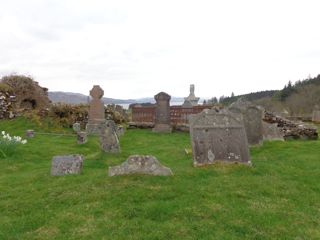
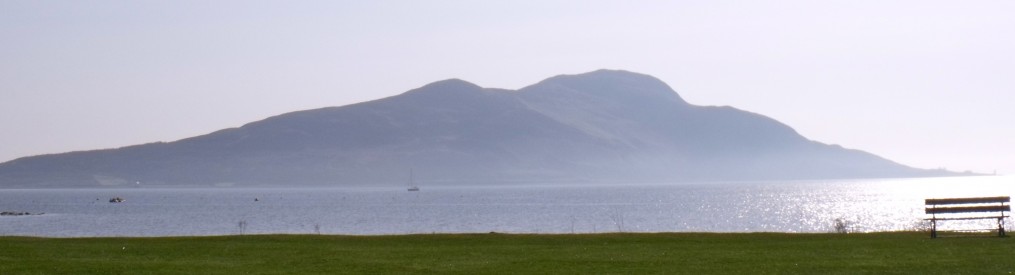
The Morvern Peninsula, on the west coast of Scotland, is an isolated and stunningly beautiful part of the world. Because it is so peaceful and wild, you tend to think that probably not much has happened here in the past 1,000 years. But you couldn’t be more wrong. In the days when travel by water was the only effective method of getting from A to B, the Sound of Mull was a ‘motorway’ for vessels sailing up the west coast of Scotland – all the way back to the Vikings and beyond.

The present Kiel Church, which stands on a hill overlooking the Sound of Mull, is only just over 100 years old, but there has probably been a church on this site since the 6th Century. It’s even possible that St Columba himself, who died on Iona, might have visited here.

soundofmull    church

I’m used to cemeteries being flat and ordered. That’s not the case with this graveyard. The ground is rough, the stones – mostly 18th and 19th century – laid out higgledy-piggledy, with many sinking into the ground, leaving only their tips visible.

graveagain    grave1

For such an isolated corner of the country, there’s a lot of interesting history to be found here. A marker has been placed by one monument, commemorating the grave of a soldier who carried a Jacobite banner on Culloden Field.

cullodenTo the side of the church, there is a tiny building which houses the beautiful Carved Stones of Kiel which date from the 14th, 15th and 16th centuries. These too are gravestones, their size and intricate carving indicating the importance of the people whose graves they once belonged to.

stones1    stones2

If you’re ever in this wonderful part of the world, please take the time to visit Kiel Church, its fascinating cemetery and carved Stones.


Dougie Maclean – Caledonia

dougie2I’m still thinking about Dougie Maclean’s concert last week and playing his music on my iPod as I’m writing this. All his songs are very beautiful and powerful but, when people go to one of his concerts, there is one song, above all, they want to hear.

Caledonia.

Caledonia was the name the Romans gave to Scotland, the country beyond the wall that they were unable to conquer.  (Sound familiar, Game of Throne-ers?) Somewhere around Perth (not Hadrian’s Wall) is where The Roman Empire ended. Caledonia, the song, has become popular world-wide.

The Americans love it, the Irish claim it as their own. It’s played at weddings, funerals, football matches, military tattoos, rugby games, adverts and is often called Scotland’s unofficial national anthem.

Dougie Maclean calls Caledonia his loveable monster because it’s taken on a life of its own. He wrote it a long – long – time ago on a beach in France when he was feeling very homesick. It’s a song of longing – and belonging – written from the heart.

And therein – I believe – lies its magic.

As writers we’re told to write about the specific, not the general. By writing about the specific – in the case of Caledonia, Maclean’s homesickness – he touched on one of the unique experiences and emotions every single person in the world feels, understands and relates to.

You don’t need to be Scottish to understand the love you have for your homeland – whatever that country may be – or your need to be with your ‘ain’ folk.

You just need to be human.

There are all different versions on Caledonia available on Youtube, but even though I’ve already posted this one several times it remains my favourite.  Enjoy.

Dougie Maclean – The Scythe Song

I’m on my holidays and finding it hard to stick to my routine of Mon/Wed/Friday posts on History/Travel/Writing. Which is a good thing really, because holidays are a time for stepping back and taking time to look at yourself in the world.

Dougie maclean1One of my best experiences this trip has been the opportunity to hear Dougie Maclean perform in a tiny village hall in the back-of-beyond Perthshire. For those of you who don’t know of him or his music, if you’ve ever watched the film The Last of the Mohicans and listened to that wonderfully hypnotic music – that’s his. Or how about ‘Caledonia‘, a song that people around the world have taken to their hearts – his ‘loveable monster’ as he calls it – and which one day may become Scotland’s national anthem.

One of the songs he performed the other night was The Scythe Song, a haunting and incredibly wise song about learning, practise and patience.

He told us the story behind it; of how his father, a farmer, was skilled at scything the old-fashioned way, slicing through the wheat which then fell to the ground with a softly whispered hishh. Dougie tried to copy him but was unable to match his father’s skill.

“Oh, this is not a thing to learn inside a day,” his father says in the song. “Stand closely by me and I’ll try to show you the way. You’ve got to hold it right, feel the distance to the ground.  Move with a touch so light, until its rhythm you have found. Then you’ll know, what I know.”

The final verse suggests that years later Dougie’s daughter asked him to show her how to play like him. “So little dancing girl you want to learn to play a tune. One that your heart can fill to help you shine under the moon.”

His reply? “Well, it’s not a thing to learn inside a day. Stand closely by me and I’ll try to show the way.”

Then, by changing one single word and adding another, he completes the circle and teaches all of us that, no matter what our passion, whether it’s writing, singing, knitting, sports, building, engineering, science, the answer is the same.

“You’ve got to hold it right feel the distance to the sound
Move with a touch so light until its rhythm you have found
Then you’ll know what I know now.”