WW2 Month of Rations – Research

As with last time, I will be including the images of the wartime food I eat each day with a little history of the war.

What I personally enjoyed most about my previous ration challenge was hearing the stories my Aunt Anne, who was a child during the war, contributed to my blog, as well as her advice on what I was doing right… or wrong.  (No rice pudding!)  I’m thrilled she’s given me some more stories this time around.

anne2013

For research,  I’m using The Chronicle of the 20th Century, which describes the events of each day of the century.  There are all kinds of WW2 sites available online, but I recently found a link to Real Time’ WW2 Tweets.  It’s absolutely fabulous and I can’t recommend it highly enough.

history book

When it comes to the food, I’ll be mostly using three books of Marguerite Patten’s wartime recipes published by the Imperial War Museum –  We’ll Eat Again, The Victory Cookbook and Post-War Kitchen.

cookbook

There are also some great wartime ration websites out there, my favourite being The 1940s Experiment.  She has some great recipes and information, so please check it out!

And of course, there’s always Youtube.  Here’s an excerpt from an informative (and funny!) documentary series the BBC released a few years ago.

WW2 Month of Rations – The ‘Rules’.

1) Despite food being rationed during WW2, it didn’t mean rations were always available in the shops.  If there were no eggs available one week, it didn’t mean that you got 2 the following week. However, for the purposes of this challenge, I’m going to assume that all my rations are available.

2) I’ve figured out our weekly ration allowance and am coming to grips with the point system. From our 16 points (each) for January, I’m going to allow ourselves one tin of peas and one tin of golden syrup.

3) I’m going to assume I have some basics already in my cupboards: 8 oz of lentils and 8 oz of sultanas left over from the previous month’s point allowance, plus some bisto, mayonnaise, dried ginger etc.  Also, I’ve been told by a friend’s mother, who was a housewife during the war, that flour (wholemeal) and oatmeal were freely available off ration, so I will be making the most of them!

4) We’ll eat only fruit and vegetables in season in the UK during the war.  For January, that means – beetroot, Brussel sprouts, cabbage (yuck!), cauliflower, kale (double yuck!!) leeks, carrots, parsnips, potatoes, red cabbage, turnips, carrots, apples and pears.  Hmmm – no sign of onions in there, and I know there were long periods when they weren’t available during the war.  As I’m not a gardener who would have Dug for Victory, how will recipes taste using leeks instead of onions?  I guess I’m going to find out!

5) Factories, offices and schools provided un-rationed meals for workers and school children. In addition, a system of ‘British Restaurants’ was set up to provide a filling three-course meal to the general population for the modern equivalent of about 1.50GBP or $3. Statistics suggest that people ate out about 4 times a week during the war, which gave housewives a happy respite from struggling to come up with interesting meals on the ration. My husband is participating in this programme (for the first week, at least) so he will be able to eat lunch out on weekdays. If I go out for lunch, I will ensure I eat only wartime food – eg fish and chips – available at the British restaurants.

6) Wartime propaganda might have suggested that everyone was ‘in it together‘, but as is always the case, those people with money continued to eat better than most of the population. (When I ate wartime rations back in May, I referred to it as ‘Eating at The Savoy.) The only restriction in the high-class hotels was that meat could only be served for one course.  So… as my husband and I have an office winter party coming up at the end of the month, we’ll be ‘Eating – and drinking – at The Savoy’ that night!

Tomorrow, I’ll provide a list of the references I’ve used for this challenge.

Wartime Rations

Back in May last year, I spent a fortnight eating World War Two British rations. It was a great experience and I’ve decided to repeat it for four weeks this January. My initial instinct was to start on January 1st, but we have so many leftovers from Xmas/New Year it would go against the wartime spirit of eliminating waste – it was illegal to waste food –  so I’m going to start on Monday, January 6th and will finish on Sunday February 2nd.

My husband has agreed to join in – at least for the first week. (When he discovers that the main vegetable available in the winter months was cabbage, he might change his mind.) Until then, I’m going to spend the next few days explaining the ‘rules’ and how I plan to structure my posts.

Rations varied throughout the war – and didn’t end until 1954! – but I’m going to adopt the same rations as last time. The foods that were rationed were mostly dairy, meat, sugar and tea.  Un-rationed foods included vegetables, bread, fish and offal (when the latter was available). There was also a ‘points’ system with each person getting 16 points a month. In general 16 points could buy you – for example – 1 can of fish or 2 lbs of dried fruit or 8 lbs of pulses.  Certain foods  – eg bananas – were not available until long after the war ended.

ratiions

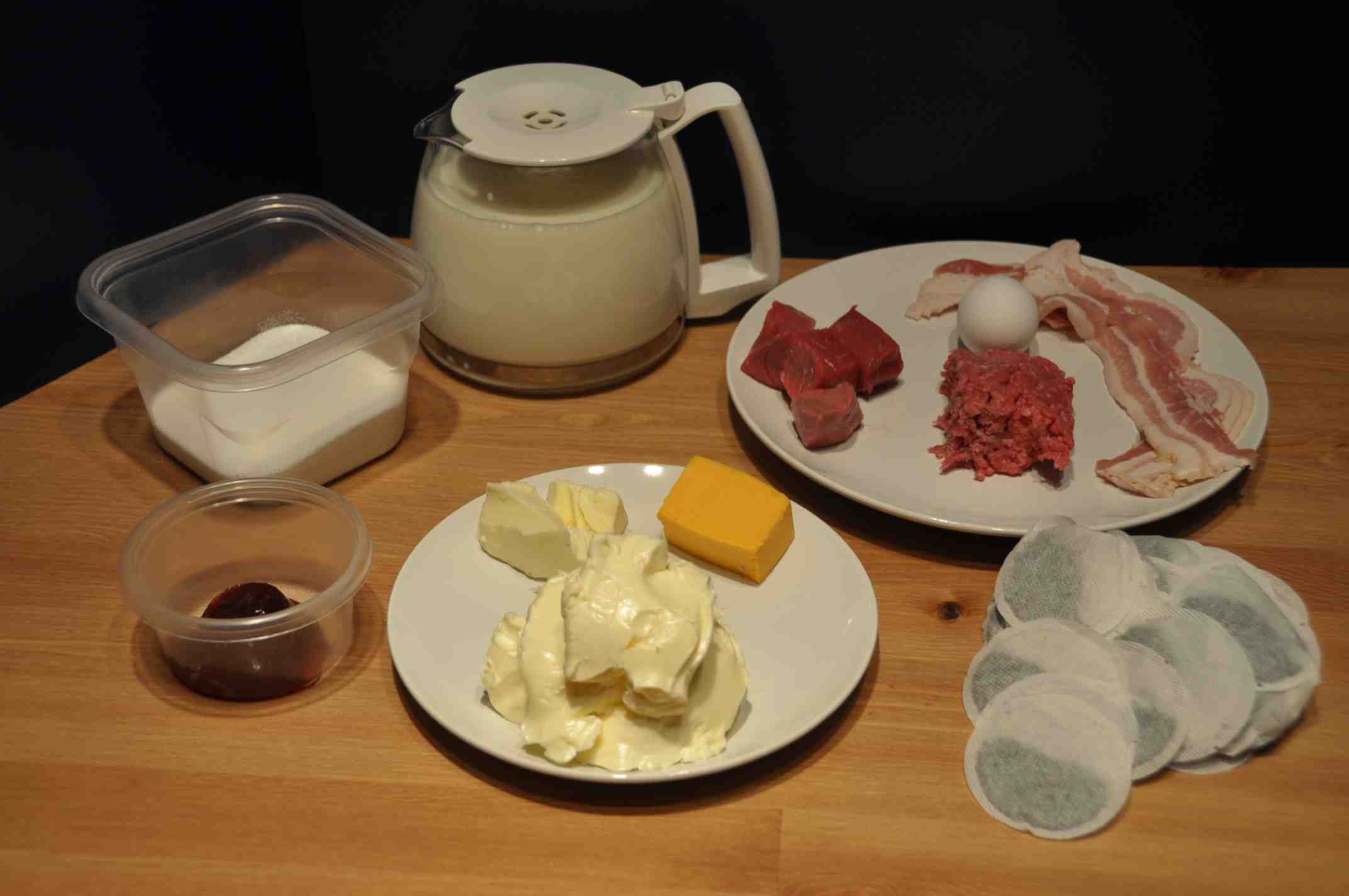
Rationed food per person per week: (Just because it was rationed didn’t mean it was always available!)

Bacon – 4 oz

Meat – 8oz

Fat:  10 oz.   2 oz butter, 4 oz margarine and 4 oz of lard, but I’m going to use all butter.

Cheese  – 2oz

Milk – 3 pints

Sugar – 8oz

Jam – 2oz

Tea – 2oz (I read somewhere it was 15 teabags, but I measured out 23!!)

Eggs: 1 shell, 3 powdered.

Christmas in Wartime

Starting one week today (Monday, January 6th 2014) I plan to return to eating World War Two British rations for one month. As before I’ll be adding in tidbits about the war, while Anne (my aunt) will once again add her own recollections of living in Scotland during that conflict.

To get my mind in the right headspace, I’ve recently been watching a few WW2 documentaries and dramas. A Wartime Farm Christmas, a documentary which can be found on Youtube, is a wonderful antidote to the excesses of our 21st Century festive season and a great tribute to the resilience of those wartime civilians.

Enjoy!