Wartime Rations – Day 2

It might only be my second day of rations but I couldn’t quite face porridge for breakfast again. After the recent excesses of the holiday season, my mindset saw it as shades of Oliver Twist in the workhouse begging for more gruel.  Give me a couple more days and I’ll be back in the swing of it. Instead, I enjoyed some toast with a meagre scraping of butter and precious jam with my morning cuppa.

For lunch I finished off the homemade soup and leftovers from last night’s dinner, so I’m not going to bore you with those repeated photos.

We’re probably going to have to eat at least one – maybe two – meatless evening meals per week, so I tried to ease ourselves gradually into it this evening with baked potatoes, with a bacon and cheese topping, and carrots on the side. For pudding, I made individual apple crumbles, using one (large) apple and half the crumble mix.  I was still left with 1/2 apple and plenty of topping, so guess what we’re having for pudding tomorrow!

Potatocrumble

Because I’m such a modern day TV addict,  I wondered what radio programmes – and the actual radio set itself – were like during wartime.  Also, I’d heard the newsreaders were supposed identify themselves – something to do with ensuring accurate news during an invasion, I think. I asked Anne, and here’s her reply.

anne2013Radio?  No. no – WIRELESS SET.  It sat on top of the coal bunker, was about 16″ across, 10-12″ high and 9-10″ deep.  Yes, it took a while for the valves to warm up, so you switched THE WIRELESS on a little before your programme was due to start.
Don’t know what it was made of – it wasn’t wood, though many wireless sets were.  It looked like a mottled brown plastic case but of course it couldn’t have been.  The speaker was behind a gold piece of cloth, and there were two knobs:  one for volume and one which changed the station, arrayed in a narrow arc at the bottom.  The foreign station names fascinated me and I used to switch from one to another whenever I could, to listen to the strange languages.  It arrived about 1937 as a gift from Alex to Mum, but of course everyone had use of it, and woe betide anyone who wanted to use it – or made any noise – if Dad was glued to it for a cricket match or a special football match.  It was treated by Mother as if it were sentient – no-one could talk if the wireless was on.  It was as rude as interrupting a person talking, Mum said.   Don’t remember a smell. 

Mary had a wireless in Kippen, but there was no power there and it needed two batteries to work, a solid one about 10x5x3″ deep, and a liquid one in a heavy glass container with a handle so you could carry it to a petrol station or other place to get it re-charged. Which reminds me that we lived by the light of oil lamps. 

The wireless was on most of the day – except during the frequent power cuts. Yes the newsreaders gave their names John Snagge, Bruce Belfridge, Alvar Liddell etc . Lots of b-i-g dance bands with half-hour programmes: Henry Hall, Geraldo, Jack Jackson (my favourite) et al. The biggest ones of around 25-30 instruments called themselves dance orchestras – but it still wasn’t as loud as today’s pop. One of Mother’s favourite wireless programmes was Sandy McPherson on a cinema organ.

Anne mentioning my Uncle Alex above made me decided to check out The Glasgow Herald to see what other programmes were on the WIRELESS on January 7th, 1942.  (Uncle Alex was a reporter with the newspaper before he joined the RAF.)  Here’s a selection.

7.30am: Exercises. 8.15: The Kitchen Front. 10.30: Music While You Work. 2.30: Billy Cotton and his Band. 9.20pm: Tamburlaine, a play by Christopher Marlowe.

What else was in the paper that day?

The blackout in Glasgow started at 5.32pm in the afternoon and ended at 9.15pm next morning.

The New Year Sales were coming to an end.  You could buy a pair of ladies’ shoes for 30 shillings, a nightdress for 8/11,  or a ‘Hampster’ fur coat  (Really?? I hope I read that wrong!) for 19 Guineas.  Even though you could afford the purchase, I think the points system was operating by this time, so I’d love to know how many points you needed for a fur coat.

It was still pantomime season in Glasgow, with Aladdin playing at the Pavilion Theatre and Dick Whittington at the Alhambra.The afore-mentioned Geraldo and his Orchestra were performing at the Glasgow Empire.

An enraged letter to the editor discussed a particular Glasgwegian’s fury at the proposal to plough up golf courses for agriculture while so much untilled land was still available in the countryside.

Women born in 1921, whether married or single, were to register for war-work on Saturday morning at their local Labour Exchange.

In the Situations Vacant, there was a call for a butcher – weekly wage of 6 pounds .  Also a hairdresser – wage not mentioned. And there was another advertisement inviting women – not liable for National Service – to apply for clerical positions in engineering works in the Glasgow Area.

A worker in Paisley was charged with failing to participate in his works fire duties and was fined 4 pounds – to be paid within 8 weeks – or face 6 weeks imprisonment.  His excuse was that he’d gone to a dance and ‘forgotten about the matter’.

But there was some tragic news in there, too. On January 6th, 6 miners were killed in a gas explosion in Lancashire. But that wasn’t the only catastrophic accident in the first week of the New Year. On New Year’s Day, there was an explosion at the Sneyd Colliery near Stoke-on-Trent where 57 miners lost their lives.

mine screen shot


Wartime Rations – Day 1

What was it Robert Burns said about the best laid plans…? I decided over a month ago to start eating ‘wartime rations’ today, so you’d think I’d have been a bit more organised about it. Wrong! Having cleaned out my fridge yesterday of all the non-rationed foods and eating porridge for breakfast this morning (milk and a wee bit of sugar)…

Porridge

… lunchtime found me racing down to Safeway to buy my rations for the week.  Healthy ‘perimeter’ shopping which cost a fraction of my usual bill. (The carton of eggs you see is three weeks supply of shell eggs – I still have to pick up powdered eggs.)

safeway

Last time I ate wartime rations it was spring/summer, so I could enjoy lettuce, tomato and cucumbers in my  ‘Oslo meal’ sandwich. (Oslo meal = sandwich, piece of fruit and glass of milk).  But with no salad available in January – and little advance prep on my part – I had to make do with a carrot sandwich.  It looks a bit odd, but actually tasted okay. Fortunately, I had made some homemade soup yesterday evening, so that was nice and warming on a cold day!

Oslo Meal

While discussing dinner with my husband last night. I told him I would be making vegetable curry for our first evening meal. (I want to keep the bulk of my meat ration until later on in the week.) However, when I came downstairs this morning to discover he’d really got into the spirit of things and made himself porridge for breakfast I relented. Sausages were available during the war off ration, but were hard to get and the quality was not always the best.  Tonight they were available and, along with more homemade vegetable soup, we enjoyed a Stewed Sausage recipe of my mother’s  – probably my grandmother’s too – made with apples, leeks and carrots with beetroot and mashed potato on the side.

dinner

Okay, on to some historical stuff.

As this is the first day back at school for most children after the holidays, what was discipline like in wartime schools? During those years, Anne went to school in Glasgow and was also evacuated into the countryside, so here are her recollections.

At Hillhead, very strict. All of us had to sit with arms folded or hands clasped behind our backs, according to a particular teacher’s whim, unless we were actually writing. A whistle was much used in the playground to stop unladylike behaviour. At Hyndland/Balfron it was a bit looser: my history teacher for instance didn’t mind that I listened to his lectures with my head resting on my arms on the desk – he took it that I was listening, which I was. But that would never have been countenanced at Hillhead. 

As for what was going on in the war on this day… although it wasn’t voted in until March, on January 6th, 1941, FDR asked Congress to support Lend Lease, offering the allies money and supplies in the war effort. According to Wikipedia, the vote was split down party lines with the Republicans against, seeing it as a step to war. Through Lend Lease, the US supplied the Allies with  $50.1 billion ($659b in today’s money) worth of goods.  Repayment of the British debt started in January 1951 – although the annual payments were deferred for 5 years.  Britain submitted its final installment of $83.3million to the US on January 29th, 2006.

WW2 Month of Rations – Research

As with last time, I will be including the images of the wartime food I eat each day with a little history of the war.

What I personally enjoyed most about my previous ration challenge was hearing the stories my Aunt Anne, who was a child during the war, contributed to my blog, as well as her advice on what I was doing right… or wrong.  (No rice pudding!)  I’m thrilled she’s given me some more stories this time around.

anne2013

For research,  I’m using The Chronicle of the 20th Century, which describes the events of each day of the century.  There are all kinds of WW2 sites available online, but I recently found a link to Real Time’ WW2 Tweets.  It’s absolutely fabulous and I can’t recommend it highly enough.

history book

When it comes to the food, I’ll be mostly using three books of Marguerite Patten’s wartime recipes published by the Imperial War Museum –  We’ll Eat Again, The Victory Cookbook and Post-War Kitchen.

cookbook

There are also some great wartime ration websites out there, my favourite being The 1940s Experiment.  She has some great recipes and information, so please check it out!

And of course, there’s always Youtube.  Here’s an excerpt from an informative (and funny!) documentary series the BBC released a few years ago.

WW2 Month of Rations – The ‘Rules’.

1) Despite food being rationed during WW2, it didn’t mean rations were always available in the shops.  If there were no eggs available one week, it didn’t mean that you got 2 the following week. However, for the purposes of this challenge, I’m going to assume that all my rations are available.

2) I’ve figured out our weekly ration allowance and am coming to grips with the point system. From our 16 points (each) for January, I’m going to allow ourselves one tin of peas and one tin of golden syrup.

3) I’m going to assume I have some basics already in my cupboards: 8 oz of lentils and 8 oz of sultanas left over from the previous month’s point allowance, plus some bisto, mayonnaise, dried ginger etc.  Also, I’ve been told by a friend’s mother, who was a housewife during the war, that flour (wholemeal) and oatmeal were freely available off ration, so I will be making the most of them!

4) We’ll eat only fruit and vegetables in season in the UK during the war.  For January, that means – beetroot, Brussel sprouts, cabbage (yuck!), cauliflower, kale (double yuck!!) leeks, carrots, parsnips, potatoes, red cabbage, turnips, carrots, apples and pears.  Hmmm – no sign of onions in there, and I know there were long periods when they weren’t available during the war.  As I’m not a gardener who would have Dug for Victory, how will recipes taste using leeks instead of onions?  I guess I’m going to find out!

5) Factories, offices and schools provided un-rationed meals for workers and school children. In addition, a system of ‘British Restaurants’ was set up to provide a filling three-course meal to the general population for the modern equivalent of about 1.50GBP or $3. Statistics suggest that people ate out about 4 times a week during the war, which gave housewives a happy respite from struggling to come up with interesting meals on the ration. My husband is participating in this programme (for the first week, at least) so he will be able to eat lunch out on weekdays. If I go out for lunch, I will ensure I eat only wartime food – eg fish and chips – available at the British restaurants.

6) Wartime propaganda might have suggested that everyone was ‘in it together‘, but as is always the case, those people with money continued to eat better than most of the population. (When I ate wartime rations back in May, I referred to it as ‘Eating at The Savoy.) The only restriction in the high-class hotels was that meat could only be served for one course.  So… as my husband and I have an office winter party coming up at the end of the month, we’ll be ‘Eating – and drinking – at The Savoy’ that night!

Tomorrow, I’ll provide a list of the references I’ve used for this challenge.

Wartime Rations

Back in May last year, I spent a fortnight eating World War Two British rations. It was a great experience and I’ve decided to repeat it for four weeks this January. My initial instinct was to start on January 1st, but we have so many leftovers from Xmas/New Year it would go against the wartime spirit of eliminating waste – it was illegal to waste food –  so I’m going to start on Monday, January 6th and will finish on Sunday February 2nd.

My husband has agreed to join in – at least for the first week. (When he discovers that the main vegetable available in the winter months was cabbage, he might change his mind.) Until then, I’m going to spend the next few days explaining the ‘rules’ and how I plan to structure my posts.

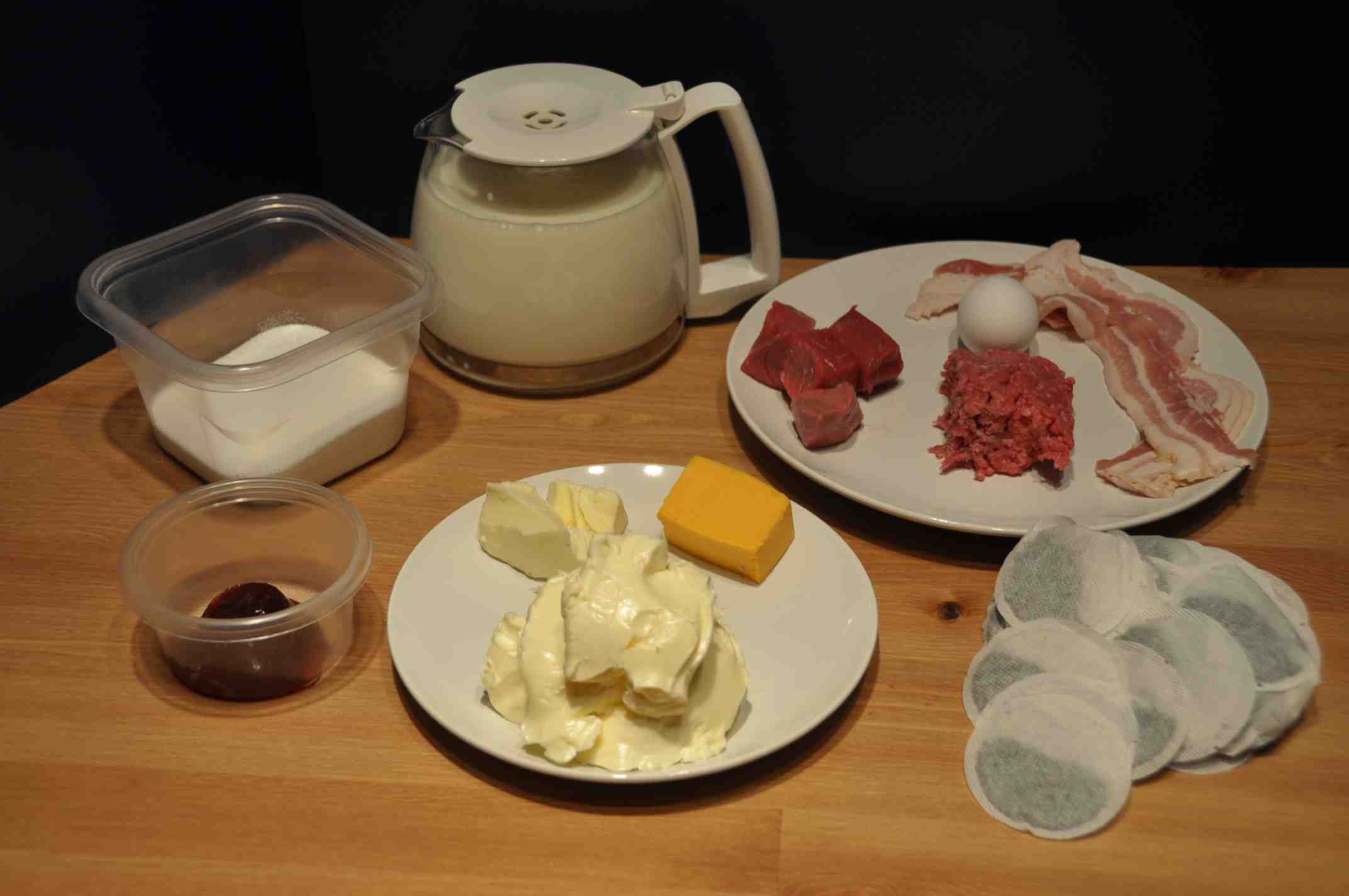
Rations varied throughout the war – and didn’t end until 1954! – but I’m going to adopt the same rations as last time. The foods that were rationed were mostly dairy, meat, sugar and tea.  Un-rationed foods included vegetables, bread, fish and offal (when the latter was available). There was also a ‘points’ system with each person getting 16 points a month. In general 16 points could buy you – for example – 1 can of fish or 2 lbs of dried fruit or 8 lbs of pulses.  Certain foods  – eg bananas – were not available until long after the war ended.

ratiions

Rationed food per person per week: (Just because it was rationed didn’t mean it was always available!)

Bacon – 4 oz

Meat – 8oz

Fat:  10 oz.   2 oz butter, 4 oz margarine and 4 oz of lard, but I’m going to use all butter.

Cheese  – 2oz

Milk – 3 pints

Sugar – 8oz

Jam – 2oz

Tea – 2oz (I read somewhere it was 15 teabags, but I measured out 23!!)

Eggs: 1 shell, 3 powdered.

Christmas in Wartime

Starting one week today (Monday, January 6th 2014) I plan to return to eating World War Two British rations for one month. As before I’ll be adding in tidbits about the war, while Anne (my aunt) will once again add her own recollections of living in Scotland during that conflict.

To get my mind in the right headspace, I’ve recently been watching a few WW2 documentaries and dramas. A Wartime Farm Christmas, a documentary which can be found on Youtube, is a wonderful antidote to the excesses of our 21st Century festive season and a great tribute to the resilience of those wartime civilians.

Enjoy!

History Mystery – Part Three

I’m still on the search for the Canadian Native soldier who supposedly died in Glasgow, Scotland in 1916.  His name – Gay Flier – appears to be wrong, so it’s going to be a challenge.  However, The Commonwealth War Graves Commission responded with a very informative e-mail giving me the names of 42 Canadian soldiers who died and were buried in 7 different cemeteries in the Glasgow vicinity from 1915-1919.  Unfortunately for my particular search, there is no native sounding name among them.

The list makes for sober reading. The youngest victim was 17, a seaman from Newfoundland, the oldest a 45 year-old American from Florida who joined the Canadian military.  Most died of ‘wounds’ or pneumonia – one was ‘accidentally killed’ – and you can’t help but wonder about the stories behind these men.  One, a member of the Canadian Forestry Corps, had a Glaswegian wife. Was theirs a wartime romance that ended in tragedy?

But the name that really caught my attention was that of Private James Crawford Begg, 31st Brigade, Canadian Infantry.  Died of pneumonia following wounds (gas) 5th of February 1919. Age 22.  Son of William and Janet Napier Crawford Begg of 219-14th Ave West, Calgary, Alberta.  Born at Govan, Glasgow.  A young man who emigrated to Canada for a better life and then died in the city of his birth. And the fact that he died more than three months after the war ended… So sad.