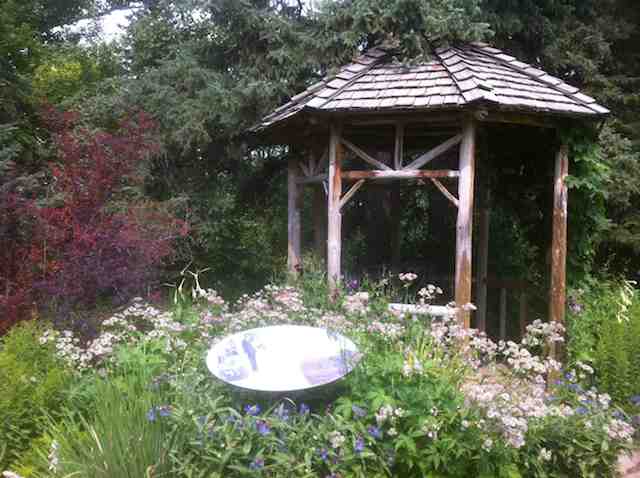
A few weeks ago, my daughter took me to the Reader’s Rock Garden Cafe for my birthday lunch. It’s one of Calgary’s little secrets – most native Calgarians have no idea it’s there – tucked off Macleod Trail on 25th Ave. The setting is glorious and the food first class. (Check out their menu here.)
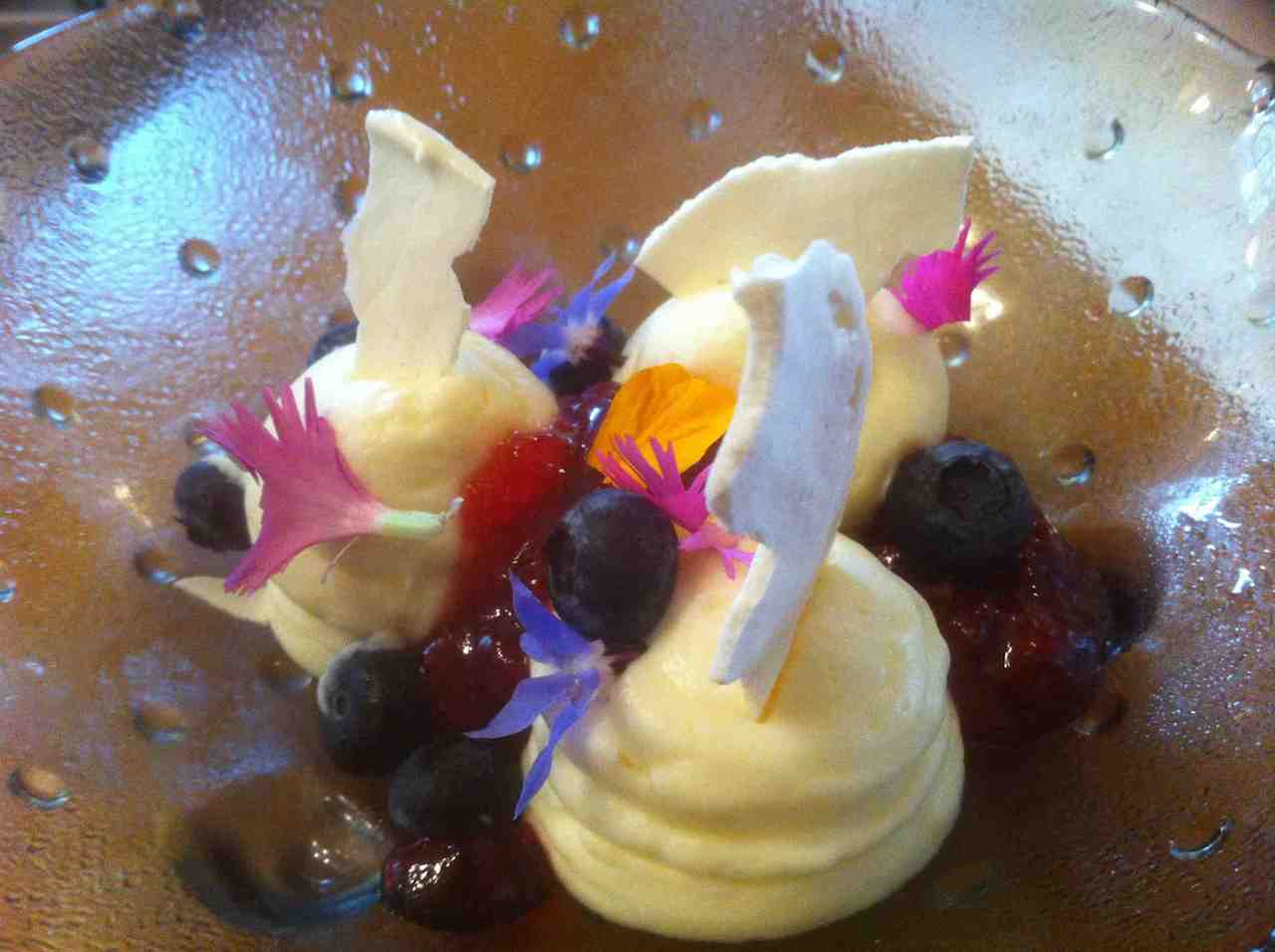
On the day we visited, I had the lamb – Albertan, of course – which was cooked to perfection. I followed that with an Eton Mess – one of my favourite desserts – which tasted every bit as wonderful as it looked. Prices are very reasonable considering the excellent quality, and the setting couldn’t be more perfect.
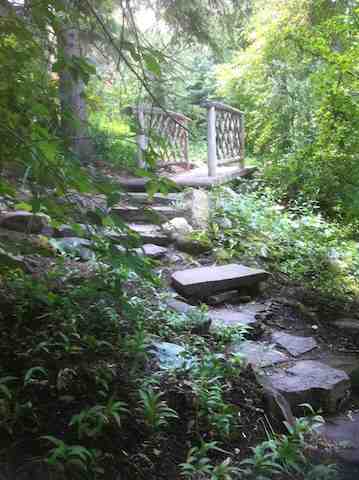
The cafe is surrounded by the most beautiful garden which is a testament to one man’s passion for horticulture. William Roland Reader was Superintendent for the City of Calgary Parks from 1913-42. During that time he transformed what was a bare hillside into an internationally acclaimed garden.
Over a period of 30 years, he trialled over 4,000 different plant species. The result is a tranquil, exquisite and secret paradise barely metres from one of Calgary’s busiest thoroughfares.
August 4th, 2014 marks the 100th anniversary of the outbreak of what became known as World War One. I never met my grandfather on my dad’s side, David Tweedie Cranstoun; he died ten years before I was born. A trained ‘dispenser’ working in a pharmacy shop in Rothesay, he joined the Royal Army Medical Corps (RAMC) in 1916, ultimately winning the Military Medal for ‘Bravery In The Field’ in 1918.
How do I know this? Not from learning stories about him when I was a child. It never occurred to me to ask questions about his life. By the time I did, all the family members who’d known him personally were dead.
But it’s easy to find out about an ex-soldier’s military record, I can hear you say. When you know their service number you can access their service records online. What could be simpler?
And that’s true – except my grandfather’s service records were among those damaged or destroyed by the Luftwaffe in World War Two. But some fragments remain, burn marks evident around the sides.
So this is what I’ve found out about the grandfather I never knew. He was born on May 2nd, 1887, the illegitimate son of Jane Tweedie, a domestic servant.
The fact that he was illegitimate came as a surprise. Growing up in Glasgow in the 60s, ‘that kind of thing’ didn’t happen in families like ours. And you know, I’m not sure my dad ever knew, because somewhere between 1900 an 1910, before he married and became a father, David Tweedie changed his name to David Tweedie Cranstoun. As far as my siblings and cousins were aware, our Cranstoun great-aunts and uncles were truly our grandfather’s flesh and blood. They were always present for family celebrations and there was never a hint of ‘scandal’ about the man who – in reality – was their half-brother.
Married with three children, David joined the army in 1916, serving, as I mentioned before, in the Royal Army Medical Corps.
I know very little about his war. It must have been bloody and he must have seen some horrific sights. According to surviving records, he contacted measles at the front and was a patient in an isolation hospital in Glasgow for some time. And he must have done something very brave to win the Military Medal in 1918.
I also know that after he was demobbed from the army in 1920 he couldn’t settle. According to my father, my grandfather found it hard to adjust to everyday civilian life and signed up to fight for the ‘White Russians’ following the Bolshevik Revolution in 1921.
Today, 100 years on from the beginning of that bloody First World War, I can’t help thinking of David Tweedie Cranstoun and all the sons, brothers, fathers, sisters, daughters and mothers who served in that conflict at enormous emotional and physical cost to themselves and their families.
I’ve been toying with the idea of self-publishing for some time, but yesterday I took the plunge and uploaded a short memoir of my pilgrimage to the beaches of Dunkirk in 2009 to Amazon.
My dad was one of 340,000 soldiers evacuated from the beaches of Dunkirk in May 1940 following the German invasion of Belgium, Holland and France. Dad died when I was in my early twenties. He never really talked about his experiences, but in 2009 I visited France with my friend Anna. Not only did we walk the full length of the beach from De Panne in Belgium to Dunkirk in France in his memory, but we also had the honour of meeting a real Dunkirk veteran and talking to him about his time on the beach 69 years earlier.
And then… I met an elderly man who had known my father all those years ago; who had lived in the house next door to where Dad was billeted for six months.
If you’re interested in reading the story, please click hereto purchase a copy. I’ve also included several photos from my journey on the In My Father’s Footsteps link at the top of this page.
The annual Calgary Stampede – The Greatest Outdoor Show on Earth – kicked off last Friday morning with a three-hour parade through downtown. This year’s parade marshall was Captain Kirk himself, William Shatner, but in the past it’s been led by actors such as Bing Crosby, Bob Hope, Christopher Reeve and Jack Palance, politicians, sports stars and other dignitaries such as Chris Hadfield, Prince Charles, Ken Taylor, Rick Hansen and Walt Disney.
The first stampede – although not called that – was organised in 1912 by Guy Weadick, an American cowboy and veteran of travelling Wild West Shows. Back then, Calgary was a relatively young city; the North West Mounted Police had arrived in 1875 and founded a fort by the Bow and Elbow rivers. In 1884, Calgary, with a population of only 500 people, was incorporated as town.
In 1912, with financial backing provided by four very successful cattlemen – Pat Burns, George Lane, AE Cross and AJ MacLean – Guy Weadick produced what was called the Frontier Days and Cowboy Championship. It was supposed to be a one-off and while there was a suggestion it should be repeated in 1913, money wasn’t forthcoming. After World War One, the idea was resurrected and in 1919 The Victory Stampede was held. Since then, it’s gone from strength to strength.
Beginning on the 1st Friday in July and continuing for ten days until the following Sunday, it’s a time when the city comes alive with the spirit of the Old West. Down at the Stampede grounds you’ll find an afternoon rodeo, evening chuck wagon races and show, a midway, agricultural and craft exhibition, market, native village and nighttime firework display.
During the ten days of Stampede, the city itself is festooned with banners, rodeo scenes are painted onto the windows of shops and office buildings, and you can find plenty of pancake breakfasts and stampede parties to suit everyone’s taste. Banks are transformed into Wild West corrals, and young and old deck themselves out in jeans, cowboy shirt, hat and boots.
On a recent visit to San Francisco, I took an Alley tour of Chinatown where our guides told us the story of Donaldina Cameron (July 26, 1869 – January 4, 1968). Born in New Zealand to Scottish parents, Donaldina Cameron moved to California with her family when she was two years of age.
Initially joining The Presbyterian Home (a mission home caring for Asian women) in San Fransisco as a young sewing teacher, Donaldina became its superintendent at the young age of twenty-five. Situated on the edge of Chinatown, the home was a place of refuge for young Chinese girls smuggled illegally into the US to work in the sex trade or as indentured servants.
Fearing an influx of Asian immigration to the US, the government had enacted the Chinese Exclusion Act in 1882. This prohibited the immigration of (primarily) Chinese labourers, but it especially banned the immigration of Chinese women unless they were already married to a US citizen. Needless to say, this skewed ratio of men to women and set the stage for a massive illegal sex trade. (The act was only repealed in 1943, with a Californian law prohibiting Asians from marrying whites not repealed until 1948. In other states, similar laws were repealed only in 1967.)
Depending on which side you were on, Donaldina was known as the Angry Angel of Chinatown, the Jesus Woman or the White Devil. With the help of the police – and a sledgehammer or two – she broke down the doors of places she knew women were being held, rescuing as many as she could and gaining guardianship so they could not be returned to their slave owners. Estimates are she saved 3,000 such women, but only 600 were actually recorded on her books. Still, 600 is a not insubstantial number.
Once the women were freed they resided at the Presbyterian Home where they converted to Christianity and were taught English and western housekeeping skills. While some women accepted this conversion and went on to call Donaldina ‘Lo Mo’ (Foster Mother), others weren’t so happy about the loss of their culture. The girls left the home only to marry Christian men
The original home was destroyed by the 1906 earthquake. The women fled the building only for Donaldina to realise their guardianship papers were still inside; without those, the girls could be snatched back by their former owners. Donaldina returned to the damaged house to retrieve the papers, getting out just before the building was dynamited to create a firebreak in an attempt to halt the fire raging through the city.
The house was rebuilt in 1907 on Sacramento Street.
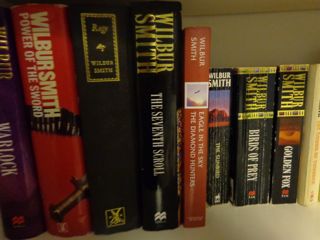
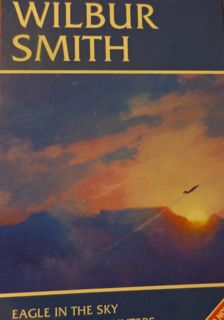
Eagle In The Sky was my introduction to Wilbur Smith’s writing. I read it waaaay back in the day and loved it, finding it to be the perfect mix of romance and adventure. For me it brought the late 60s and early 70s, and a part of the world I didn’t know, vividly to life.
Fast forward 40 years. (Yikes! Am I really that old?) My husband’s been nagging me that we have to downsize – which we do – and that, ‘You really have to do something about the ridiculous number of books you have, Diana. If you want to read something again, put it on your Kindle.’
Which is all well and good, but personally I think a house without shelves filled with books has no right to call itself a home. Still, I get his drift, so I go down to the basement to make a start on clearing out some of the bookcases and come across a shelf full of Wilbur Smith. I haven’t read quite as many as my husband, but we’re both fans.
And there it is.
Eagle In The Sky.
Not my original copy – that’s been lost in one of our many moves – but a replacement I must have bought and never read.
I pull it from the shelf and flick through the pages.
Should I risk reading it again?
My memories of the story from all those years ago are so strong – both the characters and plot are clear and much beloved in my head and my heart. If I read it again will I be disappointed?
No.
David and Debra’s love story remained as poignant as it was on first reading. Smith’s deft touch as he takes us from South Africa to Israel and back again is assured and masterful. That last scene…
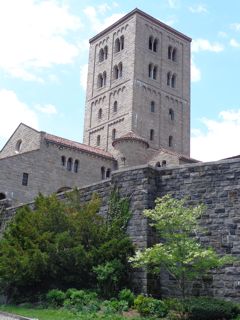
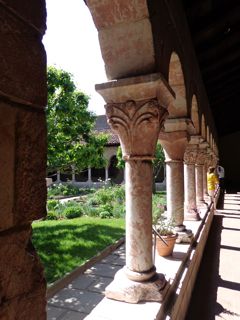
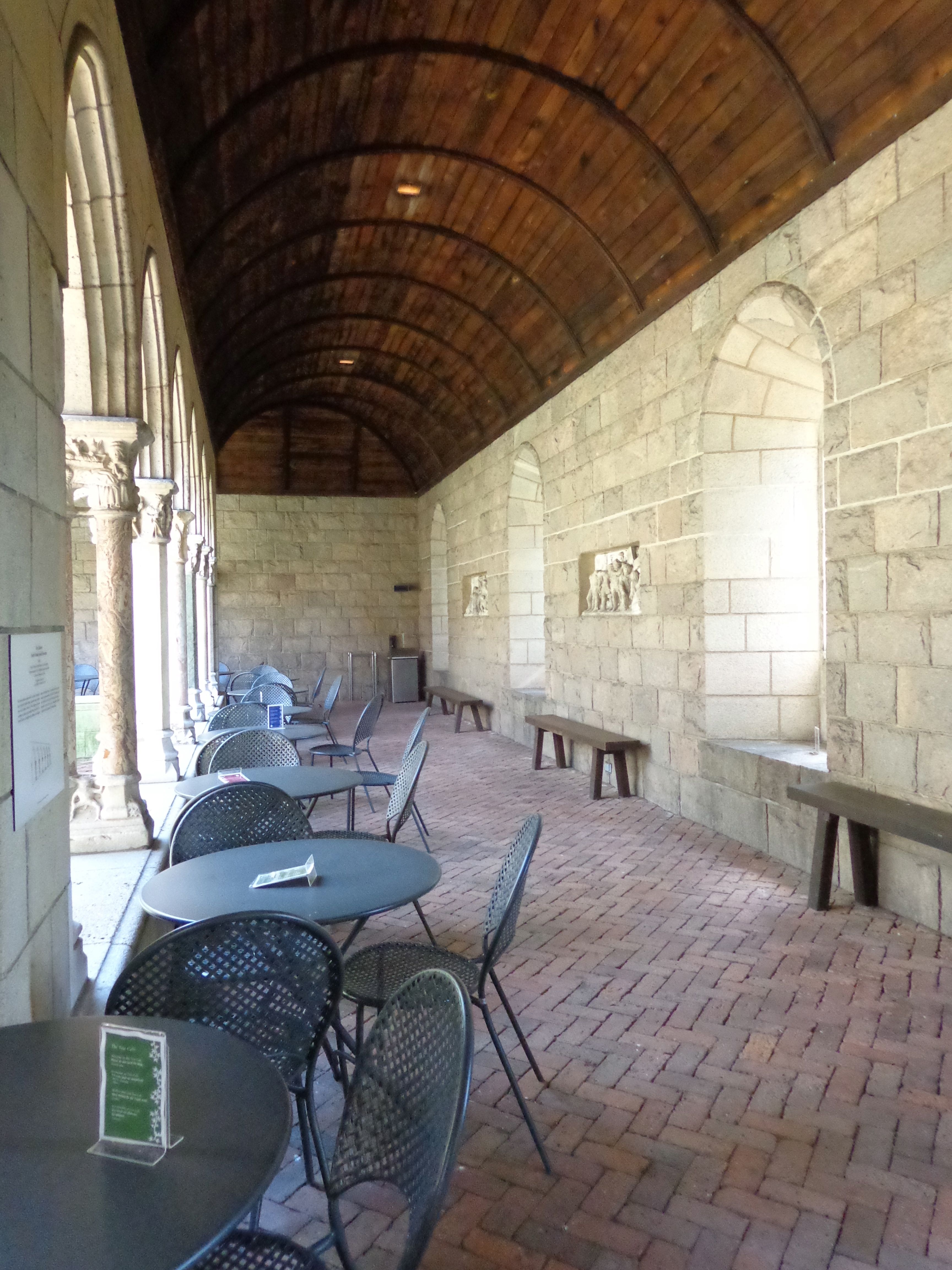
I have to be honest, when it was suggested we visit The Cloisters during our recent trip to NYC I took a bit of convincing. I’ve visited medieval convents and monasteries in Europe and was very sceptical that such beauty, solitude and atmosphere could be replicated in Manhattan.
Boy, was I wrong!
(Victoria Smith refers to The Cloisters as one of the underrated gems of New York, so please check out her blog for it and other suggestions.)
As part of the Metropolitan Museum of Art, The Cloisters is devoted to the art and architecture of Medieval Europe. (Click Here for a link to the official site which includes a 28 minute video.)
A ticket for Metropolitan Museum of Art allows you six days to use that same ticket to visit The Cloisters.
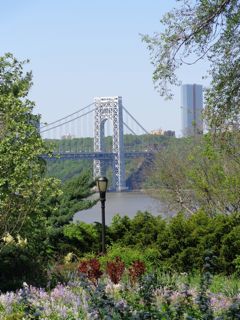
Getting there is simple. Take the A train uptown to 190th. From there you can either a) hop on the M4 bus for one stop, b) walk along Margaret Corbin Drive, or c) walk through Fort Tyron Park. I recommend the latter as the scenery and views are stunning.
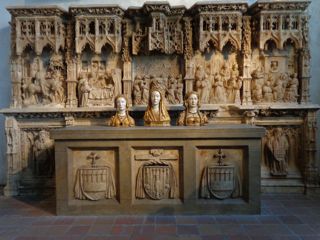
Built from money donated by Rockefeller, the actual fabric of The Cloisters contains elements from original European (mostly French) medieval cloisters.
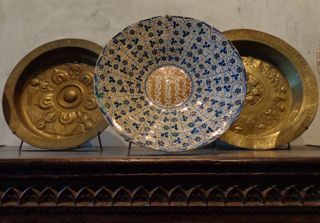
Artifacts include paintings, tapestries (including the Unicorn tapestry), plates, sculptures and religious items.
My favourite was a golden filigree straw, used for drinking the wine (Blood of Christ) from the chalice to ensure none spilled on the ground.
Possessing the most peaceful cafeteria you can imagine, The Cloisters is a wonderful place to while away a few hours and recharge your soul before returning to the hustle and bustle of the rest of Manhattan.
I found Friday’s remembrances of the 70th anniversary of D-Day very moving, but perhaps for many of us the story that stood out was the journey 89 year-old Bernard Jordan took from his care home in Hove to join his colleagues in France. It’s already been nicknamed The Great Escape, and I’m sure within a few weeks there will be a film in the pipeline.
Quite rightly, the emphasis this weekend was on the veterans and thousands upon thousands of young men who died on those beaches and in the months following the invasion. But it got me to wondering about the news the British people received, listening to the radio or reading the papers to find out what was happening to their loved ones.
Once again, I turned to The Glasgow Herald of June 7th, 1944 for some insights and gathered together a collection of tidbits that appealed to me.
Whereas other papers’ headlines screamed Invasion, with only 8 pages available (because of paper rationing) The Glasgow Herald wasted little space on pictures and remained as understated as ever. On the front page were the usual blackout times (Glasgow 11.57pm until 4.34am) and notifications of births, marriages and deaths. The current entertainment available at the city’s theatres was listed (including the Half-Past Eight Show mentioned in last week’s blog) as well as a programme of musical concerts in city parks.
But the Invasion did make its presence known on the front page with notices from city churches informing the faithful of special prayers and services for ‘our King and County and Allies and for the Forces now invading Europe’. Glasgow Cathedral offered two services at noon and 3pm for ‘those engaged in the Second Front Operation’.
The Late News column referenced a German report which talked of ‘grim fighting’ between Havre and Cherbourg being the ‘bloodiest of the day’ with several hundred Canadian paratroopers wiped out or forced to surrender.
German Overseas Radio denied any fighting in Caen. ‘Mr Churchill’s reference about fighting in Caen is untrue. No enemy troops have penetrated into the city, therefore no fighting has taken place in Caen.’
Page two carried the Colonial Secretary being forced to deny a ‘silly and harmful story’ which had had much circulation, particularly in America, to the effect that America was being charged for every palm tree they destroyed in battles for the recovery of British possessions.
When talking about the history of invasion in Europe, one columnist pointed out that Caen had been the HQ of William The Conqueror before he turned his sights on England in 1066.
Eisenhower apparently carried seven old coins in his pocket – one being an ancient five guinea piece. He is said to have given these mascots a rub before the Italian invasion and everyone hoped that the mascots would do as good a job again.
Regarding the Invasion of Italy and France, it had been decided by Roosevelt and Churchill at the Casablanca Conference in 1943 that an invasion of the west would be deferred until the Allies had cleared the Mediterranean and knocked out Italy.
Page 3 contained Scottish news with detailed Invasion news starting on page 4.
The Invasion was originally scheduled for Monday June 5th, but postponed for 24 hours because of bad weather.
German Radio admitted the Allies had a foothold 10-15 miles long and nearly a mile deep in France.
Allied landings also took place on Guernsey and Jersey in the Channel Islands.
Hitler was reported to have taken charge of the military response to the invasion.
Between midnight and 8am on June 6th, an estimated 31,000 Allied airmen flew over France. 1,300 Fortresses and Liberators began their attack at 6am ending at 8.30am.
Priority was being given for troops’ mail so that both the men in the front line and their relatives and friends at home should receive regular deliveries of letters.
One hour before they left for the beaches, the troops enjoyed a meal of pork chops and plum duff. Each solder was then given a ‘landing ration’ – a bag of chocolate and biscuits and cigarettes for ‘consumption while waiting’.
Civilian workmen and villagers who had seen anything of the preparations at an American airfield were detained in the camp by the authorities for 48 hours until news of the landings were released.
125,000,000 maps were used by the US invasion forces.
Eisenhower broadcast a Call to the People of Europe: The hour of your liberation is approaching. All patriots, men and women, young and old, have a part to play in the achievement of final victory.
General Montgomery wished the troops ‘Good Hunting in Europe’.
And then, on pages 7 and 8 it was back to normal with commodity markets, situations vacant, property, livestock and farms for sale. A five-room terraced house with kitchen and scullery could be bought for 800 pounds. So much for the biggest invasion force the world had ever seen.
If you ever get the opportunity to watch the film The Longest Day, I highly recommend it. It’s a comprehensive view of the events of June 6th, 1944 from all sides involved.
I’m putting my cards on the table here; I’m a Jane Austen fan. My three favourite books of her are – in order – Persuasion, Pride and Prejudice and Emma.
Because I love her characters so much I’ve read a few Pride and Prejudice spin-offs, but most of them have left me rather underwhelmed.
Until now.
Maybe that’s because most writers have tried to re-imagine Jane Austen’s beloved characters whereas in Jo Baker’s book Longbourn, she observes them. They impact the story only as their actions affect her main characters – the servants.
When I was studying Pride and Prejudice at university, my tutor complained that although Jane Austen was writing during the Napoleonic wars, she never discussed the conflict or its impact on society.
Then, as now, I found that comment very unfair. Austen frequently talks about the presence of the militia and she was writing to an audience who was well aware what was going on in Europe.
Unless one is personally involved in a conflict, war remains an abstract concept. Following the end of English Civil War in the mid-17th century until the first air-raids during World War One, England did not experience war first hand on its soil.
My tutor also complained that we only got glimpses of the servants in her books. But Jane Austen was not writing about the lives of the servants. For me the fact that she doesn’t mention them reveals a huge amount about Jane’s class and society – and my tutor’s prejudices. (‘scuse the pun.)
All his reservations are addressed in Jo Baker’s Longbourn. Told from the servants’ POV, this is a delightfully fresh approach to a very familiar story allowing us to see the Bennet family, and others, in a completely new light.
I loved this story and particularly loved Jo Baker’s voice. I look forward to reading more by this excellent writer.
One of the best things about NYC is the food. During our stay in the East Village we tried out several local restaurants and didn’t find a bad meal anywhere.
But my absolute favourite…?
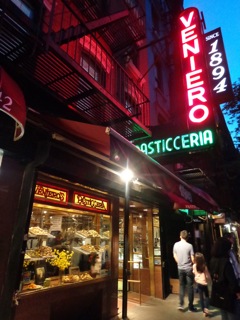
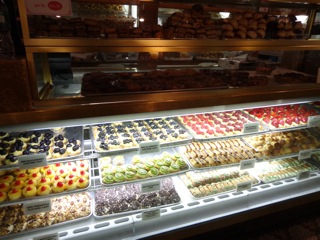
Not exactly a restaurant, but a patisserie called Veniero. If you like ANY kind of dessert, this is NOT to be missed.
As for the cheesecake…!
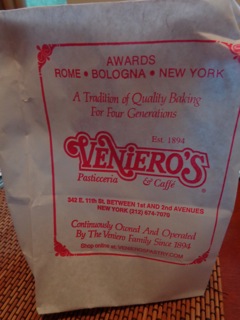
Established in 1894 by Antonio Veniero, it’s located at 342 East 11th Street and 1st Ave, NY 10003, and has opening hours to suit everyone.
Sunday-Thursday: 8am-midnight.
Friday/Saturday: 8am – 1am.
Take out? Eat in? Your choice. With an elegant cafe attached, this is one eatery definitely worth visiting!




 before he married and became a father, David Tweedie changed his name to David Tweedie Cranstoun. As far as my siblings and cousins were aware, our Cranstoun great-aunts and uncles were truly our grandfather’s flesh and blood. They were always present for family celebrations and there was never a hint of ‘scandal’ about the man who – in reality – was their half-brother.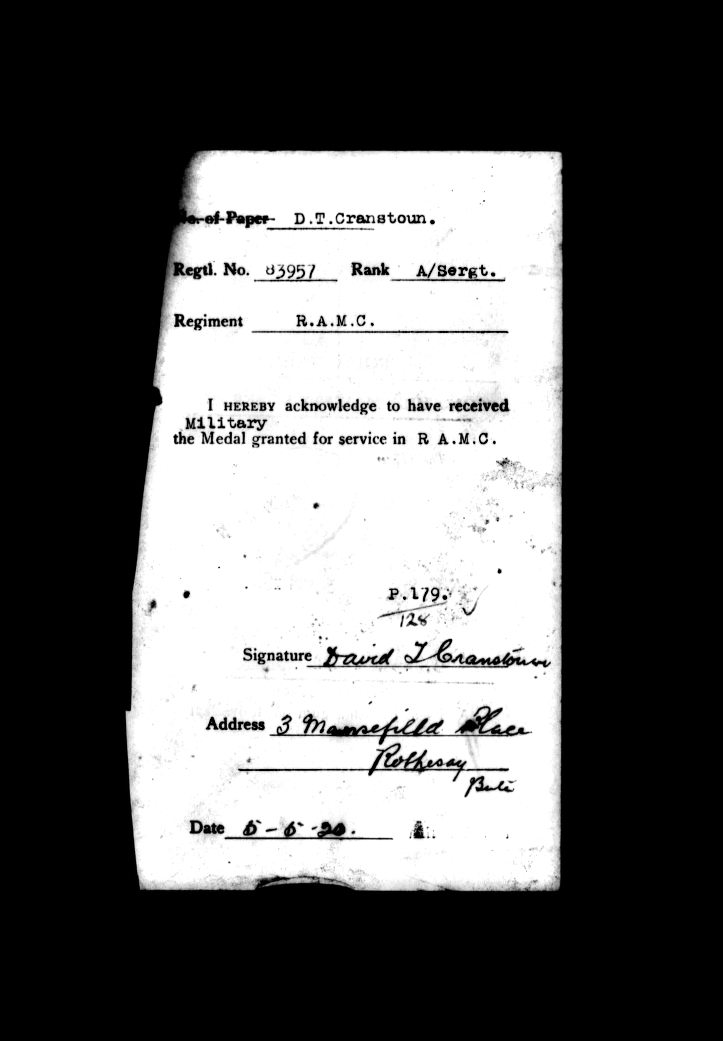












 Diana Cranstoun