Calgary Stampede

cowboy hatThe annual Calgary Stampede – The Greatest Outdoor Show on Earth – kicked off last Friday morning with a three-hour parade through downtown. This year’s parade marshall was Captain Kirk himself, William Shatner, but in the past it’s been led by actors such as Bing Crosby, Bob Hope, Christopher Reeve and Jack Palance, politicians, sports stars and other dignitaries such as Chris Hadfield, Prince Charles, Ken Taylor, Rick Hansen and Walt Disney.

The first stampede – although not called that – was organised in 1912 by Guy Weadick, an American cowboy and veteran of travelling Wild West Shows. Back then, Calgary was a relatively young city; the North West Mounted Police had arrived in 1875 and founded a fort by the Bow and Elbow rivers. In 1884, Calgary, with a population of only 500 people, was incorporated as town.

CHUCKS

Photo: girltrieslife.com

In 1912, with financial backing provided by four very successful cattlemen – Pat Burns, George Lane, AE Cross and AJ MacLean – Guy Weadick produced what was called the Frontier Days and Cowboy Championship. It was supposed to be a one-off and while there was a suggestion it should be repeated in 1913, money wasn’t forthcoming. After World War One, the idea was resurrected and in 1919 The Victory Stampede was held.  Since then, it’s gone from strength to strength.

GROUNDS

Photo: girltrieslife.com

Beginning on the 1st Friday in July and continuing for ten days until the following Sunday, it’s a time when the city comes alive with the spirit of the Old West.  Down at the Stampede grounds you’ll find an afternoon rodeo, evening chuck wagon races and show, a midway, agricultural and craft exhibition, market, native village and nighttime firework display.


Western ShirtsDuring the ten days of Stampede, the city itself is festooned with banners,  rodeo scenes are painted onto the windows of shops and office buildings, and you can find plenty of pancake breakfasts and stampede parties to suit everyone’s taste. Banks are transformed into Wild West corrals, and young and old deck themselves out in jeans, cowboy shirt, hat and boots.

Come visit us!

Donaldina Cameron

On a recent visit to San Francisco, I took an Alley tour of Chinatown where our guides told us the story of Donaldina Cameron (July 26, 1869 – January 4, 1968). Born in New Zealand to Scottish parents, Donaldina Cameron moved to California with her family when she was two years of age.

Initially joining The Presbyterian Home (a mission home caring for Asian women) in San Fransisco as a young sewing teacher, Donaldina became its superintendent at the young age of twenty-five. Situated on the edge of Chinatown, the home was a place of refuge for young Chinese girls smuggled illegally into the US to work in the sex trade or as indentured servants.

Fearing an influx of Asian immigration to the US, the government had enacted the Chinese Exclusion Act in 1882. This prohibited the immigration of (primarily) Chinese labourers, but it especially banned the immigration of Chinese women unless they were already married to a US citizen. Needless to say, this skewed ratio of men to women and set the stage for a massive illegal sex trade. (The act was only repealed in 1943, with a Californian law prohibiting Asians from marrying whites not repealed until 1948. In other states, similar laws were repealed only in 1967.)

Depending on which side you were on, Donaldina was known as the Angry Angel of Chinatown, the Jesus Woman or the White Devil. With the help of the police – and a sledgehammer or two – she broke down the doors of places she knew women were being held, rescuing as many as she could and gaining guardianship so they could not be returned to their slave owners. Estimates are she saved 3,000 such women, but only 600 were actually recorded on her books. Still, 600 is a not insubstantial number.

Once the women were freed they resided at the Presbyterian Home where they converted to Christianity and were taught English and western housekeeping skills. While some women accepted this conversion and went on to call Donaldina ‘Lo Mo’ (Foster Mother), others weren’t so happy about the loss of their culture. The girls left the home only to marry Christian men

The original home was destroyed by the 1906 earthquake. The women fled the building only for Donaldina to realise their guardianship papers were still inside; without those, the girls could be snatched back by their former owners. Donaldina returned to the damaged house to retrieve the papers, getting out just before the building was dynamited to create a firebreak in an attempt to halt the fire raging through the city.

The house was rebuilt in 1907 on Sacramento Street.

The Cloisters – NYC

I have to be honest, when it was suggested we visit The Cloisters during our recent trip to NYC I took a bit of convincing. I’ve visited medieval convents and monasteries in Europe and was very sceptical that such beauty, solitude and atmosphere could be replicated in Manhattan.

Boy, was I wrong!

(Victoria Smith refers to The Cloisters as one of the underrated gems of New York, so please check out her blog for it and other suggestions.)

CLOSITERS8

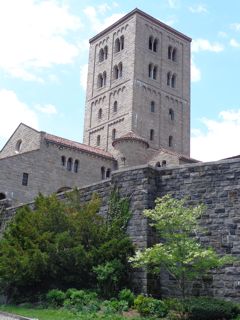
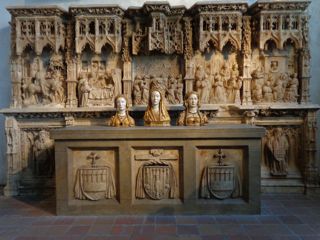
As part of the Metropolitan Museum of Art, The Cloisters is devoted to the art and architecture of Medieval Europe. (Click Here for a link to the official site which includes a 28 minute video.)

CLOSITERS4   CLOSITERS3

A ticket for Metropolitan Museum of Art allows you six days to use that same ticket to visit The Cloisters.

Getting there is simple. Take the A train uptown to 190th.  From there you can either a) hop on the M4 bus for one stop, b) walk along Margaret Corbin Drive, or c) walk through Fort Tyron Park. I recommend the latter as the scenery and views are stunning.

PARK   park2

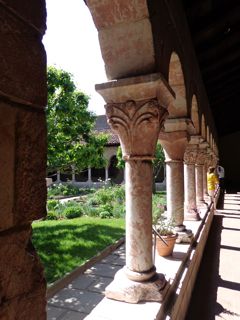
Built from money donated by Rockefeller, the actual fabric of The Cloisters contains elements from original European (mostly French) medieval cloisters.

CLOSITERS1   CLOSITERS2

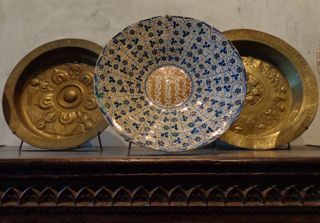
Artifacts include paintings, tapestries (including the Unicorn tapestry), plates, sculptures and religious items.

COSITER6   CLOSIETES7

My favourite was a golden filigree straw, used for drinking the wine (Blood of Christ) from the chalice to ensure none spilled on the ground.

CLOSITER9

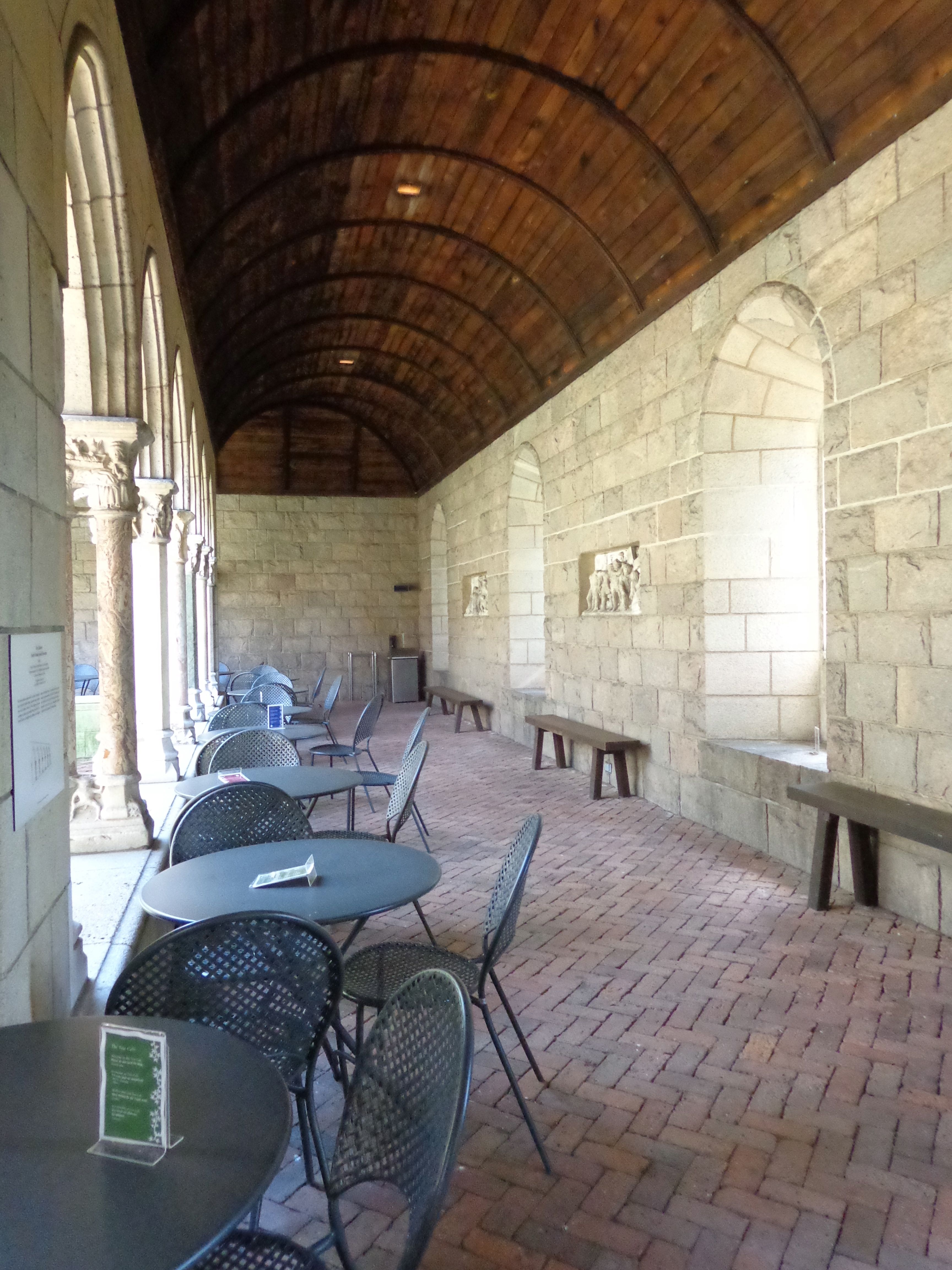
Possessing the most peaceful cafeteria you can imagine, The Cloisters is a wonderful place to while away a few hours and recharge your soul before returning to the hustle and bustle of the rest of Manhattan.

clositersmore

Visit it.  You won’t be disappointed!


Veniero – NYC

One of the best things about NYC is the food. During our stay in the East Village we tried out several local restaurants and didn’t find a bad meal anywhere.

But my absolute favourite…?

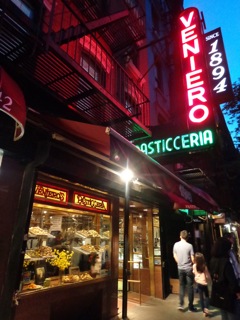
Not exactly a restaurant, but a patisserie called Veniero. If you like ANY kind of dessert, this is NOT to be missed.

As for the cheesecake…!
exterior night shop
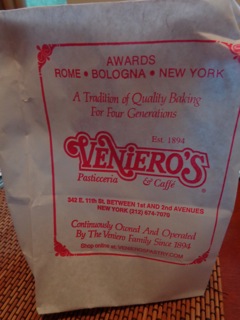
Established in 1894 by Antonio Veniero, it’s located at 342 East 11th Street and 1st Ave, NY 10003, and has opening hours to suit everyone.
Sunday-Thursday: 8am-midnight.
Friday/Saturday: 8am – 1am.
desserts2Desserts1
Take out?  Eat in?  Your choice. With an elegant cafe attached, this is one eatery definitely worth visiting!
bagcafe

A Tale of Two Parks

I recently spent a few days in New York City.  It’s the third time I’ve visited and it’s a city I love, love, love. This time we decided to try a little ‘new’ along with the ‘old’, so along with the trusted Central Park, we also took in Prospect Park and the Botanical Gardens in Brooklyn.

park

CENTRAL PARK is great. Created in the 1850s, this magnificent expanse of greenery and lakes lies slam-bang right in the middle of Downtown, But, because it’s Downtown, everywhere you look there are tourists – I know, I know,  I was one of them!

bobbiesturtles

Amongst them, a group of British Policemen and women over from England running for charity.  And turtles.  Who knew there were turtles in Central Park?  (Although, as I recall, the Heroes in a Half-Shell used to live in the NYC sewers, didn’t they?)

imagine

And then of course, there’s Strawberry Fields, with its iconic Imagine mosaic. Definitely worth a visit.

So how did PROSPECT PARK measure up against its better known neighbour?

Extremely well, indeed.

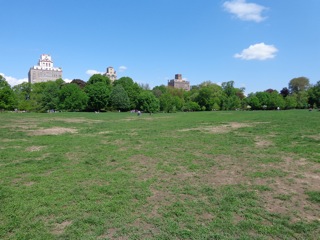
Built in the 1860s, it covers 585 acres and is only a short subway ride from Manhattan. We visited on a Sunday to find an oasis of tranquility with family groups enjoying picnics and multi-generational games of baseball.

PP1 pp2

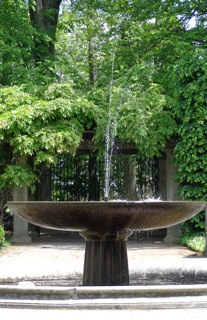
Just next door are the Botanical Gardens and they are gorgeous.  We just missed the cherry blossom and lilacs, but loved the bluebell woods and displays of azaleas, iris, peonies.

fountain   iris

And don’t forget the Japanese Gardens. With a great visitor centre and restaurant, this is a great place to get away from the hustle and bustle of Manhattan and allow the scents and scenery to soothe your soul.

japanese

Visiting Fort William

I spent an afternoon in Fort William a few weeks ago. I’d recently read an article which said the drive from Glasgow to Mallaig ranked amongst the best in the world – just don’t stop in Fort William. Well… that’s a bit harsh. Given that the town clings to the shores of Loch Linnhe, the surrounding scenery is pretty stunning.

A wee bit of history about Fort William. According to Wikipedia a ‘Fort was constructed to control the population after Oliver Cromwell’s invasion during the English Civil War and then to suppress the Jacobite uprisings of the 18th Century’. Nowadays, the town is more famous for being the end point of The West Highland Way, a 96 mile walk from Milngavie (just outside Glasgow) to Fort William.

highlandway

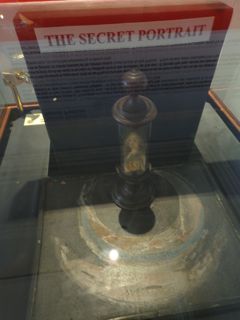
Whilst there, we visited the West Highland Museum. It’s a great wee museum, covering everything from traditional Highland life to the training of commandos during World War Two. But the highlight for me was The Secret Portrait, a fascinating piece of anamorphic art. (I’d never heard of anamorphic art or illusion before. Basically it’s when an image only reveals itself when viewed from a particular angle.)

bonnycharlieAfter the Jacobite defeat and Bonnie Prince Charlie‘s retreat back to France, the English government banned all things Scottish and any reference to a Stuart king. When toasting ‘The King’ – meaning King William – Jacobites would pass their glass over the fingerbowl in a silent toast to ‘the King over the Water’, but the English soon got wise to that and banned fingerbowls from Scottish tables.

But where there’s a will there’s a way. Anamorphic trays were designed with special metal glasses.  When viewed from a particular angle, Bonnie Prince Charlie’s image appeared on the goblet. Should the ‘enemy’ arrive on the doorstep, the goblet was removed, revealing only a messy looking tray.

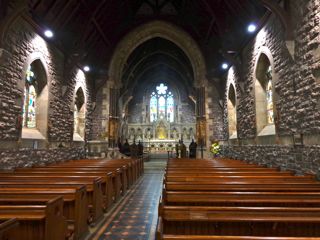
I also popped in to St Andrew’s Episcopal Church on the main street. Silent and peaceful, beautiful and welcoming, it’s definitely worth a visit.

.church1church2

Kiel Church and Cemetery – Morvern

The Morvern Peninsula, on the west coast of Scotland, is an isolated and stunningly beautiful part of the world. Because it is so peaceful and wild, you tend to think that probably not much has happened here in the past 1,000 years. But you couldn’t be more wrong. In the days when travel by water was the only effective method of getting from A to B, the Sound of Mull was a ‘motorway’ for vessels sailing up the west coast of Scotland – all the way back to the Vikings and beyond.

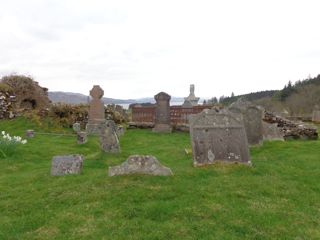
The present Kiel Church, which stands on a hill overlooking the Sound of Mull, is only just over 100 years old, but there has probably been a church on this site since the 6th Century. It’s even possible that St Columba himself, who died on Iona, might have visited here.

soundofmull    church

I’m used to cemeteries being flat and ordered. That’s not the case with this graveyard. The ground is rough, the stones – mostly 18th and 19th century – laid out higgledy-piggledy, with many sinking into the ground, leaving only their tips visible.

graveagain    grave1

For such an isolated corner of the country, there’s a lot of interesting history to be found here. A marker has been placed by one monument, commemorating the grave of a soldier who carried a Jacobite banner on Culloden Field.

cullodenTo the side of the church, there is a tiny building which houses the beautiful Carved Stones of Kiel which date from the 14th, 15th and 16th centuries. These too are gravestones, their size and intricate carving indicating the importance of the people whose graves they once belonged to.

stones1    stones2

If you’re ever in this wonderful part of the world, please take the time to visit Kiel Church, its fascinating cemetery and carved Stones.


Dougie Maclean – Caledonia

dougie2I’m still thinking about Dougie Maclean’s concert last week and playing his music on my iPod as I’m writing this. All his songs are very beautiful and powerful but, when people go to one of his concerts, there is one song, above all, they want to hear.

Caledonia.

Caledonia was the name the Romans gave to Scotland, the country beyond the wall that they were unable to conquer.  (Sound familiar, Game of Throne-ers?) Somewhere around Perth (not Hadrian’s Wall) is where The Roman Empire ended. Caledonia, the song, has become popular world-wide.

The Americans love it, the Irish claim it as their own. It’s played at weddings, funerals, football matches, military tattoos, rugby games, adverts and is often called Scotland’s unofficial national anthem.

Dougie Maclean calls Caledonia his loveable monster because it’s taken on a life of its own. He wrote it a long – long – time ago on a beach in France when he was feeling very homesick. It’s a song of longing – and belonging – written from the heart.

And therein – I believe – lies its magic.

As writers we’re told to write about the specific, not the general. By writing about the specific – in the case of Caledonia, Maclean’s homesickness – he touched on one of the unique experiences and emotions every single person in the world feels, understands and relates to.

You don’t need to be Scottish to understand the love you have for your homeland – whatever that country may be – or your need to be with your ‘ain’ folk.

You just need to be human.

There are all different versions on Caledonia available on Youtube, but even though I’ve already posted this one several times it remains my favourite.  Enjoy.

Dougie Maclean – The Scythe Song

I’m on my holidays and finding it hard to stick to my routine of Mon/Wed/Friday posts on History/Travel/Writing. Which is a good thing really, because holidays are a time for stepping back and taking time to look at yourself in the world.

Dougie maclean1One of my best experiences this trip has been the opportunity to hear Dougie Maclean perform in a tiny village hall in the back-of-beyond Perthshire. For those of you who don’t know of him or his music, if you’ve ever watched the film The Last of the Mohicans and listened to that wonderfully hypnotic music – that’s his. Or how about ‘Caledonia‘, a song that people around the world have taken to their hearts – his ‘loveable monster’ as he calls it – and which one day may become Scotland’s national anthem.

One of the songs he performed the other night was The Scythe Song, a haunting and incredibly wise song about learning, practise and patience.

He told us the story behind it; of how his father, a farmer, was skilled at scything the old-fashioned way, slicing through the wheat which then fell to the ground with a softly whispered hishh. Dougie tried to copy him but was unable to match his father’s skill.

“Oh, this is not a thing to learn inside a day,” his father says in the song. “Stand closely by me and I’ll try to show you the way. You’ve got to hold it right, feel the distance to the ground.  Move with a touch so light, until its rhythm you have found. Then you’ll know, what I know.”

The final verse suggests that years later Dougie’s daughter asked him to show her how to play like him. “So little dancing girl you want to learn to play a tune. One that your heart can fill to help you shine under the moon.”

His reply? “Well, it’s not a thing to learn inside a day. Stand closely by me and I’ll try to show the way.”

Then, by changing one single word and adding another, he completes the circle and teaches all of us that, no matter what our passion, whether it’s writing, singing, knitting, sports, building, engineering, science, the answer is the same.

“You’ve got to hold it right feel the distance to the sound
Move with a touch so light until its rhythm you have found
Then you’ll know what I know now.”


Guest Blogger – Sarah Kades Talking About Scotland

I’m delighted to have Sarah Kades as a guest on my blog today. (Please check out her website at  www.sarahkades.com) Sarah is a great person and writer, full of enthusiasm for life, who I met through the Alberta Romance Writers’ Association.  She’s writing about one of my favourite subjects today – Scotland – so, over to you, Sarah, with many thanks!
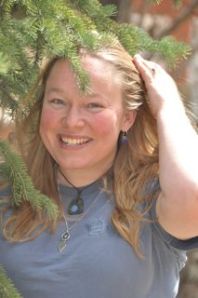
Sarah When Diana asked me if I would be a guest blogger, I immediately said yes. Then I wondered what in the dickens was I going to write about? First thing that popped into my head was Scotland. It is Diana’s homeland and I was lucky enough to call it home for one epic semester.

Scotland. Hearing reference to it brings a smile to my face and rekindles the joy I felt there. It is a magical place full of welcoming people and stunning landscapes. Its history, like most places, is deeply layered into its fabric. That can add to tension, but it can also add to resilience and strength. I needed resilience and strength when I was there.

The summer after I graduated from high school, I was gearing up for my freshman year at University. Before classes even started I received a brochure in the mail from the international office about the study abroad opportunities available.

What is this magic? I can go study in other countries? Where do I sign up? I headed to the office and checked out my options. There were several but three stood out; Sweden, Latvia and Scotland. Quite a mix. But there was something about Scotland that said, You need to pick me. Right now.

It happened to be the most affordable, too. Handy, that, as I was paying for my own schooling. (Thank you student loans and grants!) I applied for the following year, the soonest option available. When I was accepted I told my parents what I was doing. I don’t know exactly what was going through their heads during those conversations, but they both looked a bit shell-shocked. Now that I am older, I have a bit more perspective and can imagine the myriad of WTHs that must have been going through their heads. No one in our family traveled and I was flittering off across an ocean. My thoughts, Weeeeeeeeee!; their thoughts, Eeeeeek!

As the time came closer, my parents were divorcing and it was a rather tumultuous time in my family history. I briefly toyed with the notion of staying home. But a friend stated loudly and with much feeling; Sarah do not pass this opportunity because your parents are divorcing. You’ll regret it forever. Go! 

So I went. And it was perfect. I had a series of those pinging life experiences. You know, one after another, after another, after another of experiences absolutely perfect for the course of your life. Seriously, life made sense there, and worked on so many levels. I went to class, traveled, played rugby, met wonderful people, hiked energetic and incredibly beautiful landscapes, walked down stone pathways grooved by eons of footsteps, sat on benches older than my homeland’s Constitution, danced, played and overall had the perfect time. And I met myself there. The real me, the uncensored, happy hippy kid in love with life.

Back home I had a role in my family. I’m sure others can relate. It’s not bad, it’s just, well, baggage. Family is awesome, but when you want to bust out your wings and see where you can fly, sometimes finding a new launch area is in everyone’s best interest. I’m lucky my family is supportive of my black sheep tendencies. Thanks guys!! 🙂

In Scotland, I was free to be me. I was 19; it was a great time to explore who the heck I was and who I wanted to be. Scotland gave me the opportunity, and the support system of new friends and nurturing landscapes to help me do that. And fun, oh my goodness, I laughed so much! I also gained a confidence in myself that I had never experienced before. Navigating the foreign countries for side trips, meeting other travelers from around the world, tasting new foods, smelling new air, walking paths no one from back home had heard of let alone danced on was really good for me. I was learning how to forge my own way, not because back home was bad, it just wasn’t the setting for the next chapters/books of my life.

Scotland was also a lifeline when I didn’t even realize I needed one, teaching me that resilience and strength I mentioned above. A writer friend once asked why can’t adult children of divorced parents just get over it? When she asked, my first feeling was offense at her insensitivity. Maybe now I can shed some light. Just like the history of a country, the history of a family is woven. It is the blanket you know. Pull out some strings and the blanket is not the same. Reweave those strings into a new pattern and they might flow seamlessly, creating a beautiful new picture or pattern, different, but still a warm, functioning blanket. Or pull out strings and the whole damn thing snags. Forget about a pattern or picture, getting the knots out needs to happen first. Finessing those snags and knots back to smooth might happen in short order for some families, or it can take years, if ever.

As serendipity and my writing muses (i.e. my loud, adorable characters) would have it, I started writing The Tanner Series, five books featuring a family torn apart by divorce and old secrets. Now to be clear, my experience as an adult kid of divorced parents didn’t include CSIS agents or European crown princesses or bull riders, but this series is awesome to write. 🙂 I hope those who read it find each book filled with love, humor, compassion and healing, in all areas of life. For more information, available titles, and/or to subscribe to my newsletter for release dates, check out www.sarahkades.com).

Scotland provided me with a sense of home and community while the one I knew back home was snagging. It also gave me the opportunity to let myself be welcomed into friends’ family-groups. A skill that has served me, and my Canadian husband, well throughout our travels and all the places we’ve called home.

To our adopted families all over, Thank You. To one of my adoptive homes, Scotland, Thank You. You welcomed me in with open arms and kept hugging. Thanks! To my parents and siblings and Wisconsin, thanks for the amazing foundation you provided, along with continuing hugs. Those were/are epic chapters of my life and I can fly now because of them. 🙂

Happy Travels! Happy Reading!