Wartime Rations – Day Three – Ooops!

I think I mentioned in my very first post that I was on a steep learning curve with learning how to use this blog.  It now appears I forgot to push the ‘Publish’ button yesterday.  Sorrreee.

I’m having a lot of fun with my week of wartime eating and would like to acknowledge a few sources – in addition to my Auntie Anne – which have provided me with a lot of information.

The first is Marguerite Patten’s book  ‘We’ll Eat Again‘ based on wartime recipes. Most of the meals I’m eating this week are taken from her book.

The second comes from The 1940s Experiment.  This is a fabulous website and contains not just recipes but videos and stories of life of the Home Front.

Also, check out Foyle’s War.  Not only is it a great drama, but it addresses the challenges of daily life on the Home Front, including issues like rationing, food shortages and the Black Market.

As for today’s meals – except for my usual breakfast of porridge – it’s been a very ‘red’ day.

Lunch –  Borscht , a slice of bread and some fresh strawberries.
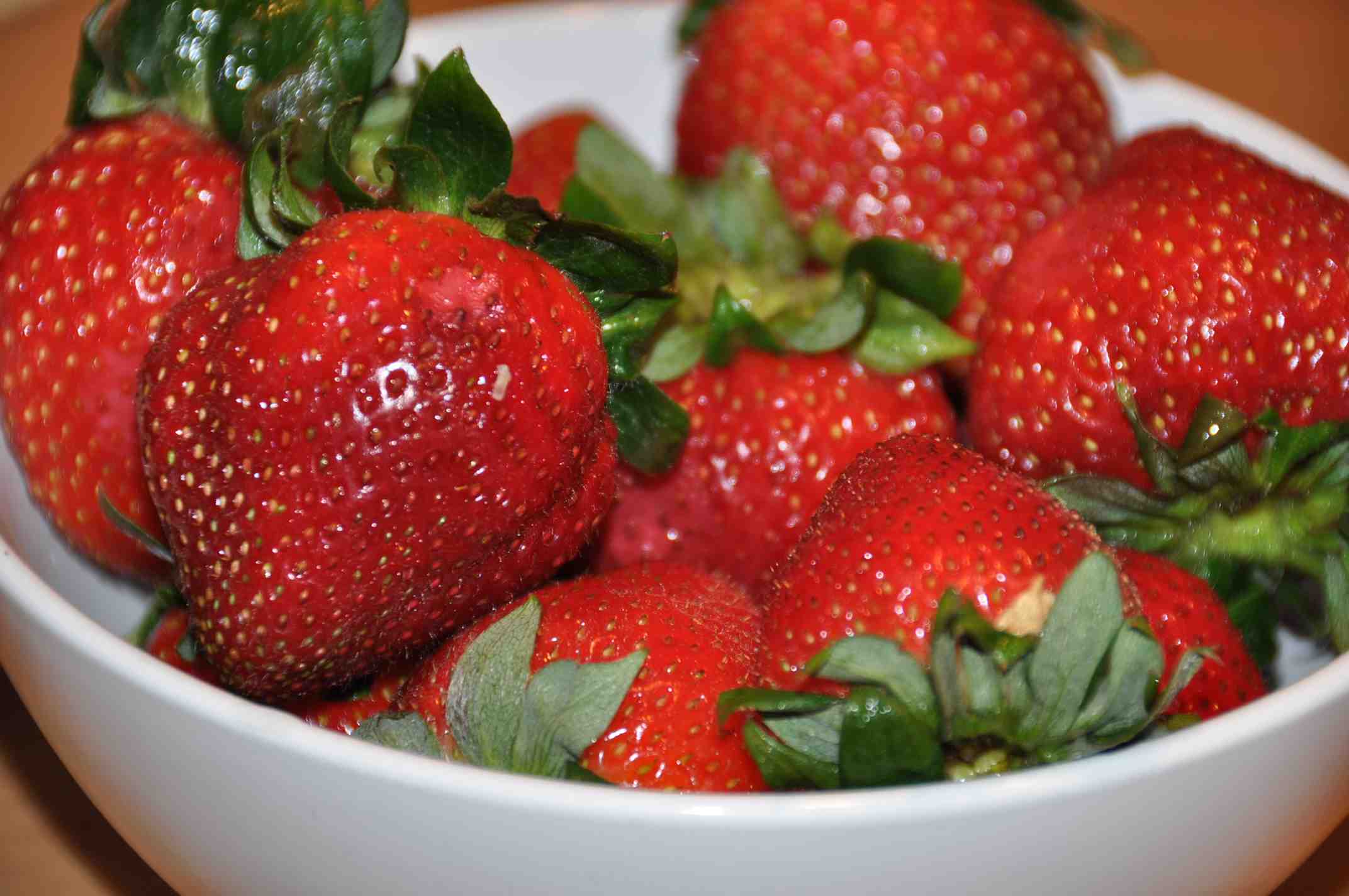
Strawberries Borscht

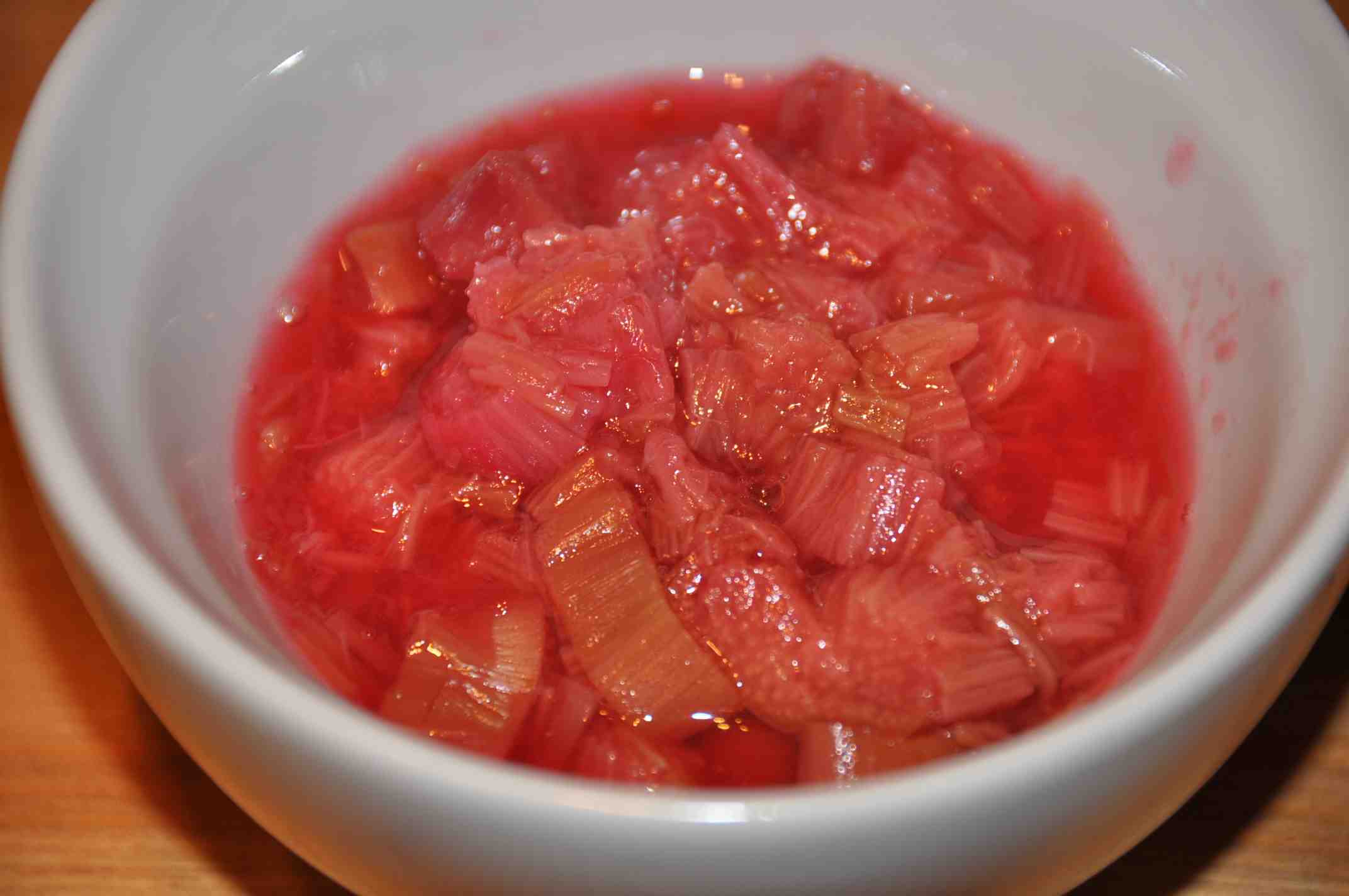
Dinner- I haven’t eaten three courses in one meal for ages, but tonight I was hungry, so I had Borscht, Cottage pie  (left over from last night) and Broccoli, followed by Rhubarb Crumble. The crumble was excellent and it was wonderful to have something sweet.

Rhubarb crumble

Some thoughts on sweet wartime treats from Anne:

Sweets and chocolate had their own coupons, for which I was quite grateful because I had ‘grown out of’ them at a fairly early age and so was able to sell them (big Black market dealer, me) and buy myself a treat in a cakeshop.  Similarly with clothing coupons (which also covered cloth and household linen).  I couldn’t afford much in the way of new clothes except for what Mother made, so got a good price from wealthier friends.

Much more than sweets, I missed the Italian ice-cream shops with their tiled floors and little booths with marble-topped tables with iron legs – I’ll never taste ice-cream like that again.  They all closed down when their owners and families were interned.  I understand that the majority were released after a few months when ‘investigations’ were completed.  There was an interesting TV programme last year about internees: many/most? were taken, along with Austrians, to the Isle of Wight and housed in what had been boarding houses.  They had left a lot of their art behind.  Apparently they had only been there for days before ex-professors and teachers among them were holding classes in everything you could think of, and people were sketching, painting, learning maths, new languages, singing – you name it.
Wartime rations – Day Two

The one thing I’m learning really quickly is that with such a limited ration of protein available, you definitely need to be organised to eat a wartime diet!  Not like these days when you just dip into your freezer and nuke dinner on a whim.

Today’s breakfast and lunch were much as yesterday, so no pictures for those.  However, I did add some chips/fries to my lunch as I met with a friend to go to a movie (the pictures!) this afternoon and knew I wouldn’t be home till late.

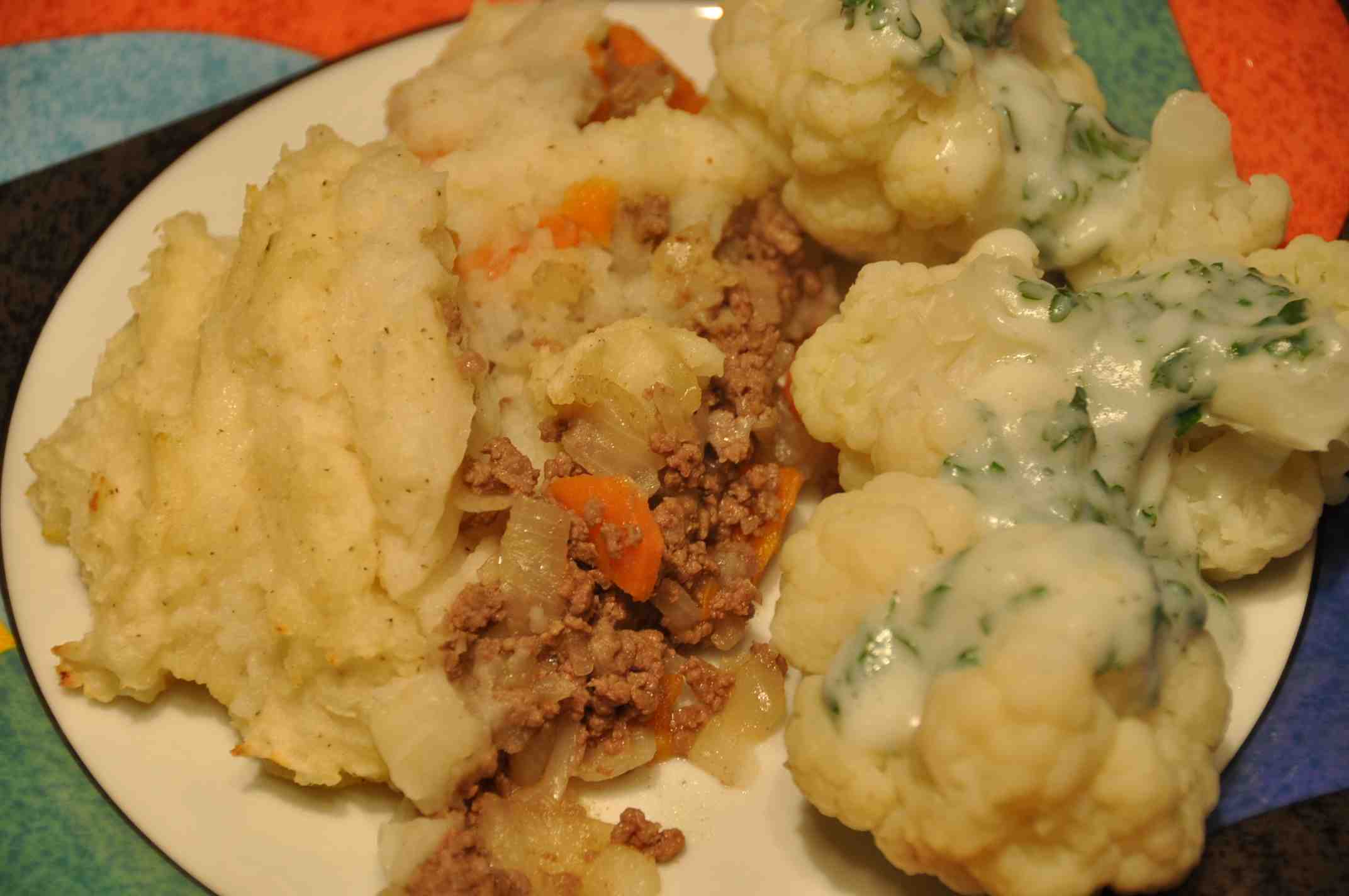
Dinner was supposed to be Woolton Pie – a dish created during the war – but wouldn’t you know it, I didn’t have the right veggies in.  So, it was soup from yesterday, followed by cottage pie and cauliflower with parsley sauce.  It looks a bit pallid in the picture, but tasted good, so with plenty pie left over for tomorrow, I’ll need to come up with more colourful vegetables to make it look a little more appetising.

cottage pie

Some conflicting memories of a particular wartime experience now, and for the fiction writers out there, an important lesson in age appropriate characterization.

Although they spent most of the war in the countryside, my Mum, Anne (who was 12 years younger than my mother) and my brother were in Glasgow during the Clydebank Blitz.

According to Wikipedia, over two nights, 528 people died, 617 were seriously injured and hundreds more injured by blast debris.  Out of approximately 12,000 houses, only 7 remained undamaged, with 4,000 completely destroyed and 4,500 severely damaged.  Over 35,000 people were made homeless.

My grandparents lived in a flat in Byres Road.  During those horrific raids, my grandmother pulled all the mattresses into the hallway – well away from the windows – for the family to sleep on.  If they were going to be killed, Mum said, they were going to die together.  It always brings me to the verge of tears when I think of that; my grandmother facing the possible loss of her whole family and my mum being unable to protect her infant son.  I can’t imagine the horror.

That’s an adult account of that experience.  Now here’s Anne’s .

A couple of years ago I was invited by the local junior school to talk to groups of children about wartime, and got many, probably enforced, thank you letters from them.  From these it was obvious that the bit they liked was when I confessed that during the Clydebank Blitzes (I was about 11/12) we had all gathered in the ‘safest’ place in the house but I several times made an excuse to go to the bathroom so that I could see the searchlights and the glow of the fires.

Oh, the wondrous resilience and fearlessness of youth!

If you have any stories of the war, I would love to hear them.

Day One – Part 2

I am neither the best cook in the world nor a particularly organised person.  Put the two together and…  I’m beginning to feel like the girl on Youtube’s My Drunk Kitchen, only without the ‘drunk’ bit.

1) I carefully measured out all my meat rations on Sunday morning and put them in the freezer. I needed one single piece of bacon for tonight’s liver, but it was frozen solid in a block of two.  Ah well, at least I had enough dripping for the Bubble and Squeak.

2) Dessert tonight was supposed to be rhubarb crumble. In deference to my health, I’d decided to go with margarine made with olive oil rather than animal marg or lard.  Weellllll… you can’t make crumble with that kind of marg,  so it was stewed rhubarb for dessert instead.  I’m going to have to exchange my rations at Safeway tomorrow.

3) I put the liver bake in the oven and forgot to set the timer.  Duh!

Anyway, I survived and this was tonight’s menu.

Liver Bake, (liver, onions, apple, bacon, seasoning), Bubble and Squeak (mashed potatoes, cabbage, spring onions, and Carrots.  The liver actually tasted much better than I expected  and I can see myself making this again in the future. As for the Bubble and Squeak – I could LIVE on this.  It was wonderful!

Liver Bake Stewed Rhubarb

Stewed Rhubarb.  I haven’t had this in years and it was delicious.  As soon as I took my first spoonful it brought back memories of the rhubarb sponges my mum used to make when I was young.

So that’s Day 1 done. This is probably the healthiest I have eaten in a long – long – time, and I’m feeling very satisfied.  Day 2, here I come, but before that, a final thought from Anne.

Everything outside the staples, incl. tinned foods, biscuits, dried fruit, coffee etc needed coupons called ‘Points’ and you could choose what to use them for, but again, a tin of apricots would make deep inroads into your allocation of Points, while a tin of meat or fish would probably use a month’s allocation.  In theory you could spend Points in any shop, but were likely to be met with,  ‘Sorry, registered customers only.’

Day One – Part One

Breakfast didn’t start off too well!  I got a bit distracted by my 21st Century e-mail and burned my porridge. However, in the spirit of ‘make do and mend’, I scraped the good stuff into another pan, added some water and heated it up.  Served with milk and sugar it tasted fine.

SoupOslo meal

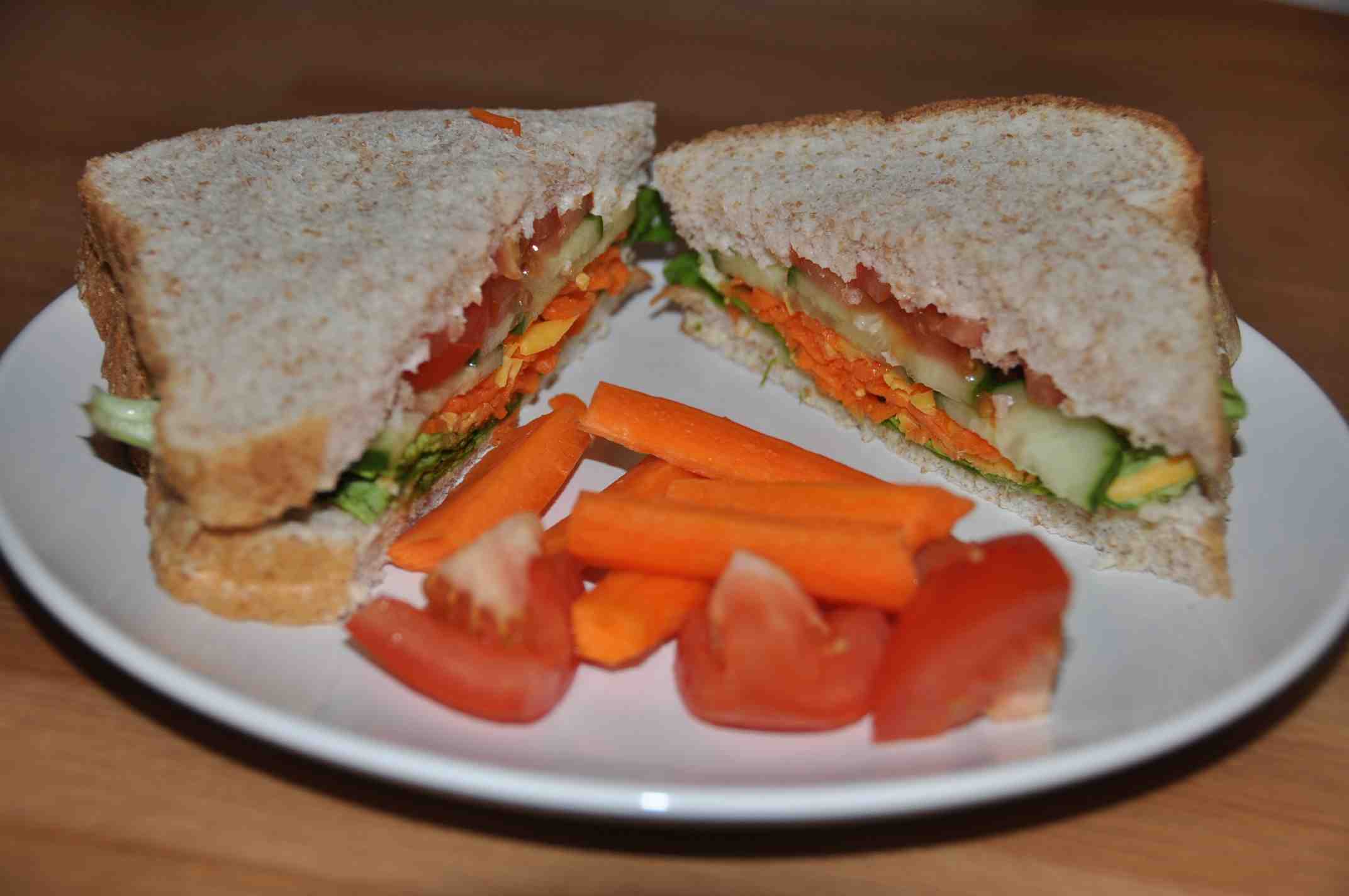
Lunch was a bowl of homemade soup and an ‘Oslo’ meal.  During the war, this was used to described a wholemeal sandwich with a little cheese and salad filling, a glass of milk and piece of fruit in season.  I just went with the sandwich as I was having soup.  (Saving up my milk ration for a rice pudding at the weekend!)

For dinner tonight – ah, that delicacy has still to come.  My husband is eating out tonight, so for the first time since we got married (last century and then some!) I’m going to have cabbage and liver.  Cabbage and Liver!!  Wish me well.  But before then, here are some more memories from Anne.

Bread and potatoes were never rationed till after VE Day, but wartime bread was always tasteless and grey in colour, so looked unattractive.  When I was in Kippen (she was evacuated into the Scottish countryside ) we were several times taken out of school to help with the tattie-howking.

There were no choices, no brands on rationed goods – everything was put into the melting pot and labelled National Butter, National Cheese etc.  You had to sign up with one grocer, one butcher etc so you knew, for instance, that there was no point in joining a queue at any other butcher who showed a few kidneys (not rationed, neither was offal) in his window; he would turn you down flat because you were not one of his ‘registered customers’.  Other off-ration protein was tripe and we ate a lot of that – OK if you had onions.  Eggs were few and far between, sometimes none for weeks at a time – Eastertime of course, there were more around. Then there were dried  eggs: yellow powder in brown waxed cardboard boxes: only suitable for cooking with really, though if you weren’t too fussy and had spare milk you could concoct a sort of scrambled egg.

Wartime Week of Rations

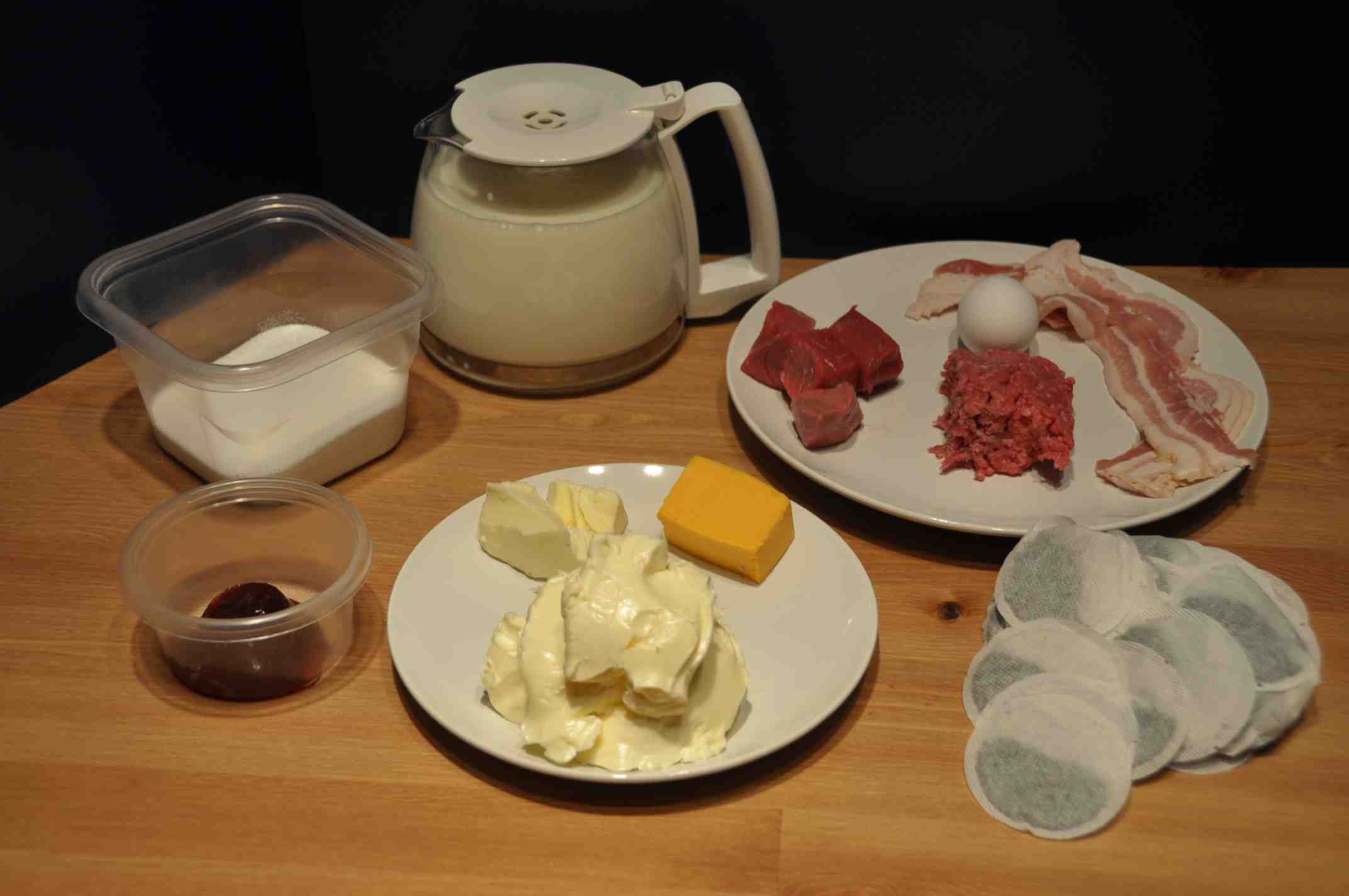
I’ve just been down to the supermarket to collect the rations for my week of eating wartime food – starting Monday morning – and here they are!

ratiions

Bacon – 4 oz

Meat – 8oz

Butter – 20z

Margarine –  8oz.  (It was supposed to be 4 oz each of marg and lard but I couldn’t find lard.)

Cheese  – 2oz.

Milk – 3 pints

Sugar – 8oz

Jam – 2oz

Tea – 2oz (I read somewhere it was 15 teabags, but I measured out 23!!)

Eggs: 1

I haven’t been able to pick up any dried eggs yet… and I’m going to hold back my sweet ration (3oz) till the weekend.

My aunt reminded me that I can only eat UK veggies and fruit in season.  I am so out of touch with seasonal foods that I had to go online to check what they are for May.

Veg: Asparagus, Cauliflower, Beetroot, Cucumber, New Potatoes, Purple Sprouting Broccoli, Radishes, Spinach, Sorrel, Spring Greens, Spring Onion, Watercress and Lettuce.

Fruit: Rhubarb, Gooseberries (Yuck!!), Strawberries.

Carrots, onions and apples don’t appear to be in season, but I’m going to be adding them to my list, otherwise I’d be stuck!  Also, I can eat as much bread (brown) as I want, although it must be at least one day old. (Apparently fresh bread encourages one to eat immoderately!)

To bring a slice of authenticity to this experiment, here are some wartime memories from my Auntie Anne who grew up in Glasgow during WW2.

Civilians were, on the whole, pretty good about food shortages, feeling that it was more important for the soldiers and sailors to get enough to stay fit and fight on, but home fare was pretty drab and monotonous.  Dad, taking on two allotments at the age of 70+ was a hero really, since there were always fresh veggies on the table, and later he also kept a few rabbits – I’m not sure about chickens, but I think so: my memory is a bit hazy.  And I think he enjoyed it in many ways, not just that he was doing his bit, but for the satisfaction when he brought home his produce.  He had to carry his tools to the tramstop, both ways, every time he went, but later put up a small shed – NOTE THAT nothing was ever stolen – neither tools nor mature veg: they were more honest times.

So now I’m ready to go.  Roll on Monday morning.  I’ll publish a post tomorrow evening to let you know how I fared on Day 1.

Everything I know about writing… Part Two

Most writers can usually come up with a great beginning to a story and a cracking end, it’s all that muddy stuff in the middle that’s the problem. Yes, yes, I’d read all about three act structure, rising action blah-blah-blah, but I just wasn’t getting it.  And then I happened to go to a workshop given by Michael Hauge.  He described structure in a very particular way, and…  Ping!  ON went the lightbulb.

All of his information is on his website and in his books – but it was his description of the important mid-point of a story that really captured my attention.  He describes the midpoint (50%) as The Point of No Return (PONR).  In an airplane, the PONR is when the plane does not have enough fuel to return to its point of origin but must complete the journey or crash. (Assuming that it’s flying over ocean with no other places to land available.)

A story consists of two journeys: The Outer Journey (plot) and Inner Journey (hero’s transformation). Once you reach the PONR, neither the plot nor the hero can go backwards.

In Dante’s Peak, Pierce Brosnan and his team come to town to investigate a rumbling volcano. He tells the mayor (Linda Hamilton) that the volcano might blow or it might not – he’ll only know for sure if sulphur leaks into the water system.  (Outer Journey/Plot.) In his personal life, his former girlfriend was killed in a volcanic eruption several years ago and he’s not had a relationship with a woman since. (Inner Journey.)

Close to halfway through the movie, Pierce takes Linda back to her house after a date.  At 50%, they kiss in her kitchen. (Not a commitment, but this is the first time he’s kissed another woman since his girlfriend died.) They’re interrupted by her son, who wants a glass of water.  When he turns on the tap, guess what he finds?  That’s right, sulphur.  The mountain is going to blow.  In both outer and inner journey, they’ve reached the PONR.  There is no going back for mountain or man.

But that’s what works in movies.  What about books?  Literature?

Jane Austen is one of the most accomplished and beloved authors of all time, and I doubt she ever read a How-to writing book in her life.  Her most famous novel, Pride and Prejudice, is about a man who must overcome his pride, and a woman who must overcome her prejudice.  Open the book halfway through (or check out the 6 part BBC TV series at the end of episode 3 and beginning of episode 4) and what do you find?  Darcy proposes to Elizabeth – the most insulting proposal ever – and is shocked when she, quite rightly, refuses him. With what she knows about him, she vows he’s the last man she’d ever marry.  His pride several dented, Darcy returns home to write Elizabeth a letter in which he acknowledges that some of the things she accused him of are true, but he also puts her right on some of her mistaken beliefs.  On receiving the letter Elizabeth then begins to question her prejudices.  This couple still have a long way to go before the story is over, but from this point on, neither is able to regard the other – or themselves – in the same light as before.

The PONR is a powerful tool in structuring your story.  Now click on Michael Hauge’s website and check out what he has to say about Opportunity, Change of Plans, and Major Setback.

Happy writing.

Everything I know about writing… Part One

Everything I know about writing I learned from two sources.  The Alberta Romance Writers’ Association (ARWA) and Michael Hauge.

ARWA is a wonderful writing organisation. If you want to learn about the craft of writing, this is where to do so.  Established in Calgary twenty-six years ago by the writer Judith Duncan, it remains one of the most successful writing organisations in Canada.

Still, when I tell people I belong to ARWA, they sometimes give me ‘that’ look.  You know the one.  It’s the expression that says – You wouldn’t catch me dead reading one of ‘those’ books.   (Which doesn’t exactly ring true because 80% of all books sold in North America are romance novels, so somebody has to be reading them.)

I have to wonder what it is that makes people so embarrassed about the idea of reading – or writing – a love story.  No other genre comes in for such ridicule.  (Western, Sci-Fi, Fantasy, Who-dunits.)  It makes me question whether or not we really believe in that famous quote,  “No man ever said on his deathbed, ‘I wish I had spent more time in the office.’”   But I think we do.  Remember Hugh Grant’s line from the beginning of Love Actually, where he recalls that all the messages sent from the twin towers on that fateful day were messages of love?

I’ll be honest, I joined ARWA with the notion of scribbling a few romance books, making some money, and then going on to write ‘real’ novels.    I mean, how hard could it be?

Very hard, as it turns out.

Before the reader even cracks open the front cover of a love story she knows how it’s going to end. This is unlike any other genre and means the romance author must be highly accomplished to keep the reader engaged with her characters and story through 50,000, 85,000, or 100,000 words.  To do that, one needs a thorough understanding of plot, character, conflict, structure, theme, POV, voice, dialogue, tension, outlines, synopsis, etc.  Which is where ARWA comes in.

For twenty-six years, ARWA has offered monthly classes in all aspects of the craft of writing.  They’ve hosted conferences and brought in writers, agents and editors from all over North America.  For the last two years, they’ve hosted a panel discussion at the When Words Collide Conference in Calgary.  This year, two of ARWA’s members, Sarah Kades and Lorraine Paton are presenting a three hour workshop on Creating Sexual Tension.  This workshop is for all writers, not just romance writers. Some of the most memorable/iconic moments in ‘non-romance’ books/movies are the relationships between the characters.  Think John Book and Rachel in Witness.  Han Solo and Leia in Star Wars.  Hawkeye and Cora in Last of the Mohicans. Rick and Ilsa in Casablanca.

I’ve known Sarah and Lorraine for several years.  Both are intelligent and passionate writers and teachers of the craft. Their upcoming workshop is not to be missed. I’m going to register right now.  Why don’t you join me?

http://www.whenwordscollide.org/spec_workshop.php

Ooops.  I seem to have run out of time. I’ll tell you about Michael Hauge tomorrow.

Theme

When I teach a writing workshop, I always begin with this disclaimer: There is only one ‘right’ way to write a story, and that’s the way that works for YOU. 

Over a long period of experimentation, I’ve discovered what works for me – at this particular time of my writing life.  As I continue to grow and develop, that approach and my insights might change.  So, have a read through this posting and if it strikes a chord with you, that’s great. If not, stay true to your own writing path.

Defining theme:

There are two ways of answering the question, What is your story ‘about’?

The first ‘about’ gives you the premise – in approximately 25 words or so.

The second ABOUT gives you the theme – in one word.

Premise: ROCKY is a story about a small time boxer who is offered the chance to fight the heavyweight champion of the world.  (This is the story, the plot.)

But what’s at the heart of this story? What is ‘Rocky’ ABOUT as opposed to ‘about’?  In one word, the theme is RESPECT. Watch any scene from that film and it’s about Rocky, Adrian, Paulie, Mickey and even Apollo Creed gaining or losing respect from others or themselves.

Bringing things more up to date, watch an episode of Mad Men.  I believe the overall theme for that show is the LIE.  As ad men, they are professional liars, but watch how often lies – and the opposite, truth – are depicted in every scene, both professional and personal.

What are some themes?  Respect.  Love.  Revenge.  Survival.  Trust.  Honour.  Winning. Resilience.  Truth.  Freedom.  Ambition.  To illustrate the theme, show the theme itself and its opposite.

What about a romance novel?  In that case, surely the theme must be ‘ Love’ or ‘Love conquers all’?   I would ask, ‘What is the ‘all’ that love will conquer by the end of your story?’  (Betrayal?  Trust?  Truth?  Respect?)  When you’ve worked that out, you’ll have found your theme.  Your premise is a story about two people falling in ‘love’.

What does theme have to do with character development/characterisation?  Everything.  Character behaviour reveals theme. For example, take the theme ‘Control’ (and its opposite – ‘Freedom’) and have two very different characters go shopping.  One, for whom control is an important part of her personality, won’t go anywhere near a shop without a detailed shopping list.  She’ll know the price of everything, including that week’s bargains, and will have the correct money ready for the checkout girl even before she rings in the first price. Another, for whom it’s all about freedom, will go in there, pick whatever takes her fancy off the shelves and then have to rummage in her purse for payment at the checkout.

Do you need to know your theme before you begin your first draft?  Of course you don’t. Personally I think it makes things easier because it allows me to keep my characters (primary and secondary) and plot tight and focused, which leads to a more focused and – hopefully – dynamic first draft. However, other writers need to write the story and discover their theme along the way in an organic way.    (Control and freedom, right?)

Remember, there is no single ‘right’ way to write.  Just write.

Bothered and Bewildered

You know that horrible feeling when you sleep through your alarm and spend the next few hours trying to play catch up?  Welcome to my day.

Here’s the thing… I’ve been planning on starting a blog for a while.  I’m going to be publishing  a series of books this autumn, and with that comes the requirement for a website.  A friend recommended it might be better to get the whole website/blog thing figured out beforehand so I can then concentrate on my writing.

Flash forward to today.  The perfect time, I decide, to start pulling my website together.  I’ll put in a few photos, a little bit of text, and then over the next week I can pull together a couple of blog topics before I push the ‘live’ button.

How was I supposed to know it went live as soon as you sign up?  They only had three TV channels when I was growing up!

So here I am, scrambling to introduce myself and this blog.  What’s it going to be about?  Three of my passions; the craft of writing, travelling and the history of the Second World War.  If you enjoy these topics, I hope you will join in the conversation.

Thanks for stopping by.

(Hmmm.  Maybe I’d better double check my alarm clock tonight.)