That Men May Fly

I took in a show at Lunchbox Theatre here in Calgary yesterday.  It’s playing until November 16th at Lunchbox Theatre, and if you’ve an interest in the Albertan experience during World War Two it’s worth catching before it ends.

Theater programme

Between December 1939 and March 1945, 107 schools in Canada trained over 130,000 graduates for the RAF and RCAF through the British Commonwealth Air Training Plan. That Men May Fly, written by Winn Bray, tells the story of two of those airmen and a female mechanic stationed in Fort MacLeod, in Alberta.

If you would like to learn more about the BCATP, it’s worth checking out the Canadian film For The Moment, starring Russell Crowe.  At one point, he recites the poem High Flight, which was written by  John Gillespie Magee, a young American who flew with the Royal Canadian Air Force and was killed at the age of 19, flying over England in 1941.

High Flight

Oh! I have slipped the surly bonds of Earth
And danced the skies on laughter-silvered wings;
Sunward I’ve climbed, and joined the tumbling mirth
of sun-split clouds, — and done a hundred things
You have not dreamed of — wheeled and soared and swung
High in the sunlit silence. Hov’ring there,
I’ve chased the shouting wind along, and flung
My eager craft through footless halls of air….

Up, up the long, delirious, burning blue
I’ve topped the wind-swept heights with easy grace.
Where never lark, or even eagle flew —
And, while with silent, lifting mind I’ve trod
The high untrespassed sanctity of space,
– Put out my hand, and touched the face of God.

The Bechdel Test – Part 2

You know how, when you get pregnant, you suddenly start noticing pregnant women and babies everywhere?  That’s how I’m feeling with The Bechdel Test this week.

Even though it was created in 1985,  I’d never heard about it until ten days ago, but now it seems to be, well… all over the media!

It’s not a perfect test, but it does make you think about how women are portrayed on-screen and in books. And it turns out the Swedish government are taking it to heart and considering a proposal that all films released in that country now carry a Bechdel rating.

Interesting.

Click Here to read an article on Sweden’s decision in this week’s Independent newspaper.

Bonfire Night!

Remember, Remember, The Fifth Of November, The Gunpowder Treason And Plot…

Of course our school teachers taught us the history behind Guy Fawkes Night – how he was captured in an attempt to blow up the Houses of Parliament and executed – but as children, November 5th meant only one thing. Bonfire night – with fireworks on the side!

Oh, the excitement when Dad came home brandishing a brand new blue box of Brock’s Fireworks. I can see it all in my mind’s eye; my breath puffing in front of me like dragon’s breath in the dark frosty night, the damp air heavy with the scent of rotting leaves and chimney smoke.  Dad places the rockets in empty milk bottles and pins Catherine wheels to the trunk of the lilac tree before setting them off in a burst of colour. And don’t forget the sparklers! Oh no, don’t forget that explosion of golden stars in your hands.

guy fakwes

Then joining neighbours for a bonfire in the street, and next morning, us kids scouring for spent fireworks to see if we could relight them. (Thank goodness Health and Safety wasn’t around in those days.  They would have spoiled all the fun.)

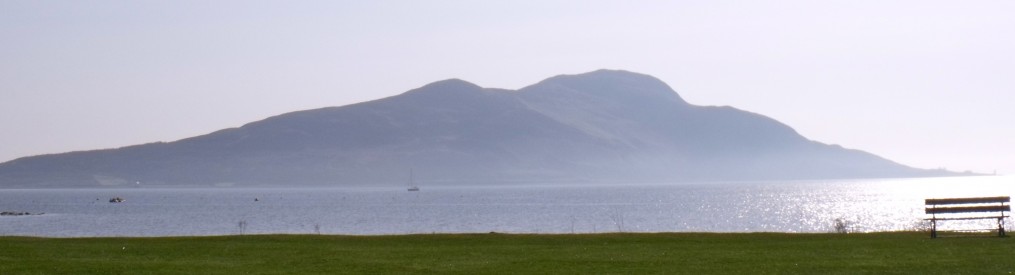
But one of the most magical Guy Fawkes nights I remember was exactly ten years ago on the Isle of Arran.  Standing on the beach, with the bonfire roaring behind us, we looked across the 20 mile stretch of black water to the Ayrshire coastline as tiny prickles of colour – blue and red and silver and green and gold – sizzled to north and south as far as the eye could see.

Magic.  Pure magic.


Nurse Edith Cavell

Edith Cavell, the daughter of an English minister, was born in 1865. After spending 5 years in Brussels working as a nanny, she returned to London in 1895 to train as a nurse.

In 1907, she set up her own training school for nurses in Brussels.  She was home visiting her mother in England in 1914 when war was declared but decided to return to Belgium. When that country fell to the Germans, her clinic and training school were taken over by the Red Cross.  Some of her nurses chose to leave for Britain, but Edith Cavell remained, treating Allied and German soldiers alike.

As a member of the Red Cross, she should have remained neutral, but she actively helped over 175  British and Allied soldiers – or men of military age – to escape to neutral territory. This was to be her downfall.

Arrested by the Germans in August 1915, she confessed to helping the Allies. A military trial followed. Although the Germans had the law on their side by sentencing her to death, their decision outraged the world.  Despite appeals from the American and Spanish embassies, she was executed by firing squad on the morning of October 12th, 1915.

Just before she was taken out to be shot, Edith Cavell made this statement.  Standing as I do, in view of God and eternity, I realise that patriotism is not enough. I must have no hatred or bitterness towards anyone.

After the war, Edith Cavell’s body was returned to England and she is buried in her hometown of Norwich. Memorials to her memory were created around the world, including a statue erected close to Trafalgar Square in London, and a mountain in Jasper National Park being named in her honour.

Released in 1939, the year the Second World War began, the film Nurse Edith Cavell recalled her actions for a new generation.

Please link to this website for more information on Edith Cavell’s remarkable life and upcoming celebrations scheduled for the First World War remembrances in 2014.

The Bechdel Test

Two friends discuss the following subjects over lunch: projects they’re currently working on; agenda topics for an upcoming board meeting; plans for the weekend; current events and the silent rise of China; a BBC documentary on Britain in the 1970s; The Fall of the Ottoman Empire and its impact on modern day Middle Eastern politics; The Bechdel Test.

Can you guess their gender from their conversation?

The correct answer is female, but if you write for film, television or a large percentage of book fiction, they could only be male. According to most films and TV shows, two women talking together can only discuss one subject – the men in their lives!

Enter The Bechdel Test. Put simply, for a story to pass The Bechdel Test, it must meet the following 3 requirements:

1) It must contain at least one scene with two named women in it…

2) Who talk to each other…

3) About something besides a man.

One scene. It’s not really aiming the bar very high, is it?  But it’s depressing how few films manage to achieve even that.

Here is a list of famous movies that fail The Bechdel Test. The Social Network, Harry Potter and the Deathly Hallows Part 2, Avatar, The original Star Wars Trilogy, The entire Lord of the Rings Saga, Run Lola Run. (To read why, click here.)

And here are some more popular films that also failed.  The Dark Knight, Ghostbusters, Wall-E, Pirates of the Carribbean (all), Men in Black, Austin Powers (all), The Princess Bride, Braveheart, When Harry Met Sally, Home Alone, Shrek, Gladiator, Up.

What I find depressing about the second list is how many of those films were geared towards women and children.

So, all you writers out there, I challenge you to include at least one – just one – scene in your story, whether it’s for the screen or page, that would pass The Bechdel Test.

And if you’re still reading this post… here’s an interesting article on how Shakespeare fares when you apply The Bechdel Test to his works. You might be surprised!

Happy Hallowe’en

Growing up in Scotland, Hallowe’en was the most magical of nights. First would come the carving of the turnip; two triangles for its eyes, a twisted slash for a grin, a candle perched inside, and string worked through the sides to create a handle.

turnip

Party pieces perfected, we’d get dressed up in weird and wonderful homemade costumes and go out guisin’, the glow from our turnip lamps lighting our way down streets glittering with frost, to visit friends and neighbours.  (No knocking on strangers doors and definitely no calls of Trick or Treat back then.) Invited inside, we’d then have to perform our poem or song, and if our audience was pleased with the recitation, we’d be rewarded with an apple, orange, peanuts, or best of all, a silver coin… or two!

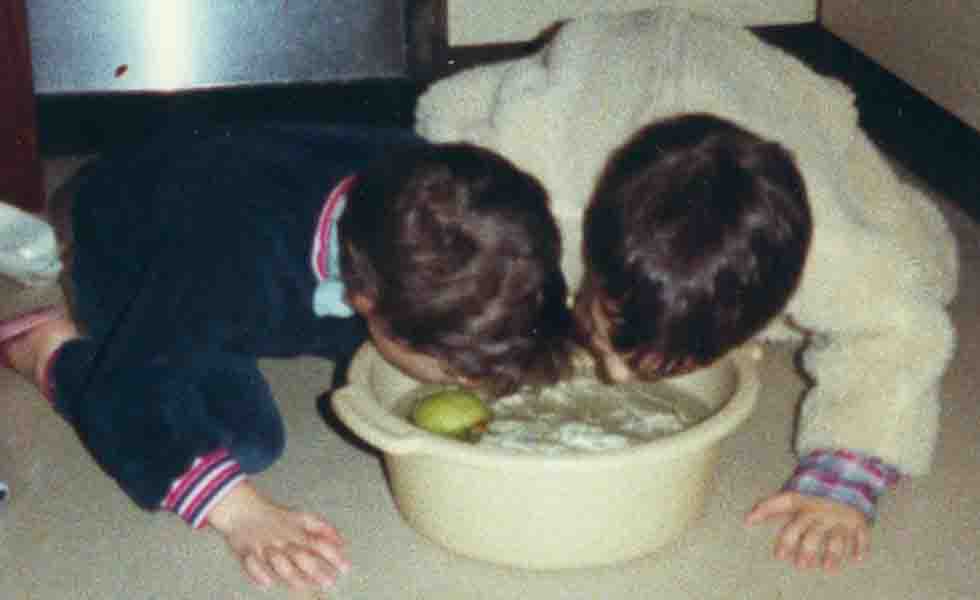
Back home, Mum would have slathered crumpets in treacle and attached them to the pulley in the kitchen.  With our hands behind our backs, the game was to see who could be first to eat them.  That would be followed – fortunately – by dookin’ for apples.  If you didn’t manage to grab an apple with your teeth, at least the treacle was washed from your face.

dookin

According to some historical accounts, it was Scottish and Irish immigrants who brought these traditions to North America. They developed over the years to the Hallowe’en celebrations kids enjoy now.

And talking of the Scots, it turns out that Robert Burns wrote a poem capturing the Hallowe’en rituals of 18th Century Scotland.  No, I’m not talking about Tam O’Shanter, but another entitled, simply, Hallowe’en, which describes the lingering pagan traditions in the Scotland of his time. Even I found myself struggling with the Scots version, so here’s an English translation.

Whatever your traditions, have a Happy Hallowe’en everyone!

Dr. Elsie Inglis

After training at The Royal Infirmary of Edinburgh, newly qualified Staff Nurses usually headed to Simpson’s or The Elsie Inglis to do their midder training. As RIE student nurses, we’d been taken to the room where Sir John Simpson had ‘discovered’ chloroform, the wonder drug which would be used to induce anaesthesia in childbirth.  (Simpson and some of his medical friends experimented with the drug one evening – Simpson was the first to wake up next morning so he got to claim the discovery.)

But what of Elsie Inglis?  What was her story?

Born in India in 1864 to supportive, liberal Scottish parents, Elsie Inglis attended the newly founded Edinburgh School of Medicine for Women, before completing her training at the Glasgow Royal Infirmary.

After working at Elizabeth Garrett Anderson’s ‘New Hospital for Women’ in London, and a maternity hospital in Dublin, she returned to Edinburgh where she opened a medical practice. An active suffragist, she was horrified by the lack of medical care available to women, and opened a maternity hospital and midwifery centre in 1894.

When World War One broke out she approached the British War Office with the idea to set up a Scottish Women’s Hospital to care for the soldiers fighting overseas.  ‘My good woman,’ came the response, ‘go home and sit still!

Undaunted she approached the French who were much more sympathetic. Funded by the Women’s Suffrage Movement, these all female staffed hospitals sent teams to France, Serbia, Salonika, Romania, Malta and Corsica.  Captured in Serbia in 1915, Elsie Inglis was repatriated to the UK where she then created and led a new team to set up a Scottish Women’s Hospital in Russia.

When Elsie Inglis died of cancer in 1917, Winston Churchill said of her, ‘Inglis and her nurses will shine in history‘.

In July 1925, the Elsie Inglis Memorial Maternity Hospital opened in Edinburgh with 20 beds. When it closed in 1988, it had expanded to provide 82 beds.

The Clydesdale Bank honoured Dr Elsie Inglis and her work by putting her likeness on their 50 pound bank note in 2002.

Ida Cook

There’s a great line in the play The History Boys by the character Mrs Lintott. “History,” she says, “is a commentary on the various and continuing incapabilities of men. What is history? History is women following behind with the bucket.”

With Remembrance Day fast approaching, I plan to post articles over the next couple of weeks featuring four remarkable and brave women who supposedly followed behind, but in fact led the way; Ida Cook, Dr Elsie Inglis, Nurse Edith Cavell and Dame Margot Turner.

IDA COOK

Writing under the name Mary BurchellIda Cook (1904-1986) wrote over 125 romance novels for Mills and Boon (Harlequin). She also helped found The Romantic Novelists Association in the UK and served as its president for many years.

An impressive CV in itself, but perhaps the proudest moment of Ida’s life came in 1965 when she and her sister, Mary Louise, were honoured as Righteous Gentiles by the Yad Vashem Martyrs and Heroes Remembrance Authority in Israel.

During the 1930s, funded by money earned from her romance novels, Ida and her sister helped 29 Jews escape the murderous regime of Nazi Germany.

At that time, Jews were forced leave all their wealth and possessions behind if they wished to leave Germany.  Countries around the world, including Britain, refused entry to Jews unless they brought their wealth and possessions with them.  An evil Catch-22.

Under the scrutiny of the Nazi security forces, Ida and Mary Louise sought out Jews in need. Using their love of opera and their connections with famous opera singers of the day, they visited Germany and Austria, supposedly to attend concerts.  In reality, these two modest sisters carried little with them as they entered the country, but left wearing jewellery belonging to Jews desperate to flee the Nazi regime, thus allowing their owners to meet the stringent UK immigration requirements. Ida and her sister put themselves at great risk in their attempt to save as many lives as they could.  Had they been discovered they would certainly have faced imprisonment in one of Hitler’s concentration camps, if not worse.

Ida Cook.  (And Mary Louise.)  Romance writer.  Genuine Heroines.

Safe Passage: The Remarkable True Story of Two Sisters Who Rescued Jews from the Nazis by Ida Cook (Nov 1 2008)

British Pathe

In the ‘olden days’ – not so long ago – when you bought a ticket to the cinema, it didn’t just buy you a few adverts, coming attractions and main feature. Oh no. It provided you with a whole experience; adverts, coming attractions, newsreels, second feature, intermission for ice creams or Kia-Ora orange juice, and then the main feature.  The programme kept going all day, from around 10 in the morning, on a continuous loop, until the National Anthem just before midnight.

I remember going with a friend to see West Side Story at what is now the Glasgow Film Theatre in Rose Street. (I also saw its predecessor Romeo and Juliet there too, but that’s a whole other story.) We walked in during the last half hour, just as Tony (Romeo) intervened in a fight between Barnardo (Tybalt) and Riff (Mercutio) resulting in the latter being killed.

No matter that we now knew the ending, we sat through the adverts, coming attractions, newsreel, second feature and intermission then watched West Side Story from beginning to end.

In those days, the newsreels were provided by British Pathe. I recently discovered, through the BBC History Magazine, that British Pathe has established a website which opens the door to an Ali Baba’s Cave of newsreel treasures.

Out of curiosity, I typed in Forth Road Bridge because I clearly remember watching a newsreel (can’t remember the film I went to see but it was at the ABC in Sauchiehall Street) on its opening.

And there it was.

The internet’s a wonderful thing, isn’t it?